The number of job openings per job seeker in July dropped to 0.4, marking the lowest level in 26 years. The increase in the number of regular employment insurance subscribers was also the smallest since 2003.
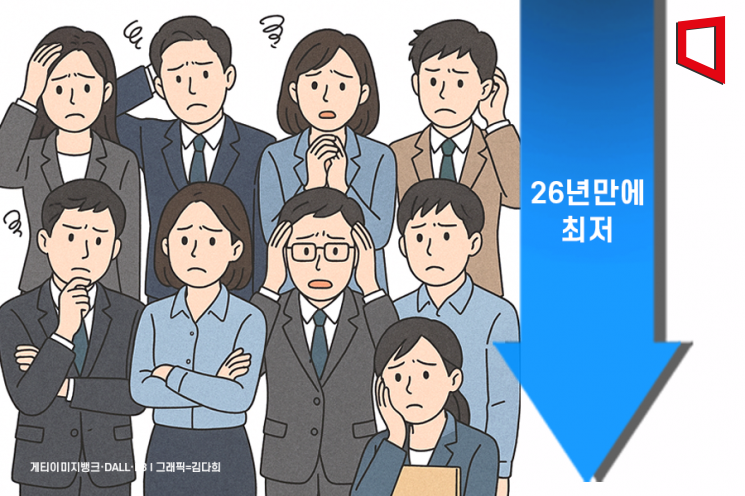
According to the "July 2025 Labor Market Trends Based on Employment Administration Statistics" released by the Ministry of Employment and Labor on the 11th, the number of regular employment insurance subscribers in July stood at 15,599,000, an increase of 180,000 (1.2%) compared to the same month last year. This is the smallest increase in 22 years since July 2003, when the figure was 106,000. During the same period, the number of job openings per job seeker was 0.40, the lowest since 1999, or in 26 years.
By industry, the number of regular employment insurance subscribers in the service sector increased by 203,000 last month, while manufacturing (-5,000) and construction (-19,000) both declined. In manufacturing, the decrease was seen in areas such as metal processing, textiles, machinery and equipment, and rubber·plastics.
In the service sector, employment increased in health and welfare, business services, professional sciences, accommodation and food, and transportation·warehousing, but continued to decline in wholesale and retail, as well as information and communications. The construction sector saw a decrease for the 24th consecutive month, mainly in general construction, though the rate of decline slowed.
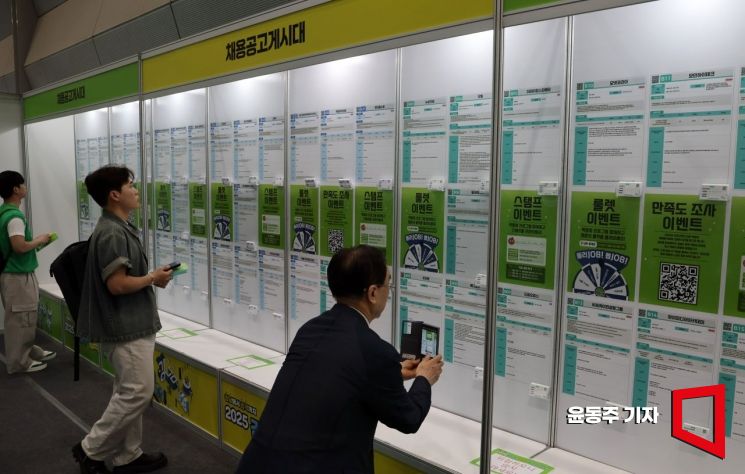 On June 5, job seekers visiting the Gangnam-gu Job Fair held at COEX in Gangnam-gu, Seoul, are checking the job posting board. 2025.06.05 Photo by Dongjoo Yoon
By age group, the number of regular employment insurance subscribers increased among those in their 30s (75,000), 50s (48,000), and those aged 60 and over (180,000), but decreased among those under 29 (-90,000) and those in their 40s (-33,000). For those under 29, the decrease was influenced by population decline and was seen in information and communications (-20,000), manufacturing (-20,000), wholesale and retail (-17,000), and professional and scientific technology (-8,000). Among those in their 40s, the decrease was also influenced by population decline and was observed in construction (-14,000), wholesale and retail (-9,000), and manufacturing (-9,000).
Last month, the total amount paid in job-seeking benefits was 1.1121 trillion won, an increase of 3.3% compared to the same month last year. The number of job-seeking benefit recipients last month was 673,000, up 3.2% from a year earlier, and the number of new applicants for job-seeking benefits was 111,000, an increase of 1,000 from last year.
Chun Kyungki, Director of Future Employment Analysis at the Ministry of Employment and Labor, said, "Overall, the lower job opening ratio is mainly due to the sluggish manufacturing sector." He added, "If demand for workers in the service sector increases, driven by retail sales and support for livelihood recovery, there is a possibility of a slight recovery in employment, especially in these areas."
© The Asia Business Daily(www.asiae.co.kr). All rights reserved.













