Working-level Talks with the Association Begin on the 11th
Expanding Recruitment Beyond Financial Incentives
Support Should Be Based on 'Performance,' Not Deficits
The Seoul Metropolitan Government has decided to provide financial incentives to village buses that improve their services, such as maintaining operating rates and headways. This measure comes in response to Seoul’s village bus operators demanding increased financial support and threatening to withdraw from the city’s public transportation transfer system. However, the city maintains that it is difficult to fully compensate for the deficits at the level requested by the village bus operators.
According to the Seoul Metropolitan Government on August 11, the city and the Seoul Village Bus Transportation Association will begin practical discussions starting today on not only financial incentives, but also expanding the recruitment of new village bus drivers and strengthening the management and supervision of village bus operations.
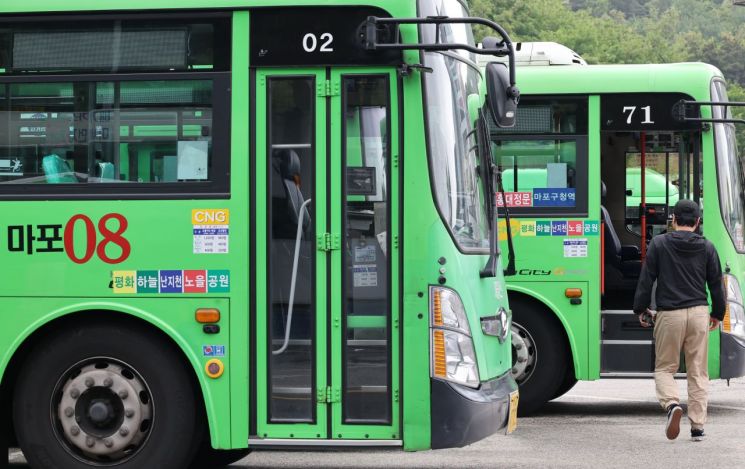
Currently, privately operated village bus companies claim that the transfer system is causing them to accumulate deficits. When a passenger transfers from a village bus to another form of public transportation, the fare settled for the village bus is 676 won, resulting in a loss of 524 won per passenger compared to the base fare of 1,200 won. While the city is already partially compensating for these losses, it acknowledges there are limits. The association is requesting an increase in the financial support standard per bus from the current 486,098 won to 509,720 won to stabilize their finances.
The criteria for calculating labor costs is also a point of contention. The association argues that 2.5 drivers are needed per bus to operate village buses throughout the day, but the city only reflects 2.2 drivers in its cost calculations. This is lower than the figure for city buses (2.89 drivers), leading to criticism that labor costs are being underestimated.
However, the city maintains that it is difficult to fully accommodate these demands, given that it has already spent tens of billions of won each year to cover deficits. The city allocated 49.5 billion won in 2022, 45.5 billion won in 2023, and 36.1 billion won in 2024 to support village bus deficits, and has set aside 41.5 billion won for this year. Above all, the city believes that since some operators comply with operating rates and headways while others do not, support should not be based solely on deficits. Instead, the city aims to establish a performance-based support system. The city has stated that if the association actively participates in and agrees to service improvements, it may consider raising the financial support standard.
The city’s recent commissioning of a new study to recalculate village bus operating costs is in line with this approach. Although this is a regular survey conducted every two years, the results could affect next year’s financial support structure, especially since the association has threatened to halt operations and withdraw from the transfer system. The study will calculate village bus operating costs based on data from 2016 to 2024, assess the validity of the current financial support system, and analyze future policy directions. It will also compare cases from Seoul’s 25 districts, 16 metropolitan governments nationwide, and some overseas cities. The study will begin in the second half of the year and be completed by the end of this year.
Once the discussions starting today are concluded, the city plans to finalize the scale of financial incentives and the number of new hires, and reflect these in the 2026 Seoul city budget proposal.
© The Asia Business Daily(www.asiae.co.kr). All rights reserved.

![Clutching a Stolen Dior Bag, Saying "I Hate Being Poor but Real"... The Grotesque Con of a "Human Knockoff" [Slate]](https://cwcontent.asiae.co.kr/asiaresize/183/2026021902243444107_1771435474.jpg)














