Ahn Junggeun's Calligraphy and Righteous Army Documents Unveiled for the First Time
"Passing Down the Spirit of Our Ancestors to Future Generations"
The National Heritage Administration announced on August 11 that it will hold a special exhibition titled "Anti-Japanese Heritage Embracing Light" at Dondeokjeon Hall in Deoksugung Palace from August 12 to October 12, in commemoration of the 80th anniversary of Liberation.
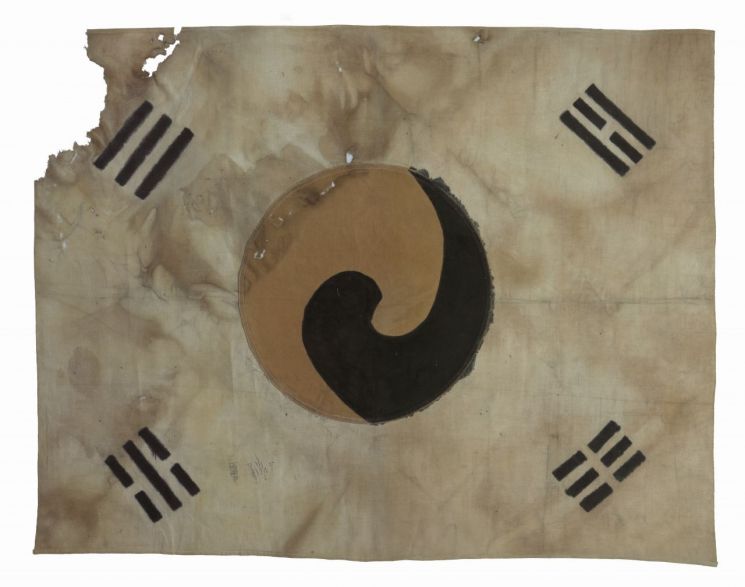
This exhibition offers an opportunity to reflect on history through anti-Japanese independence heritage spanning from the opening of ports to Liberation. It aims to commemorate the 80th anniversary of Liberation together with the public, while providing a chance to revisit the true meaning of Liberation and the value of anti-Japanese heritage.
The exhibition will unveil, for the first time, "Documents Related to the Korean Righteous Army in the Late Joseon Period," which were repatriated from Japan in July 2024, as well as the calligraphy "Green Bamboo (Nokjuk)," written by independence activist Ahn Junggeun (1879?1910) and recently acquired at auction by Koo Hyejeong, daughter of the late Koo Taehoe, honorary chairman of LS Cable & System, in April. Also on display will be "Missile Records," the diplomatic diary of Lee Beomjin, the Korean Empire’s minister to the United States, and the "Korea-Japan Relations Historical Records," compiled by the Provisional Government of the Republic of Korea to petition the League of Nations for independence.
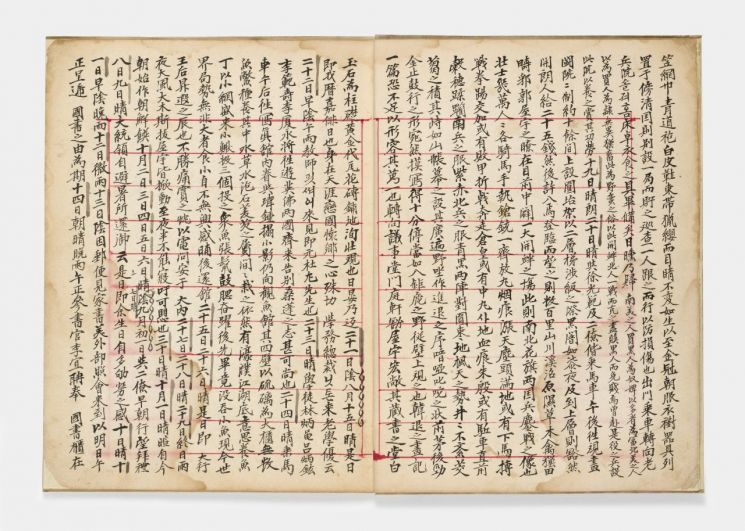
The most notable among the late Joseon righteous army documents are thirteen records created between 1851 and 1909. These include writings left by Heo Wi (1855?1908) and Lee Kangnyeon (1858?1908), who were active in the Thirteen Provinces Righteous Army, as well as letters from Choi Ikhyeon (1833?1906), a leading figure in the cause of defending orthodoxy and rejecting heterodoxy, and a key leader of the anti-Japanese righteous army movement.
 Documents Related to the Korean Righteous Army in the Late Joseon Period
 Photo by National Heritage Administration
The records left by the righteous army members are preserved in two scrolls. After assembling the materials, they were titled "Letters from Leaders Who Opposed Japan in the Late Joseon Period" and "Manifesto of Rebel Commanders Who Opposed Japan in the Late Joseon Period." When fully unrolled, the scrolls measure 406.5 cm and 569.5 cm in width, respectively.
Based on the introductory text on the scrolls and expert opinions, the National Heritage Administration estimates that Kaegawa Nagaharu collected the materials and compiled them into their current form in August 1939. Kaegawa Nagaharu was a Japanese military police officer who suppressed the independence movement and was even awarded a Manchukuo order of merit.
Throughout the documents, the unwavering determination of the righteous army members in the face of adversity is vividly depicted. In a 1908 writing, righteous army leader Noh Jaehoon declared, "How could we not carve this into our bones and hearts and kindle hope for restoration?" Meanwhile, righteous army leader Yoon Insun (1880?1909), who was active in the Yangju and Paju regions, rebuked the pro-Japanese organization Iljinhoe in a "Notice," asking, "Are you not ashamed of your actions?"
Also on display is "Green Bamboo," a piece of powerful and spirited calligraphy written by Ahn Junggeun before his execution, expressing his unwavering resolve. The phrase is taken from the orally transmitted collection of five-character poems, "Chugu," and is regarded as a symbol of Ahn’s integrity and steadfastness.
"Missile Records" is a diary kept by Lee Beomjin (1852?1911), chronicling his tenure as minister to the United States from June 20, 1896, to January 31, 1897. The diary was transcribed by embassy secretary Lee Gunho. It details Lee’s journey across the ocean, his early days in the United States, meetings with prominent Americans, and other activities as minister, organized by date, making it a valuable historical resource.
The "Korea-Japan Relations Historical Records" is a history book compiled by the Provisional Government of the Republic of Korea in 1919 to demand the independence of the Korean people from the League of Nations. It is both the first and only history book compiled by the Provisional Government. Focusing on Korea-Japan relations, it presents evidence of Japanese aggression from the Three Kingdoms period onward, documents the brutality of colonial oppression, and details the causes and development of the March 1st Movement.
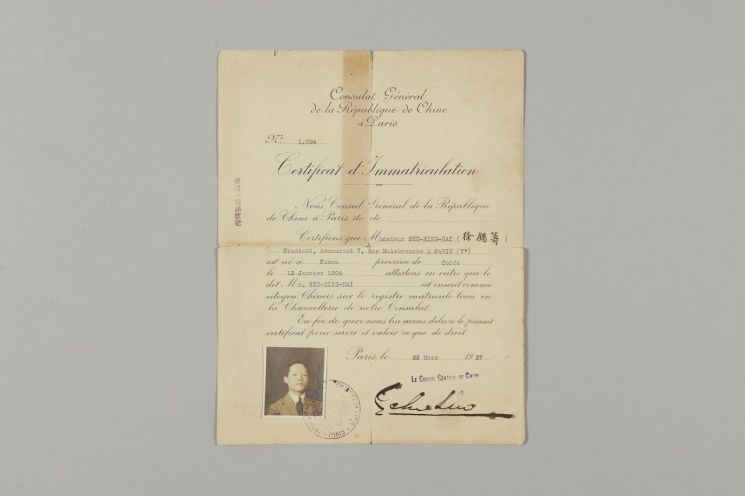
In addition, the National Heritage Administration will exhibit over 110 anti-Japanese heritage items, including the "Seoul Jingwansa Taegukgi," a Taegukgi from the Japanese colonial era discovered for the first time in a Korean temple and designated as a national treasure, as well as the "Independence Activist Seo Younghae Materials," a nationally registered cultural heritage collection showcasing the activities of Seo Younghae, who led the independence movement in Europe during the colonial period. To enhance visitors’ understanding, video and audio guides introducing the exhibited artifacts will be provided. Professor Seo Kyungduk of Sungshin Women’s University and actress Cha Jooyoung participated in the production of these guides.
A representative from the National Heritage Administration stated, "To broaden access to the exhibition, we will also set up and operate exhibition booths at the Busan Museum of Modern and Contemporary History, the Gwangju Museum of History and Folklore, the Ulsan Museum, and the Mokpo Modern History Museum during the same period," adding, "We are committed to faithfully conveying the spirit of our ancestors who sacrificed for the independence of our nation."
© The Asia Business Daily(www.asiae.co.kr). All rights reserved.














