Key Issues Remain Ahead of the Summit:
Details of Tariff Agreement Still Unresolved
Investment Structure, Agricultural Market Opening Continue to Spark Debate
The key issue in the upcoming South Korea-U.S. summit, a major diplomatic challenge facing President Lee Jaemyung, is the concretization of the mutual tariff agreement. On July 30 (local time), South Korea reached a deal with the United States to lower the mutual tariff rate from 25% to 15%. In order to reduce these tariffs, the South Korean government has decided to establish a U.S.-focused investment fund totaling $350 billion, including a $150 billion Korea-U.S. Shipbuilding Cooperation Fund. The government also agreed to purchase liquefied natural gas (LNG) and energy products worth $100 billion.
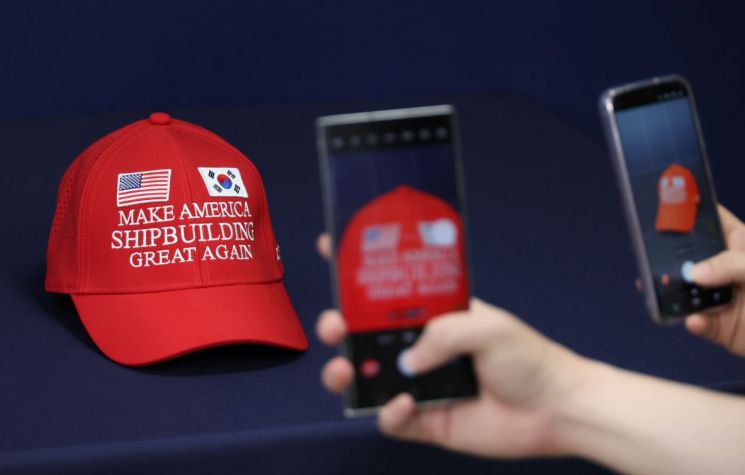
However, the agreement reached last month is closer to a broad framework. Specific details, such as the items to be invested in or purchased and the operation method of the fund, have not yet been determined. Deputy Prime Minister and Minister of Economy and Finance Koo Yooncheol also remarked in Washington, D.C. immediately after the negotiations, "People say the devil is in the details," adding, "Based on the negotiated plan, we intend to establish a concrete strategy and respond proactively in detailed negotiations with the United States."
The presidential office faces the task of ensuring that the investment structure resulting from the summit allows both the South Korean government and businesses to share in the benefits. The government maintains that there will be no scenario in which investments are made unconditionally at the request of the United States or where the U.S. monopolizes most of the profits. In contrast, the U.S. has expressed its position that the fund should be operated with a U.S.-centric approach. Secretary of Commerce Howard Lutnick even claimed on social networking services (SNS) that "90% of the profits generated" would go to the United States.
The differences between South Korea and the U.S. that emerged immediately after the agreement, particularly regarding agricultural market opening, remain a source of concern. On July 31, President Trump wrote on his SNS that South Korea would "completely open" its automobile, truck, and agricultural markets to the United States. However, Kim Yongbeom, Policy Chief at the presidential office, countered that there was an agreement not to further open agricultural, livestock, or fisheries markets, such as those for rice and beef. He also clarified that the regulation allowing only beef from cattle slaughtered under 30 months of age to be imported was not lifted.
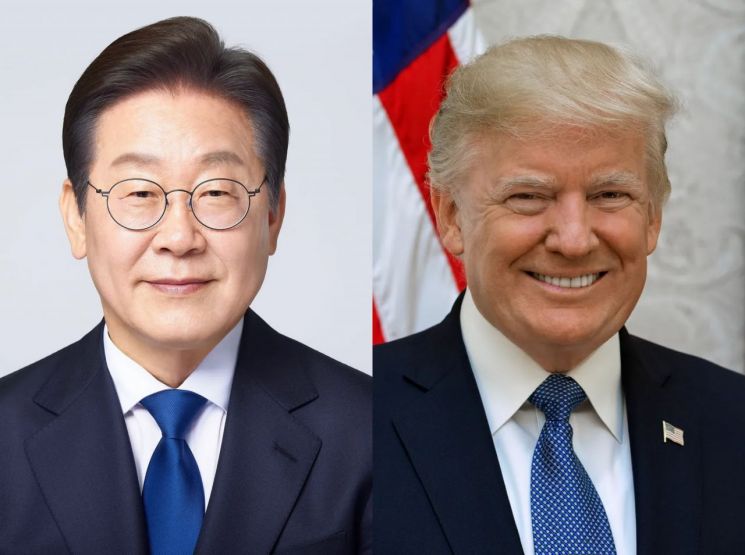
The South Korean government believes this gap stems from President Trump's "political rhetoric." The agreement included measures to expedite quarantine procedures for certain U.S. agricultural products entering South Korea, but the interpretation is that President Trump exaggerated and amplified these measures to appeal to voters. Nevertheless, since the U.S. has consistently demanded greater access to South Korea's agricultural market, pressure may continue even after the agreement.
There is also a possibility that new non-tariff barriers, which were not discussed in this agreement, could emerge. Given President Trump's tendency to make impromptu adjustments to negotiation plans, it is possible that unexpected proposals could arise during the summit. Yeo Hankoo, Director-General for Trade Negotiations at the Ministry of Trade, Industry and Energy, who led the tariff negotiations, also stated upon his return to Korea on August 1, "We cannot be assured of when tariff or non-tariff pressures may arise."
The Online Platform Act is a representative example of a non-tariff barrier. From the outset, the Online Platform Act was considered the most contentious non-tariff issue in the South Korea-U.S. negotiations. The act aims to regulate monopolistic practices by major platforms, which has raised concerns among the U.S. government and big tech companies. According to Policy Chief Kim, the Online Platform Act was discussed extensively during the mutual tariff negotiations, but it was not included in the final round of talks. This means the U.S. side could raise the issue of the Online Platform Act again at any time.
Whether to allow the export of Google’s high-precision maps is also a sensitive issue. Google has requested that the South Korean government permit the export of domestic high-precision maps overseas. The government has so far rejected these requests, citing security concerns. The U.S. identifies this as one of South Korea’s key non-tariff barriers. Although the matter was not settled in the recent tariff negotiations, it was reportedly discussed in the early stages of the talks.
© The Asia Business Daily(www.asiae.co.kr). All rights reserved.












