FT: "US Faces Difficulty Persuading Asian Partners"
"Industry and Experts Question Project Feasibility"
No Mention of Alaska in South Korea Trade Agreement
Foreign media have reported that the Alaska liquefied natural gas (LNG) project promoted by U.S. President Donald Trump has faced difficulties in tariff negotiations with South Korea and Japan. According to Yonhap News Agency on August 4 (local time), citing the UK’s Financial Times (FT), "The Trump administration is struggling to persuade skeptical Asian partners regarding the Alaska LNG project," adding, "Government and industry officials, as well as experts, have raised questions about the financial feasibility of the project."
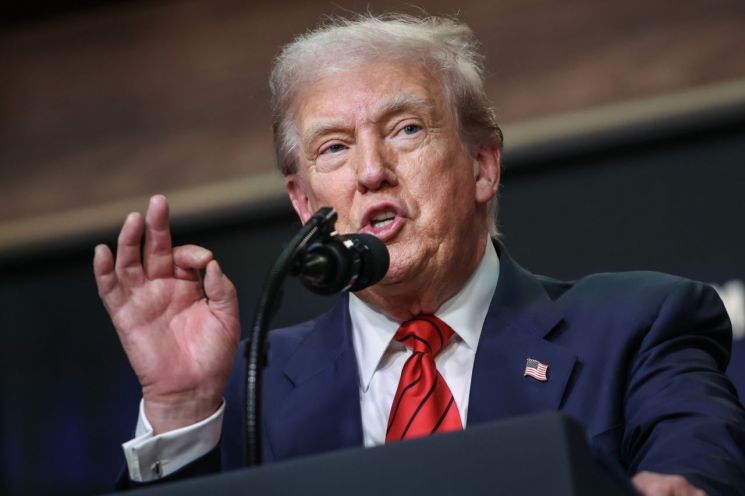 Donald Trump, President of the United States, is trying to lead the participation of Korea and Japan in the Alaska liquefied natural gas (LNG) project. Photo by UPI
The Alaska LNG project involves transporting natural gas from the North Slope region of Alaska to Nikiski, a port near Anchorage, where it will be liquefied and then supplied to demand centers. The project requires the construction of approximately 1,300 kilometers of new pipelines along the route. Due to the high risks involved, the project has been adrift since 2016, when U.S. oil majors ExxonMobil and ConocoPhillips withdrew from participation.
During the recent tariff negotiations, the United States reportedly strongly encouraged Japan and South Korea?respectively the world’s second- and third-largest LNG buyers?to participate in the Alaska LNG project. However, actual participation in the project has not materialized.
According to the FT, while South Korea and Japan concluded trade negotiations, they did not even sign a non-binding Letter of Intent (LOI) regarding the Alaska LNG project. In Japan’s case, it was announced at the time of the negotiations that Japan would establish a joint venture (JV) with the United States for the Alaska LNG project. However, subsequent official statements from the White House and the Japanese government only stated that "Japan is considering participation in the project," withholding further commitment.
An individual directly involved in the U.S.-Japan trade negotiations told the FT, "What the White House referred to was merely that the United States and Japan are considering a new LNG purchase agreement from Alaska, which is far from the JV that President Trump boasted about."
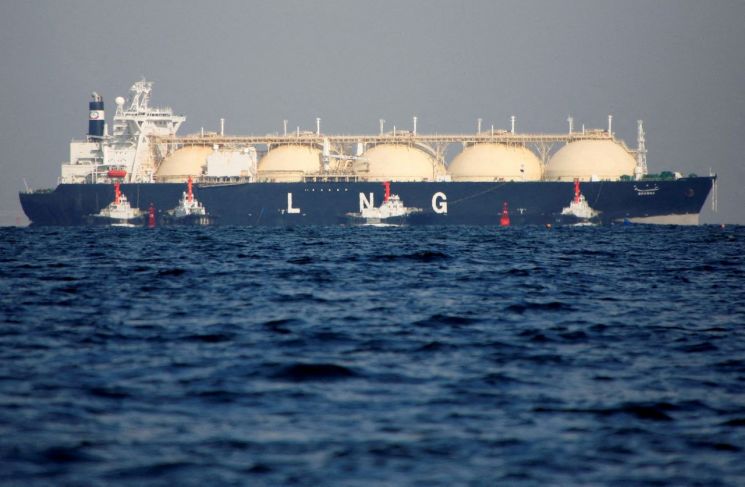
South Korea agreed to purchase $100 billion worth of U.S. energy, including LNG, over the next four years; however, participation in the Alaska LNG project was not specifically mentioned in the agreement. A South Korean government official, speaking to the FT on condition of anonymity, said, "Some Korean companies have shown interest in participating as construction partners, but there are doubts about the economic viability of the project, especially regarding pipeline construction," adding, "The United States has not provided us with the necessary cost information. If it were not for U.S. pressure, Korean gas buyers would never have considered investing in this project."
In his State of the Union address last March, President Trump pressured, "Japan, South Korea, and other countries should each invest trillions of dollars in this project." Jane Nakano, senior fellow for energy security at the Center for Strategic and International Studies (CSIS), explained to the FT, "As Russia and China increase their influence in the Arctic region, strengthening Alaska’s economic resilience has become a core objective of the U.S. government."
According to U.S. energy consultancy Rapidan Energy Group, the second phase of the Alaska LNG project is estimated to cost more than $60 billion, excluding the cost of pipeline construction in the first phase. There are also concerns about the risk of environmental lawsuits. Rapidan analyst Alex Munton told the FT, "The Trump administration’s attempt to use this project as a political tool?either as part of its energy dominance strategy or as a condition in bilateral trade negotiations?further highlights the risks," adding, "Our base-case scenario is that the project will not reach a final investment decision."
© The Asia Business Daily(www.asiae.co.kr). All rights reserved.













