Annual Production Capacity of 300,000 Tons in Seosan, South Chungcheong Province
Project Advanced Through Joint Venture with Italian Company Eni
Portfolio Transformation Accelerates Amid Petrochemical Downturn
LG Chem is building the nation's first eco-friendly fuel production facility based on plant-derived raw materials. By utilizing recycled resources such as used cooking oil, the company is moving to secure high value-added fuels and accelerating its portfolio transformation strategy amid a sluggish business environment.
On August 4, LG Chem announced that it has begun construction of a Hydrotreated Vegetable Oil (HVO) plant in Seosan, South Chungcheong Province, through its joint venture, LG Enibio Refining. This is the first facility in Korea to directly produce and refine HVO on a commercial scale, with completion targeted for 2027. The planned production capacity is 300,000 tons per year. LG Enibio Refining is a joint venture established in December last year, with LG Chem and Enilive, a subsidiary of the Italian energy company Eni, each holding a 50 percent stake.
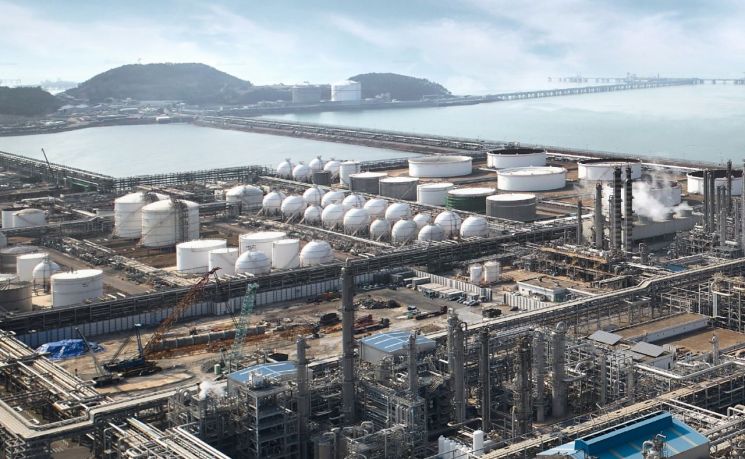 LG Chem announced on the 4th that it has started construction of a hydrogenated vegetable oil (HVO) plant in Seosan, Chungnam through the joint venture "LG Eny Bio Refining" with Enylive, a subsidiary of the Italian energy company Eni. The photo shows the construction site of the HVO plant in Seosan, Chungnam. Photo by LG Chem
According to industry sources, the total investment amounts to approximately 860 billion won. Eni has experience operating HVO facilities with an annual capacity of 2 million tons in Europe, and possesses advanced refining technology and a global bio-feedstock supply chain. LG Chem anticipates synergy, as feedstocks such as used cooking oil can be sourced not only from Europe but also from Asia, including Malaysia. HVO can be converted into Sustainable Aviation Fuel (SAF), biodiesel, and bio-naphtha, and is used across various industries.
In addition, LG Chem plans to directly feed the bio-naphtha produced at the new plant into its own naphtha cracker (NCC) to manufacture eco-friendly, high value-added products such as synthetic resins for home appliances and automobiles (ABS), super absorbent polymers (SAP), and ethylene vinyl acetate (EVA). These products are part of the Bio Circular Balanced (BCB) product line, which has obtained the international eco-friendly certification ISCC Plus, and global demand for these products is reportedly growing rapidly.
Vice Chairman Shin Hakcheol of LG Chem stated, "We will continue to drive technological innovation and commercialization in eco-friendly fuels and bio-feedstocks such as Hydrotreated Vegetable Oil to strengthen our global competitiveness," adding, "Through the transition to a low-carbon business portfolio, we will secure both sustainable growth and profitability."
Stefano Ballista, CEO of Enilive, said, "This groundbreaking will serve as a milestone in realizing Enilive's strategy to expand sustainable products," and added, "We will further solidify our leadership in the global eco-friendly fuel production sector."
© The Asia Business Daily(www.asiae.co.kr). All rights reserved.











