KDCA Issues Japanese Encephalitis Alert Later Than Usual Due to Heavy Rains
Vaccination Recommended for Children Under 12 and Other At-Risk Groups
On August 1, the health authorities issued a nationwide Japanese encephalitis alert and urged children under the age of 12 (born on or after January 1, 2012) who have not yet been vaccinated, as well as adults aged 18 and older who have never received a Japanese encephalitis vaccine, to get vaccinated.
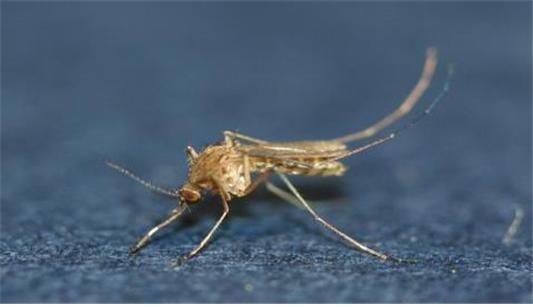
The Korea Disease Control and Prevention Agency (KDCA) announced that, according to the Japanese encephalitis vector mosquito surveillance system, on July 30 (week 31), 60.1% (633 out of 1,053) of mosquitoes collected in Wando County, Jeonnam, were identified as Culex tritaeniorhynchus, the main vector of Japanese encephalitis.
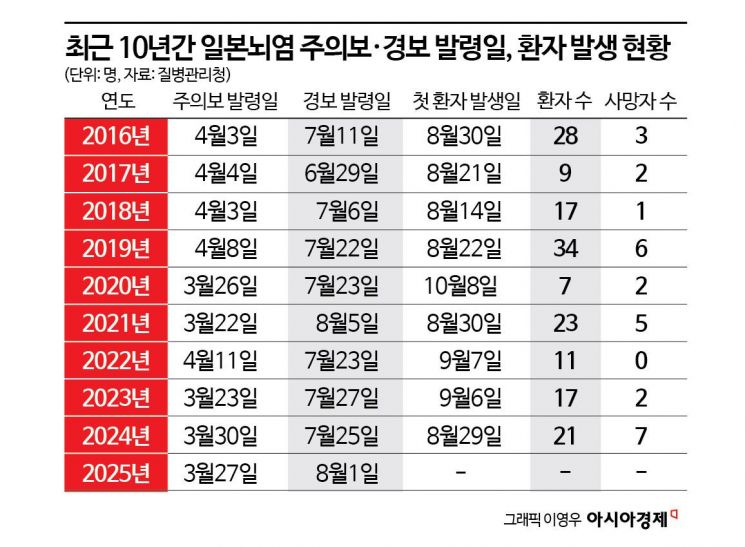
A Japanese encephalitis alert is issued when at least one of four criteria is met, including when the average daily number of Culex tritaeniorhynchus collected twice a week exceeds 500 and accounts for more than 50% of the total mosquito population. This year, due to persistent heavy rains and heatwaves, the overall mosquito population has decreased, resulting in the alert being issued one week later than last year.
Previously, on March 27, the KDCA issued a Japanese encephalitis advisory. The advisory is issued when Culex tritaeniorhynchus, the vector mosquito for Japanese encephalitis, is first detected in a given year.
Culex tritaeniorhynchus, the mosquito that transmits Japanese encephalitis, is a small, dark brown species that inhabits rice paddies, livestock barns, and puddles, and is mainly active at night. It is found throughout Korea, with the density of vector mosquitoes peaking in August and September, and remaining active until the end of October.
Infection with the Japanese encephalitis virus usually causes mild symptoms such as fever and headache, but in rare cases, if it progresses to encephalitis, it can lead to severe symptoms such as high fever, seizures, neck stiffness, confusion, convulsions, and paralysis. Among these severe cases, 20-30% are at risk of death. Even if encephalitis symptoms improve, 30-50% of patients may suffer various neurological complications depending on the affected area.
In Korea, around 20 cases of Japanese encephalitis are reported annually. Although no cases have been reported so far this year, the first cases are typically reported between August and September, and cases can continue to occur through November.
Among the 79 reported cases of Japanese encephalitis between 2020 and 2024, 70 patients aged 50 and older accounted for 90% of all cases. The most common symptoms experienced by these patients were fever, altered consciousness, encephalitis, and headache, in that order. Additionally, 79.7% (63 patients) suffered from complications such as paralysis, cognitive, language, motor, or mental disorders.
The KDCA recommended that children under the age of 12, who are eligible for the national immunization program, receive the Japanese encephalitis vaccine according to the standard immunization schedule. In addition, adults aged 18 and older who have never been vaccinated against Japanese encephalitis and who live in or plan to visit high-risk areas such as rice paddies or livestock barns during the transmission season, as well as foreigners who have moved from non-endemic areas and plan to stay in Korea long-term, and travelers to countries where Japanese encephalitis is prevalent, are advised to receive the vaccine at their own expense.
© The Asia Business Daily(www.asiae.co.kr). All rights reserved.













