Vetoed Grain Act and Agricultural Products Management Act Under Yoon Administration
Expected to Pass National Assembly Plenary Session on August 4
Institutionalizing Preemptive Reduction Instead of Costly Post-Production Isolation
The key difference between this amendment and the previous versions is the inclusion of "preemptive supply and demand management." While the government's mandatory purchase of surplus rice remains the same as in the first and second reconsideration requests, this amendment makes it obligatory to provide proactive financial support to prevent overproduction. Despite measures such as the strategic crop direct payment system to balance supply and demand, the government is required to purchase surplus rice only in cases of unexpected overproduction, such as bumper harvests. The government expects that by strengthening preemptive supply and demand management, it can reduce budget expenditures since there will be less need for post-production purchases.
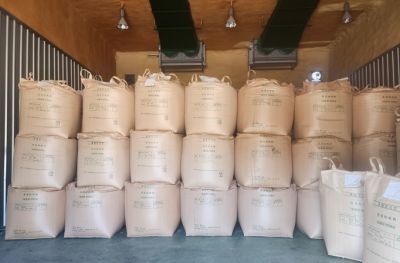
On the 30th, the Ministry of Agriculture, Food and Rural Affairs explained the main points of the amendments to the Grain Act and the Agricultural Products Management Act during a press briefing held at the Government Complex Sejong.
Byun Sangmoon, Director of Food Policy at the Ministry, emphasized, "The core of this amendment is to institutionalize a preemptive supply and demand policy so that rice overproduction does not occur in the first place," adding, "In unavoidable cases, the government's responsibility (isolation) has been strengthened."
The amendment provides a legal basis for sufficient financial support to farmers who participate in cultivating alternative crops in paddy fields, ensuring the government's preemptive supply and demand policies are effective. Director Byun stated, "This year, the target for reducing rice cultivation area was 80,000 hectares, but the budget for the strategic crop direct payment system could only cover about 35,000 hectares, so the structure inevitably resulted in rice oversupply." He added, "From next year, if the budget for the strategic crop direct payment system is significantly increased, sufficient preemptive supply and demand adjustment will be possible."
The main tool for preemptively reducing rice supply to balance supply and demand is the strategic crop direct payment system. Under this system, if farmers cultivate crops such as soybeans, powdered rice, or forage crops instead of rice, they can receive direct payments of up to 5 million won per hectare, depending on the crop. This year, the budget for strategic crop direct payments for summer crops, including rice, is 145 billion won, but an increase in the related budget is necessary. Director Byun explained, "By increasing the strategic crop direct payment budget by 200 billion won, the 1.4 trillion won that was feared to be required in 2030 under the mandatory purchase clause of the previous reconsideration request can be avoided," and added, "The specific budget size is being discussed with the budget authorities."
The government's post-production rice purchase will only be triggered in unavoidable cases, even after implementing preemptive supply and demand adjustment policies. The amendment stipulates that the government will set the scope of the trigger criteria in advance by Presidential Decree, and the Grain Supply and Demand Management Committee will determine the isolation trigger criteria within the scope set by the government. The committee, currently operated by public notice from the Ministry, will be elevated by law to strengthen its deliberative authority. In addition, it will be legally mandated that at least five of the 15 committee members must be representatives from producer organizations, such as the Korea Advanced Farmers Federation and the Korean Peasants League.
Director Byun stated, "Until now, the main direction of the government's rice policy was price control, but since 2023, the policy direction has shifted to preemptive supply and demand management," adding, "Going forward, if we reduce rice price fluctuations through preemptive supply and demand management, we will be able to more actively invest policy capabilities in developing the rice industry, such as expanding overseas markets for processed rice foods and reducing rice production costs."
The amendment to the Act on Distribution and Price Stabilization of Agricultural and Fishery Products (Agricultural Products Management Act) is also expected to pass the National Assembly along with the Grain Act amendment. The key difference between this amendment and the previous version, which was vetoed, is also the strengthening of preemptive supply and demand adjustment. The amendment also provides a legal basis for government support for preemptive supply and demand adjustment policies, such as support for stable production and revitalization of contract transactions.
Hong Ingi, Director of Distribution and Consumption Policy at the Ministry, stated, "We are institutionalizing a public-private cooperation system for supply and demand stability by establishing 'agricultural product supply and demand plans' through adjustments to city and provincial supply and demand plans and deliberation by the Supply and Demand Adjustment Committee." He added, "Despite efforts for preemptive supply and demand management, if prices fall, we plan to introduce a price stabilization system that compensates the difference between the average price and the reference price, such as wholesale market prices and producer prices during the harvest season, so that farmers do not incur losses."
The Ministry of Agriculture, Food and Rural Affairs plans to prepare the composition and operation of the Grain Supply and Demand Management Committee and the criteria for the government's post-production measures in the enforcement decree after the Grain Act and Agricultural Products Management Act amendments pass the plenary session of the National Assembly, aiming for implementation one year later. In addition, a research service will be conducted in the first half of next year to specify the target items for the price stabilization system and establish necessary measures for system operation, such as methods for calculating average prices.
© The Asia Business Daily(www.asiae.co.kr). All rights reserved.