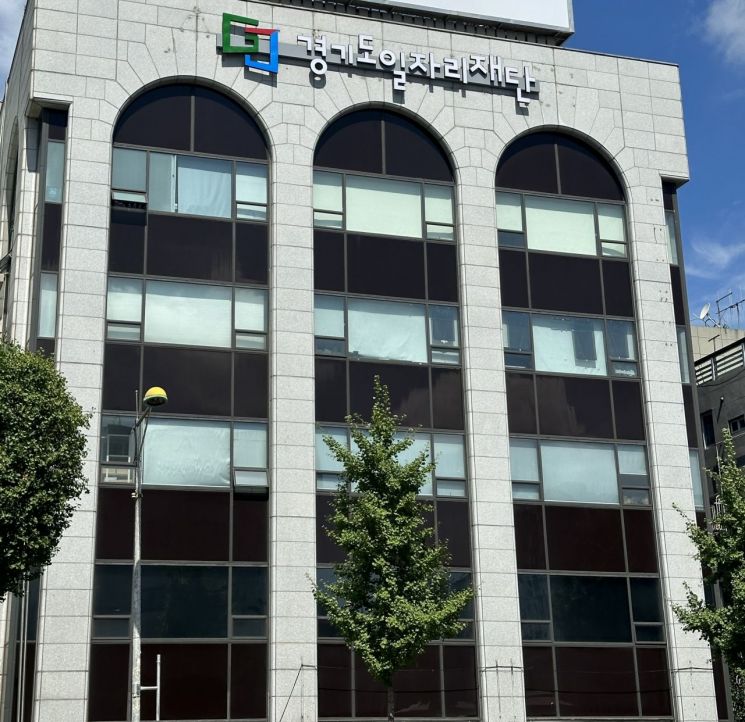
The Gyeonggi Job Foundation has published a report titled "Recent Decline in Manufacturing Jobs in Gyeonggi Province and Increase in Imports from China," analyzing the causes behind four consecutive quarters of declining manufacturing employment in Gyeonggi Province.
According to the report released on the 31st, the number of manufacturing employees nationwide has been decreasing for four consecutive quarters since the second quarter of last year. The decline is particularly pronounced in Seoul and Gyeonggi Province. As of the second quarter of this year, Seoul saw a decrease of 130,000 employees compared to the previous year, while Gyeonggi Province experienced a reduction of 33,000 employees.
It is noteworthy that the decline in manufacturing employment in Gyeonggi Province is not a short-term phenomenon but a structural change that has persisted for three years since the third quarter of 2022.
The number of manufacturing employees in Gyeonggi Province fell from 1.5 million in the third quarter of 2022 to 1.35 million in the second quarter of this year.
By region, the decline in employment has been concentrated in traditional industrial complex areas such as Bucheon (178,000 employees), Siheung (128,000 employees), and Ansan (111,000 employees). In contrast, manufacturing employment has increased significantly in Pyeongtaek (133,000 employees), Yongin (128,000 employees), and Gimpo (77,000 employees).
By industry, the most pronounced declines were observed in fabricated metal products, rubber·plastics, other machinery and equipment, and other product manufacturing. According to the OECD's classification of manufacturing by technological intensity, these industries fall under medium- or low-technology sectors.
Particularly noteworthy is the change in import and export structures. Since the 2020s, imports from China have surged in manufacturing sectors experiencing employment declines. For example, imports of fabricated metal products from China increased 1.5 times since 2020, and similar patterns were seen in the plastics and other machinery and equipment sectors.
Choi Kyungsoo, Senior Research Fellow at the Gyeonggi Job Foundation, stated, "The increase in imports of Chinese products may have accelerated the decline in manufacturing employment, but it is difficult to see this as the fundamental cause." He added, "These industries are medium- or low-technology manufacturing sectors, and even without competition from China, it would have been difficult to maintain a comparative advantage."
Based on this analysis, the Gyeonggi Job Foundation suggested that policy intervention is needed for these industries.
© The Asia Business Daily(www.asiae.co.kr). All rights reserved.












