Expansion of Distributed Power Sources Such as Solar Energy
255 Circuits and 6,476 c-km to Be Newly Built Over Five Years
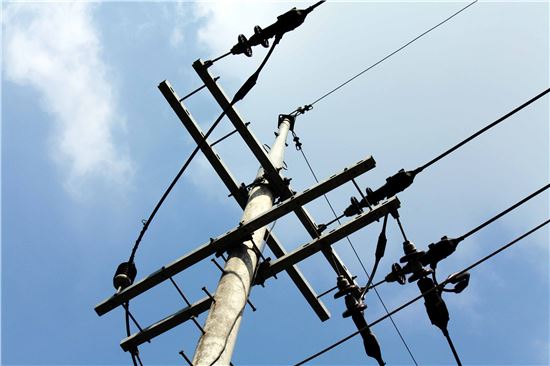
In preparation for the expansion of distributed power sources, including renewable energy, Korea Electric Power Corporation (KEPCO) has decided to invest 10 trillion won in the distribution network over the next five years. The power industry forecasts that investment in the distribution network will exceed 40 trillion won over the next 15 years. For reference, see our July 22 article, <"Let's Completely Overhaul It" 40 Trillion Won to Be Poured Over 15 Years... The Power Industry Is Abuzz Over Distribution Network Investment>.
On July 29, KEPCO announced that it had established the 'First Long-term Distribution Plan' to expand renewable energy supply and build a regional distributed energy system, and finalized it after reporting to the 314th Electric Power Committee of the Ministry of Trade, Industry and Energy.
This plan is the first long-term distribution plan established under the Special Act on the Promotion of Distributed Energy, which came into effect in June 2023. It covers the expansion and operation of the distribution network, as well as related new technologies and systems, for the five-year period from 2024 to 2028.
To this end, KEPCO collaborated with 173 local governments nationwide to investigate the status of power generation business permits and forecast the capacity of distributed energy to be connected to the distribution network in the future. The investigation found that distributed energy connected to the distribution network is expected to increase by approximately 44%, from 25.5 GW at the end of 2024 to 36.6 GW at the end of 2028. The spread is expected to expand nationwide, not only in the Honam region.
Distributed power sources of 40 megawatts (MW) or less, such as solar power, must transmit the electricity they generate through the distribution network, not transmission lines. Accordingly, investment in distribution lines will need to increase in the future. Distribution facilities refer to power lines of 22.9 kilovolts (kV) or less that deliver electricity from substations to end consumers.
In this first long-term distribution plan, KEPCO has decided to invest approximately 2 trillion won over five years for timely connection of distributed energy, and 8.2 trillion won for user-side power networks, totaling 10.2 trillion won.
Over the next five years, KEPCO plans to expand distribution facilities by 255 circuits and 6,476 circuit kilometers (c-km, a unit representing the length of power lines). Of these, 155 are common distribution facilities.
Common distribution facilities refer to power lines and equipment of 22.9 kV or less that connect a single point of use directly from a power plant or substation, without passing through other power plants or substations.
By region, Jeonnam has the most with 53 projects (circuits), including new and ongoing projects, followed by Gyeongbuk with 37, Jeonbuk with 19, Gangwon with 12, Gyeongnam with 9, Jeju with 9, Chungnam with 7, Gyeonggi with 5, and Chungbuk with 4.
KEPCO also plans to build connection facilities for a 14 GW-scale distributed energy distribution network (power lines from common distribution facilities to specific customers).
KEPCO will also work with the government to expand distributed energy intelligent infrastructure for AI-based distribution network operation, strengthen the cooperation system between KEPCO and Korea Power Exchange for power system operation, and reinforce reliability standards for distribution system operation, all to ensure stable power supply.
In addition to the expansion and operation plan for the distribution network, KEPCO will also promote policies to build a distributed energy system in cooperation with the private sector.
First, from the end of 2025, regional flexibility services (using private ESS, etc.) will be piloted in the Jeju region, with full-scale implementation planned for 2027. Procedures will also be established to allow local governments and private entities to participate in the next long-term distribution plan.
In addition, a technology roadmap for distributed power networks (through 2035) will be announced in the second half of the year, and a Distribution System Operator (DSO) Alliance (KEPCO-private sector consultative body) will be formed to promote the distributed energy industry through expanded technical and policy exchanges with the private sector.
KEPCO stated, "Through this plan, we will implement the government's renewable energy expansion policy and take the lead in creating a sustainable energy ecosystem," adding, "We will establish a foundation for a distributed power system in which electricity produced in the region is consumed locally."
The main details of the First Long-term Distribution Plan can be found on the KEPCO website.
© The Asia Business Daily(www.asiae.co.kr). All rights reserved.












