Commercialization of 'AI Voice Phishing Detection Service 2.0'
Real-Time Detection Enhanced Through Collaboration with the National Forensic Service and the Personal Information Protection Commission
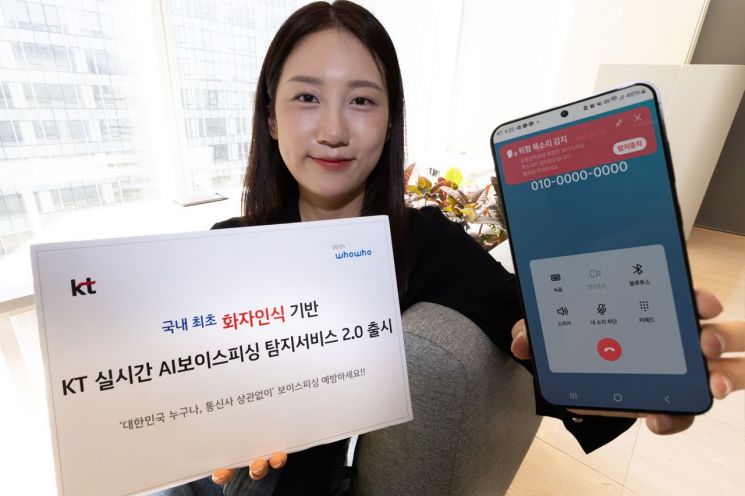
KT announced on July 29 that it will commercialize its enhanced "AI Voice Phishing Detection Service 2.0" starting from July 30. The service is equipped with the ability to recognize the actual voices of criminals and simultaneously detect AI-modified voices (deep voice).
This new service features advanced technology that not only builds on existing context-based detection methods, but also identifies the real voices of voice phishing criminals and detects voices altered by artificial intelligence (AI). KT is commercializing this technology through an ICT regulatory sandbox demonstration project in collaboration with the Personal Information Protection Commission, the Ministry of Science and ICT, and the National Forensic Service.
The speaker recognition function analyzes vocal characteristics based on reported voices of voice phishing criminals, known as "Geunom Moksori," to determine whether a crime is involved. This method is a significant advancement over conventional approaches that focus on financial keywords or sentence structure analysis. The National Forensic Service spent approximately ten months refining voice data for this purpose. This is also the first time the technology has been commercialized following regulatory review and approval by the Personal Information Protection Commission.
KT has also introduced a "deep voice detection" feature that identifies voices altered using AI voice synthesis (TTS) technology. This technology demonstrated its reliability last year through the AI voice authentication service implemented at the National Health Insurance Service customer center.
In the first half of this year, KT analyzed 14.6 million call records, achieving a detection accuracy rate of 91.6% and is estimated to have prevented damages amounting to approximately 71 billion KRW. The detection accuracy rate has increased by 1.3 percentage points compared to the initial phase of the service last year.
KT is also expanding its collaboration with the financial sector. In May, KT signed a memorandum of understanding (MOU) with the Korea Federation of Banks to link voice phishing detection information with the financial institutions' abnormal transaction detection systems (FDS). When AI detects a suspicious call, follow-up measures such as account monitoring and withdrawal blocking are implemented.
Lee Hyunseok, Head of KT's Consumer Business Division (Vice President), said, "With the commercialization of this technology, we will further expand our cooperation with the financial sector to dramatically reduce customer losses."
© The Asia Business Daily(www.asiae.co.kr). All rights reserved.












