Bank of Korea Reports Q2 Foreign Exchange Transaction Trends at Foreign Exchange Banks
Trading Volume Continues to Rise After Extension of Market Hours
Stronger Asian Currencies and New Government Policies in Korea Drive Won's Strength
In the second quarter of this year, the average daily foreign exchange trading volume in South Korea once again reached a record high for any quarter. This result was driven by several factors: the continued increase in trading volume following the extension of foreign exchange market trading hours in July last year; a significant expansion in the volatility of the won-dollar exchange rate; and an increase in foreign investors' trading of domestic securities.
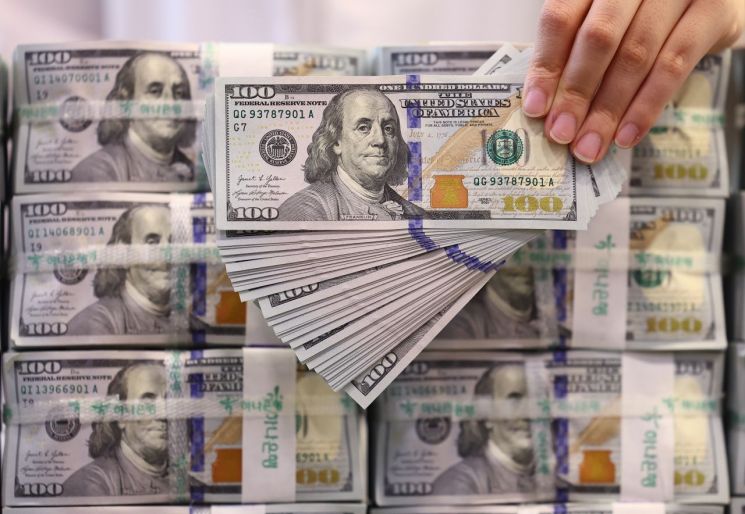
According to the "Trends in Foreign Exchange Transactions by Foreign Exchange Banks in the Second Quarter of 2025" released by the Bank of Korea on July 29, the average daily foreign exchange trading volume (including spot and foreign exchange derivatives transactions) by foreign exchange banks in the second quarter of this year was $82.16 billion. This is an increase of $9.4 billion (12.9%) compared to the previous quarter's $72.76 billion. For the second consecutive quarter, this figure has broken the record since the statistical revision in 2008.
The steady increase in trading volume since the extension of trading hours, as well as a sharp shift in market participants' expectations for the won-dollar exchange rate in the second quarter?from expecting a weaker won to a stronger won due to expectations of a stronger Asian currency and new domestic government policies?led to increased volatility in the won-dollar exchange rate. The average daily volatility of the won-dollar exchange rate in the second quarter was 0.61%, significantly higher than the 0.36% recorded in the first quarter. The average daily won-dollar exchange rate in the second quarter was 1,401 won, down from 1,453 won in the first quarter. As a result, foreign investors' trading of domestic securities also increased. In the second quarter (April to May), the monthly average trading volume of domestic listed stocks and bonds by foreigners was 238 trillion won, up from 223 trillion won in the previous quarter.
By product in the second quarter, spot trading volume was $32.77 billion, up $4.82 billion (17.3%) from the previous quarter. The trading volume of foreign exchange derivatives was $49.39 billion, an increase of $4.58 billion (10.2%) from the previous quarter. By bank type, domestic banks' trading volume was $37.27 billion, up $4.73 billion (14.5%) from the previous quarter, while the trading volume at foreign bank branches was $44.89 billion, up $4.67 billion (11.6%) from the previous quarter.
The average daily trading volume of foreign exchange derivatives was $49.39 billion, an increase of $4.58 billion (10.2%) from the previous quarter. Forward trading ($15.39 billion) increased by $1.98 billion (14.8%) from the previous quarter, mainly due to growth in non-deliverable forward (NDF) trading ($1.67 billion). Foreign exchange swap trading ($32.29 billion) increased by $2.36 billion (7.9%) from the previous quarter, as both interbank transactions among foreign exchange banks ($950 million) and transactions with non-residents ($890 million) increased.
© The Asia Business Daily(www.asiae.co.kr). All rights reserved.












