Impact Reduced as Auto Tariff Cut to 15% Considered a Relief
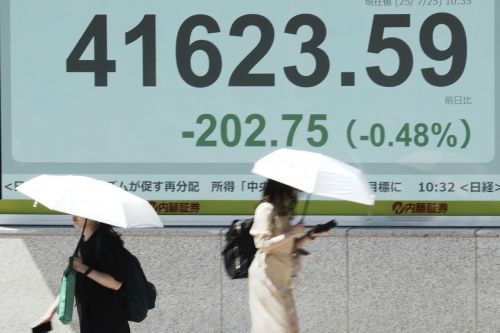
Japanese economic experts have analyzed that the results of the US-Japan trade negotiations will deal a direct blow to Japan's Gross Domestic Product (GDP). Despite positive reviews that the reduction of mutual tariffs from the previous 25% to 15% was a 'good defense', they say negative impacts are unavoidable.
According to NHK Japan on July 25, Kugo Shotaro, chief economist at Daiwa Institute of Research, stated, "These tariffs could reduce Japan's real GDP by 0.6% this year," and predicted, "The impact will grow over time, with the decline possibly expanding to as much as 3.2% by 2029."
Kiuchi Takahide, chief economist at Nomura Research Institute, analyzed that Japan's GDP will decrease by 0.55% over the next year. He also warned, "America's 'America first' policy is increasing the risk for Japanese companies investing in the US," and "Some companies may reconsider their investment plans in the United States."
Kento Minami, economist at Daiwa Securities, said, "The 15% mutual tariff, along with the existing 50% tariffs on steel and aluminum, and 12.5% tariffs on automobiles, pharmaceuticals, and semiconductors, could contribute to a 0.6 percentage point decline in real GDP." He added, "If the tariff on the automotive sector had remained at 25%, the decline could have reached up to 1.1 percentage points. With this agreement, the GDP shock has been reduced to about half."
Such forecasts stem from concerns about the macroeconomic soundness of the Japanese economy. The International Monetary Fund (IMF) suggested on this day that if Japan implements economic stimulus measures, support should be provided temporarily and only to vulnerable groups.
According to Trading Economics, Japan's government debt-to-GDP ratio in 2024 was 237%, which is considered high. This is overwhelmingly higher than Greece (151%) in second place, Italy (135%) in third, and the United States (121%) in fourth.
In Japan, there is a possibility that strong economic stimulus measures may be introduced for political reasons. On July 20, after the ruling Liberal Democratic Party suffered a crushing defeat in the House of Councillors (upper house) election, populist stimulus measures and opposition-led consumption tax cut policies are gaining traction.
Julie Kozack, IMF spokesperson, said at a briefing that day, in response to questions about the fiscal stimulus pledges made by various parties during the House of Councillors election, "We assess that Japan remains in a position with limited fiscal space due to high public debt and the need for future spending related to an aging population." She added, "Generalized subsidies and tax cuts should be avoided," explaining, "This is not an efficient way to use limited fiscal resources."
© The Asia Business Daily(www.asiae.co.kr). All rights reserved.












