Third High-Level Talks on July 28-29
Nvidia Chips Smuggled into China Worth $1 Billion Despite Export Controls
Lutnick Pressures for Approval of TikTok Stake Sale
As the third high-level US-China trade talks are set to take place in Stockholm, Sweden on July 28-29, Nvidia’s artificial intelligence (AI) chips and the Chinese-owned video platform TikTok have emerged as key issues. There are growing expectations that the recent incidents involving the illegal export of Nvidia chips to China and the pressure on TikTok to sell its stake could become strategic negotiation topics that go beyond discussions of simple trade barriers or tariffs, touching on technological supremacy and data security.
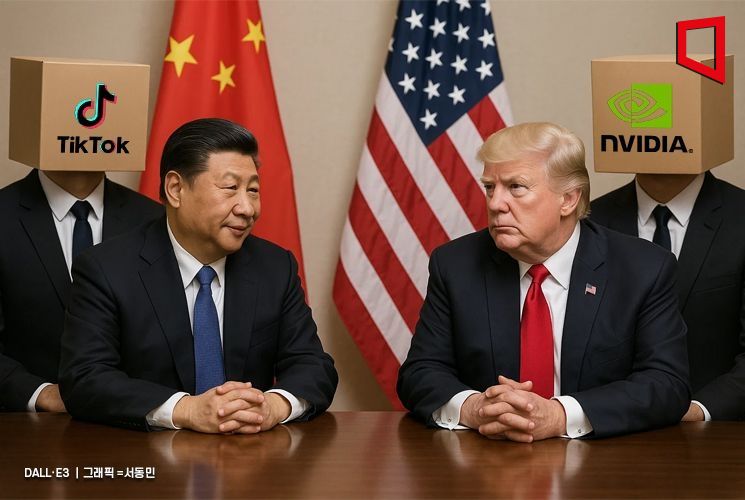
The Financial Times (FT) reported on July 24 (local time) that at least $1 billion worth of Nvidia AI chips had been smuggled into China over the past three months since US export controls were tightened. According to the report, Chinese distributors began supplying the latest B200 chips, which are subject to the US export ban, to data centers collaborating with Chinese AI companies starting in May. The B200 is Nvidia’s latest AI chip based on the Blackwell architecture, and it outperforms the H20, a lower-spec model intended for export to China. Earlier, the US Department of Commerce banned the export of H20 chips to China in April this year, but the Trump administration abruptly lifted this ban and allowed the issuance of export licenses this month.
These smuggling cases highlight loopholes in the US technology control system and suggest the possibility of policy discussions aimed at further tightening controls. The South China Morning Post (SCMP) reported that "the US Department of Commerce is considering introducing a 'location verification' feature for AI chips to monitor their whereabouts after export."
The TikTok issue is also likely to be raised at the negotiating table. US Secretary of Commerce Howard Lutnick, in an interview with CNBC, responded "Yes and no" when asked whether TikTok would be part of the trade negotiations. Secretary Lutnick warned that if the Chinese government does not approve the sale of ByteDance’s stake, TikTok’s parent company, the application could be suspended in the United States.
In April last year, the US Congress passed the "TikTok Ban Act" citing national security concerns, putting TikTok’s US operations at risk of being suspended unless its Chinese parent company, ByteDance, sold its US business to an American company. The original deadline for the sale was January 19 this year, but President Trump extended it three times by 90 days each, pushing the deadline back to September 17.
TikTok stands at the center of the US-China technology conflict. This is not simply a matter of a social networking service (SNS) platform, but an issue that combines national security, data sovereignty, technological supremacy, and political symbolism. This is why President Trump is directly involved in the sale negotiations. Reuters recently reported that "the debate over TikTok’s fate is part of broader trade negotiations between President Trump and China."
With the Trump administration moving to use the Nvidia chip smuggling incident and pressure for TikTok’s stake sale as bargaining chips, there is a possibility that the upcoming Stockholm talks will see a negotiation phase where technology regulation and trade negotiations become intertwined. In fact, the Trump administration previously employed a strategy of linking technology negotiations to the approval of AI chip exports during the first and second rounds of US-China trade talks. The FT reported that "Trump’s suspension and subsequent approval of H20 exports was a negotiating leverage card."
© The Asia Business Daily(www.asiae.co.kr). All rights reserved.












