'Practical Spending' Trends with Consumption Coupons Amid High Inflation
Convenience Stores See Surge in Meat and Ready-to-Eat Meal Sales
On July 22, when the government's livelihood recovery consumption coupons began to be distributed, sales of meat and ready-to-eat meals at convenience stores saw a significant increase. Analysts attribute this to two main factors: first, consumers, feeling the burden of rapidly rising restaurant prices, turned to more practical spending options; and second, the retail industry's advance deployment of discount and giveaway promotions proved highly effective.
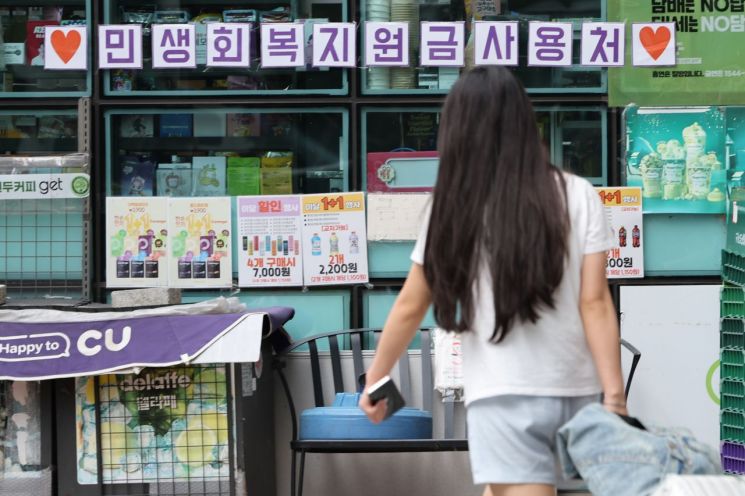 On the 13th, a notice about the use of livelihood recovery consumption coupons posted at a convenience store in Seoul. Photo by Yonhap News
According to GS Retail, which operates GS25 convenience stores, on July 22, sales of domestic beef at GS25 surged by 178.4% compared to the same day of the previous month (June 24). Other fresh meats such as chicken (134.1%) and domestic pork (118.5%) also ranked high in sales growth, followed by kimchi (104.9%), sauces and condiments (79.4%), and domestic fruits (60.3%). In particular, when compared to the same day of the previous week (July 15), sales of chicken and domestic beef skyrocketed by 229.9% and 136.3%, respectively, indicating that the effect of the consumption coupons was immediately reflected in sales.
At CU, a convenience store chain operated by BGF Retail, sales in the ready-to-eat meals category, including lunch boxes (23.1%), gimbap (35.8%), and sandwiches (29.7%), increased by 23.8% compared to June 24. Sales of bagged ramen (19.5%) and cup ramen (12.3%) rose by 13.9%, while processed foods such as instant rice (10.6%), health foods (31.7%), and home meal replacements (HMR, 19.6%) also saw double-digit growth. Seven-Eleven reported that during the same period, sales of ice increased by 70%, while pouch beverages (60%), ice cream (60%), instant foods (40%), and beer (30%) also sold well.
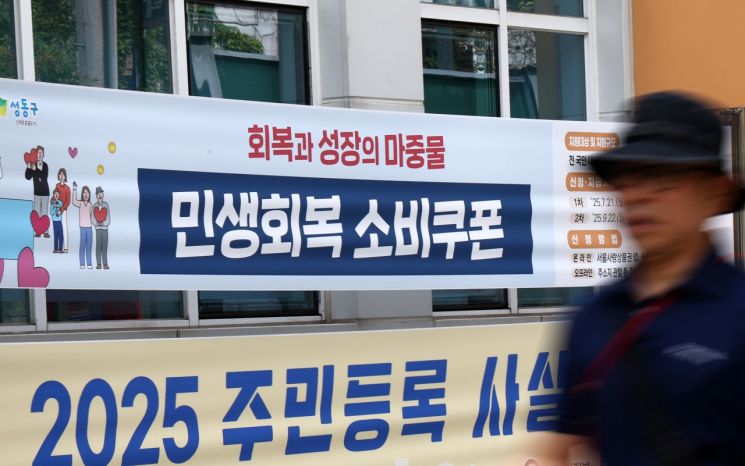 On the 20th, a banner related to livelihood recovery consumption coupons was hung at a community center in Seongdong-gu, Seoul. Photo by Yonhap News
The industry commonly analyzed that "practical spending" focused on food and daily necessities stood out. Consumers concentrated their spending on value-for-money food items such as fresh meat and ready-to-eat meals due to the increased burden of dining out, while the industry’s strategic response?deploying discount promotions like buy-one-get-one-free in advance for popular items based on analysis of disaster relief fund distribution patterns during COVID-19?was also effective. Some interpret this trend as evidence that convenience stores are firmly establishing themselves as alternative dining options. Experts noted, "In urban areas with a high proportion of single-person households and dual-income families, convenience stores are becoming a practical dining alternative."
The increase in sales was most pronounced in residential areas. According to GS Retail, excluding tourist destinations?where seasonal factors such as vacation periods make direct comparisons difficult?the highest sales growth rates were seen in residential commercial districts. This appears to be the result of consumption coupons being restricted for use within one's residential area, leading to increased spending at convenience stores near people's homes.
However, since this surge in sales was concentrated on the first day the consumption coupons were distributed, it remains to be seen whether it will translate into a sustained boost in consumption over the coming days. The industry expects that with the upcoming weekend, the use of consumption coupons will become more widespread, and sales of related items will rise again.
© The Asia Business Daily(www.asiae.co.kr). All rights reserved.













