"Indiscriminate Spread of AI Videos
Could Undermine Community Trust"
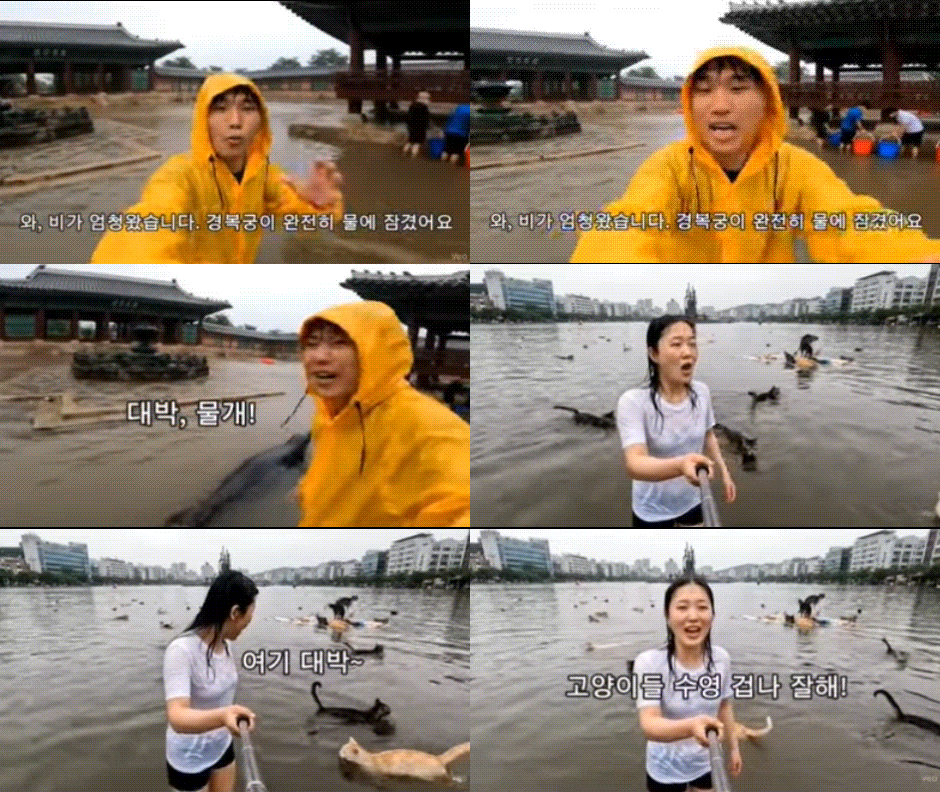
"Wow, it rained incredibly hard. Gyeongbokgung Palace is completely submerged."
A man wearing a yellow raincoat is walking around inside a flooded Gyeongbokgung Palace, holding a selfie stick. He reports on the torrential rain disaster in downtown Seoul, saying, "Gyeongbokgung Palace is completely underwater."
Behind the man, another person can be seen scooping water with a plastic bucket. Suddenly, a 'seal' appears in the flooded Gyeongbokgung Palace. The man exclaims in surprise, "Amazing, it's a seal!"
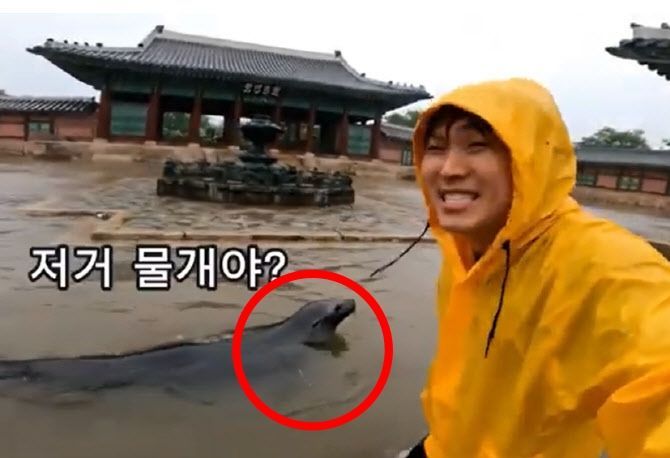
However, this video is not real; it is a fake video generated by artificial intelligence (AI).
On the 21st, Yonhap News reported, "Recently, when searching for keywords such as 'rainy season' or 'heavy rain' on video platforms like YouTube, numerous vivid disaster videos set in flooded city centers can be found," and covered the issue of AI-generated fake videos. These fake videos include scenes such as live broadcasts from flooded subway stations where water reaches chest level or from inundated Gangnam Station. Online users commented that "it looks real," but also noted that "the situation itself feels obviously fake."
It is known that the video was produced using Google's video-generating AI 'Veo3,' which launched its service in May. With Veo3, which even supports voice generation, anyone can easily create short, high-quality videos simply by paying a subscription fee. In just two months, more than 40 million videos have reportedly been created using Veo3.
Such AI-generated videos are also being used in broadcast production. Recently, MBC attracted attention by using AI videos to depict scenes that are difficult to reenact, such as 'spacewalks' or the 'Mona Lisa theft,' in its 'Surprise' program. The use of AI videos is also increasing in broadcast trailers, advertising mockups, and similar applications.
However, cases of AI videos being misused for criminal purposes are also on the rise. In particular, 'deepfake' videos, which synthesize real people's likenesses, are being used in voice phishing and romance scams. According to the Korea Institute of Criminology and Justice, the number of police reports related to deepfakes surged from 156 cases in 2021 to 964 cases last year. This upward trend is continuing in 2025 as well.
Experts warn that AI video technology could trigger social distrust and conflict. Ko Samsuk, a distinguished professor at Dongguk University's College of AI Convergence, warned, "The indiscriminate spread of AI videos can undermine community trust."
However, legal and institutional measures remain insufficient. The Basic AI Act, scheduled to take effect on January 22 next year, mandates watermarking for generative AI content, but there is controversy over its effectiveness since watermarks can be removed.
© The Asia Business Daily(www.asiae.co.kr). All rights reserved.













