"With the current disaster response measures, we cannot prevent loss of life and property. We need to completely overhaul our disaster response system."
Governor Park Wansu of Gyeongnam made these remarks at a department and headquarters chiefs' meeting held on the morning of July 21, referring to the damage caused by the heavy rain that had continued over the past four days.
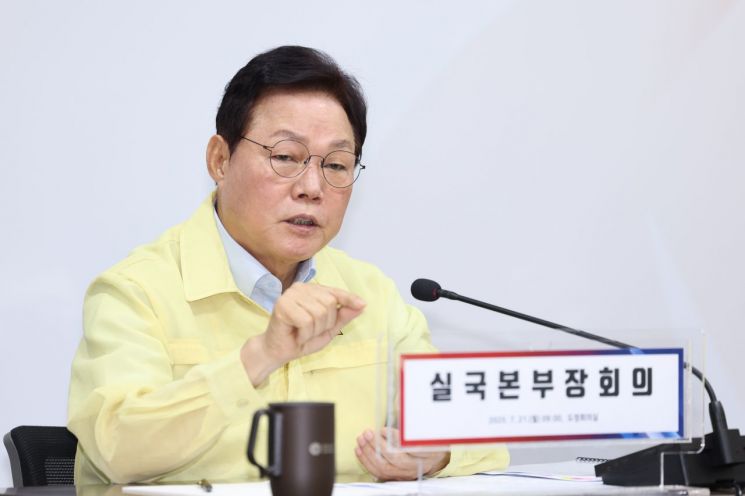
Governor Park stated, "This torrential rain was an extreme rainfall event concentrated over a short period," adding, "A total of 798mm fell in just four days, which is nearly half of the region's annual rainfall."
He emphasized, "In particular, it is unprecedented for so much rain to be concentrated in Sancheong-eup as it was this time," and instructed, "We must fundamentally change our disaster response methods in accordance with climate change."
He also pointed out, "Unpredictable damage is occurring, such as soil from mountains covering villages even in areas not previously designated as landslide risk zones," stressing, "We need a new response system that considers these extreme situations."
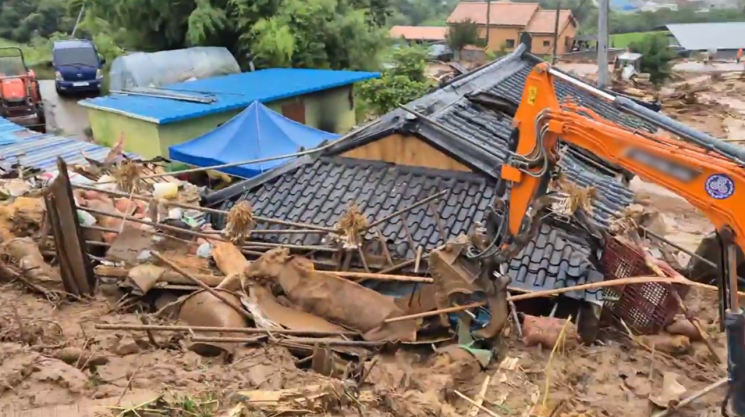 In Buri Village, Sancheong-eup, Sancheong County, Gyeongnam, soil washed out by heavy rain covered houses. Video provided by Gyeongnam Fire Headquarters.
Governor Park then expressed his condolences to residents who lost family members and friends in the floods, as well as to those who lost their homes, and instructed all provincial resources to be mobilized for the search for missing persons and emergency restoration efforts.
He said, "Families are waiting anxiously for the missing," and ordered, "Mobilize all available resources, centered on the Fire Headquarters, to complete the search as quickly as possible." He also called for simultaneous efforts to provide relief to disaster victims and restore public facilities.
"Restoration of agricultural facilities, livestock barns, and greenhouses should also proceed swiftly in parallel with quarantine measures. If necessary, request military equipment to quickly restore key infrastructure such as roads and rivers," he added.
He also stressed the urgency of restoring electricity, water supply, and mobile communications, which are directly linked to residents' daily lives.
Governor Park said, "When the power is out, washing and cleaning become impossible. With communications also down, residents are experiencing extreme inconvenience," and instructed, "Work closely with relevant departments and telecommunications companies to restore services as soon as possible."
He further urged, "The administration and disaster headquarters must work organically together to efficiently mobilize administrative organizations and personnel, and provide timely situation updates to residents."
He also said, "City and county officials should not just sit in their offices giving orders, but must personally inspect affected sites and thoroughly ensure resident evacuation and safety measures."
Finally, he stated, "What is even more concerning than the current damage is the possibility of secondary damage. Complete emergency restoration as quickly as possible by requesting cooperation from other city and county personnel and volunteers in preparation for typhoons and additional heavy rain," adding, "Let us do our utmost to protect the lives and property of residents even amid these extreme weather events."
© The Asia Business Daily(www.asiae.co.kr). All rights reserved.













