Two Missing in Gwangju: Search Resumes for Men in Their 80s and 70s
383 Residents Evacuated, 952 Flood Damage Reports
Jeollanam-do: 4,750 Hectares of Crops and 185,000 Livestock Lost
Underpasses Reopen... Partial Suspension of Rail and Air Transport
KMA: "Up to 200mm More Rain Expected... Beware of Secondary Damage"
In Gwangju and Jeollanam-do, up to 480mm of torrential rain fell over three days, leaving two people missing and forcing 383 residents to evacuate. The heavy rain caused widespread damage, affecting underpasses, roads, farmland, livestock facilities, and even cultural heritage sites.
In Gwangju, on July 17, an elderly man in his 80s near Sinan Bridge in Buk-gu and another man in his 70s in Geumgok-dong were swept away by strong currents and went missing. Police and fire authorities, who had temporarily suspended the search due to worsening weather conditions, resumed their efforts on July 19. Due to concerns over flooding and inundation, 33 people in Dong-gu, 36 in Seo-gu, 5 in Nam-gu, 132 in Buk-gu, and 177 in Gwangsan-gu?a total of 383 people?evacuated to gyms and other shelters.
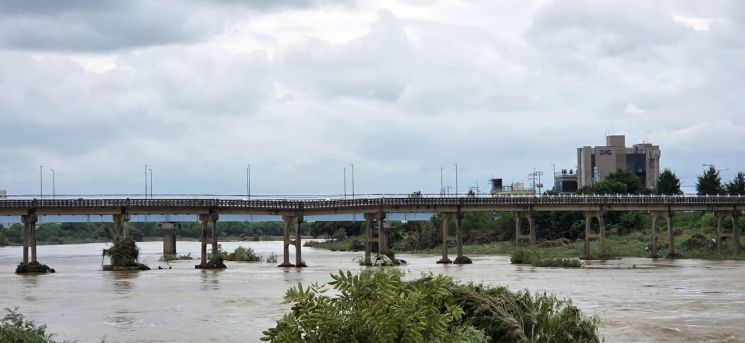 On the afternoon of the 18th, the old Sandonggyo Bridge in Dongnim-dong, Buk-gu, Gwangju was damaged due to extreme heavy rain the previous day. Photo by Min Chanki
The material damage was also significant. Across Gwangju, a total of 952 incidents were reported, including one case of subway station flooding, 303 cases of road flooding, 254 cases of building flooding, 141 cases of poor drainage, and 52 cases of vehicle flooding. Access to some riverside roads and parking lots remains restricted.
Most underpasses have reopened to traffic. On July 18, Gwangju City restored access to the Nongseong, Sinyong, Jangsu, and Wooseok underpasses, and on the morning of July 19, traffic returned to normal at the Jukrim and Yongjeon underpasses as well. Of the 102 city bus routes, 95 are operating normally while 7 are on detour. The subway is running normally across all sections.
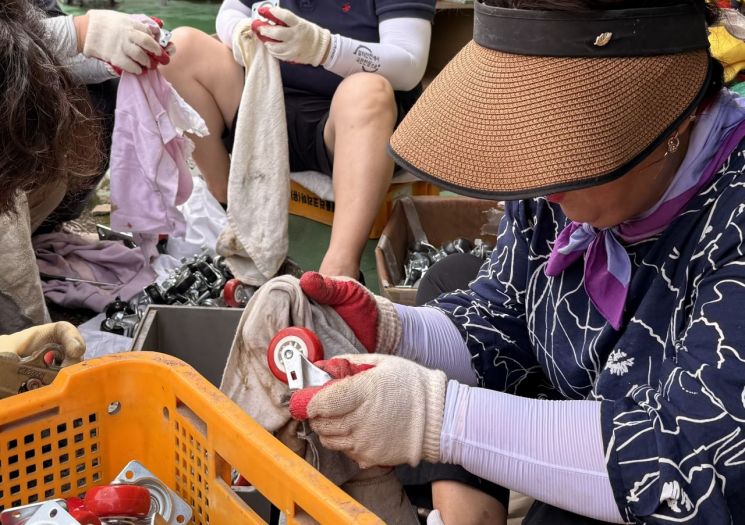 On the morning of the 18th, merchants are wiping wet items due to flooding at Gonggu Street in Buk-gu, Gwangju. Photo by Yonhap News
Rail and air transportation have experienced some disruptions. Since the afternoon of July 17, KTX and SRT services have been suspended on the Gwangju Songjeong?Naju?Mokpo section, and all regular trains, including the Mugunghwa-ho, have stopped running on the Honam Line. Some flights resumed from the afternoon of July 18, but as of the morning of July 19, flights on the Gimpo and Jeju routes continued to experience delays of 5 to 30 minutes.
Damage is also spreading in Jeollanam-do. A total of 4,750 hectares of crops?including rice (4,061ha), soybeans (310ha), fruit trees (103ha), and greenhouse horticulture (268ha)?were flooded or lost, and 17.7 hectares of farmland were washed away. Livestock losses include 107,000 ducks, 77,000 broiler chickens, 500 pigs, and one Korean native cattle, totaling 185,000 animals. Six aquaculture farms were also affected.
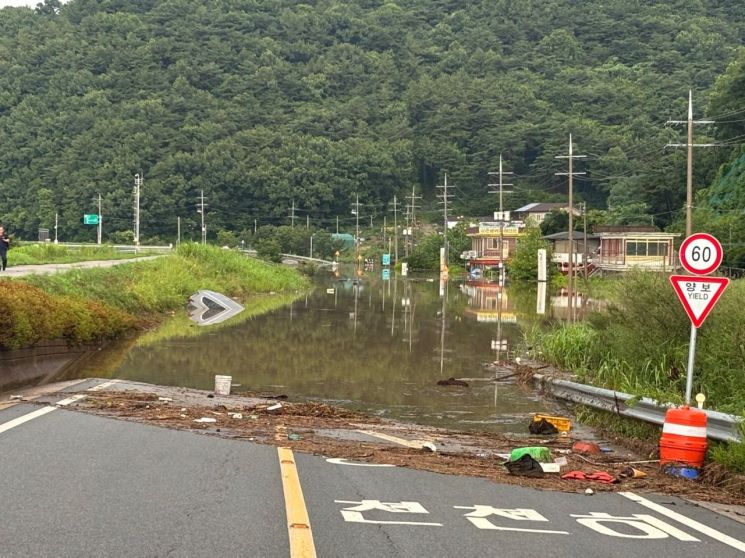 On the morning of the 18th, the second day of the heavy rain advisory, a road in Dasi-myeon, Naju City, Jeollanam-do, was submerged in rainwater. Photo by Yonhap News
Flooding affected 469 homes and shops, as well as public facilities such as Damyang Sports Complex, Dambit Swimming Pool, and Yeongam Sijong Gateball Stadium. Water supply systems in Damyang and Yeonggwang, and three cultural heritage sites including Soswaewon and Gosanseowon, also suffered damage. The Korea Meteorological Administration warned that up to an additional 200mm of rain could fall by the afternoon of July 19, urging the public to take special precautions against secondary damage caused by strong rain accompanied by gusty winds, thunder, and lightning.
© The Asia Business Daily(www.asiae.co.kr). All rights reserved.













