U.S. President Donald Trump recently sent a letter to South Korea specifying a 25% reciprocal tariff rate, prompting American consumers concerned about price hikes to begin bulk-buying Korean cosmetics, the New York Times (NYT) reported on the 17th (local time).
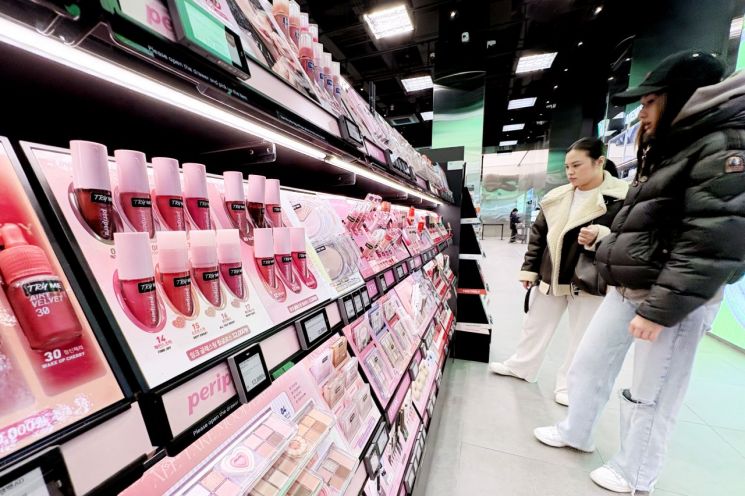
Esther Lee, a 32-year-old Korean American living in Los Angeles, California, recently purchased a year's supply of Korean cosmetics online. After adding several eyeliners and sunscreens to her cart, the total reached several hundred dollars?three times her usual purchase amount.
Korean products make up 80% of the cosmetics Lee uses. She said that if tariffs are actually imposed and prices rise, she plans to buy in bulk when she visits Korea or ask friends traveling there to bring products back for her.
An American influencer with 500,000 followers posted a video on TikTok unboxing a large haul of Korean cosmetics, saying, "The future is uncertain, but one thing is for sure: I don't want to lose my favorite Korean beauty products."
This 'K-beauty stockpiling' began in April. After President Trump announced plans to impose a 25% reciprocal tariff on South Korea, American fans of Korean cosmetics started to take action. Although President Trump granted a 90-day postponement at the time, the stockpiling boom has continued as he recently sent another letter to South Korea specifying the 25% reciprocal tariff rate.
Americans cite 'value for money' as the main competitive edge of Korean cosmetics. Many Korean products are not only affordable but also offer superior qualities such as less smudging, minimal skin irritation, and better absorption, making them highly competitive.
Liah Yoo, a 36-year-old content creator who runs a K-beauty brand based in the U.S., told the NYT, "Tariffs will generally have a huge impact on the beauty industry," adding that she will be watching how the situation unfolds over the next six months. She pointed out that the greatest strength of Korean cosmetics is their reasonable pricing, and said that Korean brands, which have focused on price competitiveness, are likely to be hit hard.
Rob Handfield, a professor at North Carolina State University, said, "Some Americans are taking action ahead of the tariffs," and noted that it seems unlikely that South Korea and Japan will reach an agreement with the U.S. before August 1.
© The Asia Business Daily(www.asiae.co.kr). All rights reserved.












