Democratic Party Activity Expected to Accelerate After August 2 National Convention
Many Democratic Party Candidates, Potential for Future Realignment
Incumbent People Power Party Leaders Likely to Seek Re-election
Behind-the-scenes maneuvering is intensifying ahead of next year’s June 3 local elections. This trend is especially pronounced within the Democratic Party, which won the recent presidential election, in contrast to the People Power Party, which has yet to find its footing. The fact that the election will be held just one year into the new administration is seen as advantageous for the ruling party. It is also regarded as an opportunity to secure local power following legislative and executive control, especially as the influence of metropolitan mayors and governors continues to grow. As a result, more candidates are emerging, and internal competition is fierce. Given that President Lee Jaemyung’s influence remains strong, the outcome could shift depending on how the campaign narrative is framed. Currently, among the 17 metropolitan mayors and governors, the People Power Party holds 11 positions, while the Democratic Party controls 5.
For politicians, the position of metropolitan mayor or governor-endowed with budgetary, personnel, and policy execution authority-represents an attractive opportunity to achieve tangible results. While most potential candidates are currently operating quietly behind the scenes, it is expected that activity among local election hopefuls will accelerate after the Democratic Party’s August 2 national convention. For the People Power Party, most incumbent metropolitan leaders are likely to seek re-election.
Local Elections Held Around the First Year of a New Administration Favor the Ruling Party
Looking at the results of past local elections, the ruling party has won every time the elections were held around the first year of a new administration: the 2nd local elections under Kim Daejung, the 7th under Moon Jaein, and the 8th under Yoon Sukyeol. This is likely because the government can push forward with various reforms and public expectations are high, creating a favorable environment for the ruling party. Next year’s local elections will also be held just one year into President Lee’s term, so the basic outlook is advantageous for the ruling party. Furthermore, compared to the 2022 presidential election (47.83%), President Lee Jaemyung secured a higher vote share in this year’s election (49.42%). We take a closer look at expected candidates for the local elections, focusing on Seoul, Gyeonggi Province, and Busan.
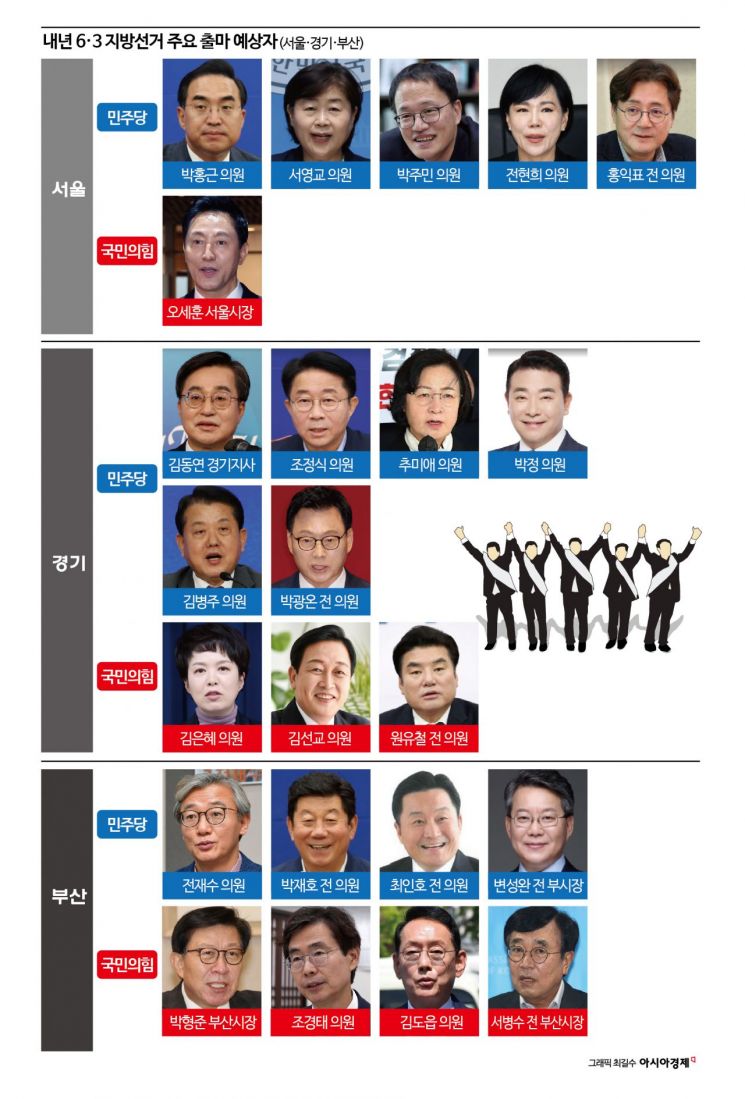
Seoul is drawing particular attention. The Democratic Party lost both the 2021 by-elections and the 2022 Seoul mayoral race. In the recent presidential election, President Lee received 47.13% of the vote in Seoul, leading Kim Moonsu of the People Power Party (41.55%) by 5.58 percentage points. This is a 1.4 percentage point increase from the 2022 presidential election (45.73%). However, there is a key factor to consider: Lee Junseok of the Reform Party, who came in third, garnered 9.94% of the vote in Seoul. If you add Kim Moonsu’s share, the combined total exceeds half at 51.49%. If next year’s local election becomes a one-on-one contest, it suggests a tough battle for both parties.
Oh Sehoon on High Alert: Restructuring His Political Team and Emphasizing Conservative Unity
This is why, at a recent dinner with Seoul’s People Power Party district leaders, Mayor Oh Sehoon remarked that “the People Power Party should merge with the Reform Party, and Lee Junseok should participate in the People Power Party convention.” The presidential election results give Mayor Oh substantial reason for concern. He appears to believe that a three-way race among the Democratic Party, People Power Party, and the Reform Party would spell certain defeat. His recent moves-such as creating a new Chief Secretary for Housing and Real Estate Policy and bringing his close aide Kang Cheolwon, former Deputy Mayor for Political Affairs, back as Seoul Brand Director-are signs that he has already begun preparing for a third term in the upcoming local elections.
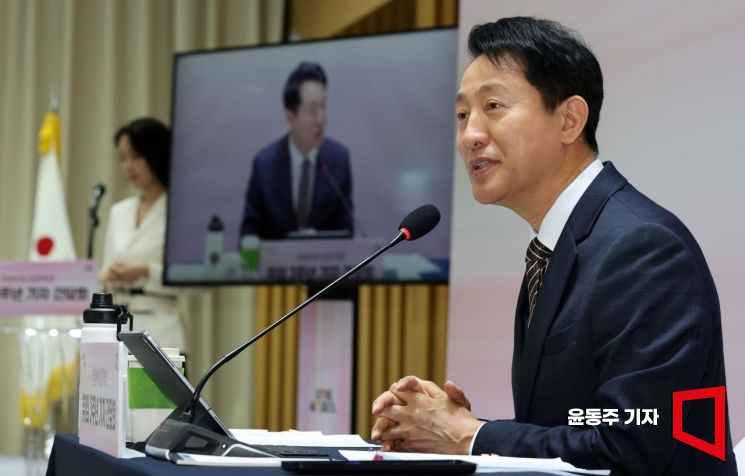 Seoul Mayor Oh Sehoon is holding a press conference on the 3rd anniversary of his inauguration at Seoul City Hall on July 16.
Within the Democratic Party, the list of potential candidates includes Park Honggeun (Jungnang-gu Eul, four-term), Seo Youngkyo (Jungnang-gu Gap, four-term), Park Joomin (Eunpyeong-gu Gap, three-term), Jeon Hyunhee (Jung-gu Seongdong-gu Gap, three-term), former lawmaker Hong Ikpyo (Seocho-gu Eul, three-term), and Jung Wonoh, Mayor of Seongdong-gu. Park Honggeun, who previously served as floor leader and currently leads the government reorganization task force as Planning Division Head of the National Policy Planning Committee, is quietly warming up behind the scenes and is expected to jump in once his committee work concludes. Park Joomin, who managed Seoul operations during the last presidential campaign, stated on CBS Radio’s “Park Jaehong’s Hanpan Seungbu” that he is “seriously considering running for Seoul mayor.” He had entered the Democratic Party’s primary for Seoul mayor in the June 1, 2022 local elections but withdrew midway. Former floor leader Hong Ikpyo revealed on Asia Economy’s AK Radio on July 4 that he is preparing various policies related to a Seoul mayoral run and plans to hold a book launch event around November. Hong is actively meeting people and ramping up preparations.
Depending on the Political Climate and Public Opinion, Prime Minister Kim Minseok May Enter the Race
However, voices within the ruling bloc question whether these candidates can truly compete with Mayor Oh Sehoon, citing their lower political stature and name recognition. This opens the door for a “third figure” to potentially enter the race. In this context, Prime Minister Kim Minseok is drawing attention. Depending on the political climate and public opinion, there remains a possibility that Prime Minister Kim could run. For the ruling party, which is aiming for a landslide victory in next year’s local elections, winning Seoul is crucial, so all options are on the table.
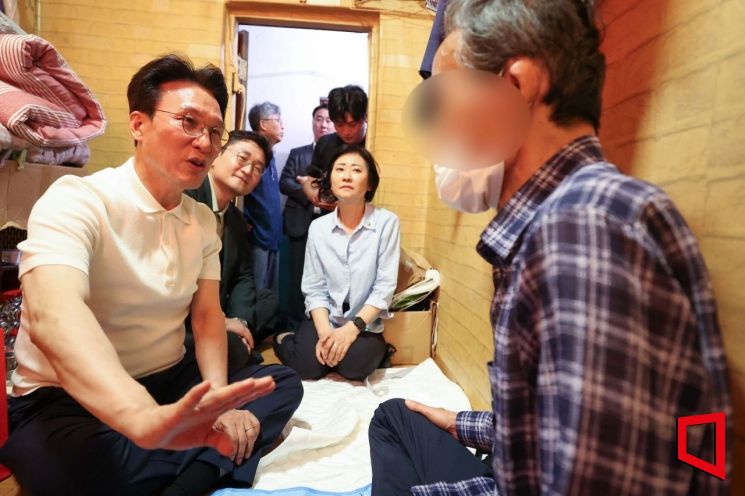 Prime Minister Minseok Kim is visiting the Donggu slum area in Daejeon City on the 9th, engaging in conversation with residents. Photo by Office of the Prime Minister
In the last presidential election, President Lee Jaemyung led Kim Moonsu by 1.31 million votes in Gyeonggi Province. With the Democratic Party’s advantage in the region clear, competition for the party’s nomination for Gyeonggi governor is fierce. Incumbent Governor Kim Dongyeon, who is seeking re-election, is under significant pressure. Although he is the only Democratic metropolitan leader in the Seoul metropolitan area, challenges are emerging from all sides-an unusual phenomenon. As a result of the primary fallout from the presidential race, hardline supporters are attacking him with a “traitor” narrative, threatening his political standing. The policy roundtable held by Gyeonggi Province and the Democratic Party at the National Assembly on July 14 to discuss incorporating the “100 Key National Tasks of the Lee Jaemyung Administration” is a telling sign of his worries. Governor Kim, emphasizing the importance of the “success of the Lee Jaemyung administration,” even skipped holding a press conference for his third anniversary in office.
Kim Dongyeon Deep in Thought, Choo Mi-ae Firmly Decides to Run
Meanwhile, Choo Mi-ae (Hanam-si Gap, six-term) is reported to have firmly decided to run for Gyeonggi governor. She is currently gathering aides and holding strategy meetings. After the August 2 national convention, she is expected to tour regions across Gyeonggi, outlining her vision through a series of lectures tailored to local communities and professional groups. Having lost the National Assembly Speaker race to Woo Wonshik, Choo appears to be seeking political expansion by running for governor. Jo Jungshik (Siheung-si Eul, six-term), known as a close confidant of President Lee, is also attracting attention. Having run for Gyeonggi governor in the June 1, 2022 local elections, he is reportedly weighing whether to declare his candidacy again or aim for the National Assembly Speaker position in the second half of the year.
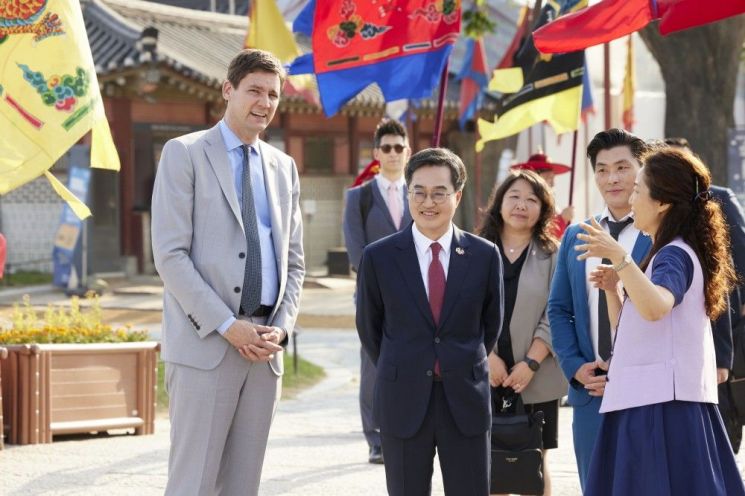 Gyeonggi Province Governor Dongyeon Kim met with David Eby, Premier of British Columbia (BC), Canada, a sister city, on the 9th to discuss economic cooperation measures. Photo by Yonhap News
Other names being mentioned include Kim Byungjoo (Namyangju-si Eul, two-term), a former four-star general known for his presence during the “martial law” period; Park Jung (Paju-si Eul, three-term), who has served as Gyeonggi Provincial Party Chair and has long prepared to run for governor; Yeom Taeyoung (Suwon-si Mu, first-term); Lee Eonju (Yongin-si Jeong, three-term); Han Junho (Goyang-si Eul, first-term); and former floor leader Park Kwangon (Suwon-si Jeong, three-term), considered a leading figure among non-mainstream party members. On the People Power Party side, Kim Eunhye (Seongnam-si Bundang-gu Eul, two-term), Kim Seongkyo (Yeoju-si Yangpyeong-gun, two-term), and former lawmaker Won Yoochul (Pyeongtaek-si Gap, five-term) are being discussed.
Park Hyungjun Focuses on Promoting Achievements, Jeon Jaesoo Focuses on Building a Track Record
In the last presidential election, President Lee secured 40.1% of the vote in Busan, becoming the first Democratic candidate to surpass 40% in the region. He is accelerating his strategy, including ordering the Ministry of Oceans and Fisheries to relocate to Busan by the end of the year. Park Hyungjun, the People Power Party mayor aiming for a third term, is working hard to publicize policy achievements such as the enactment of the “Special Act for the Creation of Busan as a Global Hub City” and the relocation of the Korea Development Bank headquarters to Busan. His main rivals include lawmakers Cho Kyungtae (Saha Eul), Kim Doeup (Gangseo), Park Sooyoung (Nam), and former Busan Mayor Suh Byungsoo.
Within the Democratic Party, Jeon Jaesoo (Buk-gu Gap, three-term), the nominee for Minister of Oceans and Fisheries, is drawing the most attention. As the only incumbent Democratic lawmaker in Busan and the nominee for Minister of Oceans and Fisheries, he has raised his political profile. At his confirmation hearing on July 14, he emphasized, “I will establish a base for the era of the Arctic shipping route. As a first step, I will ensure the smooth relocation of the Ministry of Oceans and Fisheries to Busan and attract key maritime organizations and major shipping companies.” There is a strong possibility that he will run, leveraging the “relocation of the Ministry of Oceans and Fisheries to Busan” as a key achievement.
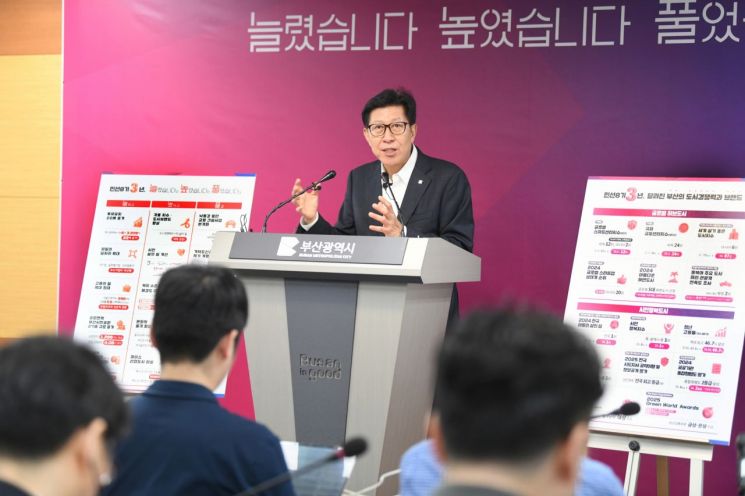 Busan Mayor Park Hyungjun held a press conference on the 3rd anniversary of his inauguration at Busan City Hall on the 1st. Photo by Yonhap News
Former lawmaker Park Jaeho (Nam-gu Eul, two-term), who served as the neighborhood campaign chair for Busan during the presidential election, is also making moves. Choi Inho (Saha Gap, two-term), former standing campaign chair for Busan, has also expressed his determination to run for mayor, saying he is “ready to enter the Busan mayoral race.” Other names being mentioned include Lee Jaeseong (Saha-gu Eul), former director at NCSoft and current Busan party chair; Byun Sungwan (Gangseo), former Busan Deputy Mayor for Administration. Some in the Democratic Party are also floating the name of former Justice Minister Cho Kuk, suggesting that, if pardoned, he could be a heavyweight contender against Mayor Park Hyungjun.
© The Asia Business Daily(www.asiae.co.kr). All rights reserved.














