Mention of Pre-feasibility Study System Reform
in Written Response for Confirmation Hearing
Reform to Support Super-Innovative Economy, Low Birth Rate, and Prevention of Regional Extinction Announced
Koo Yoonchul, the nominee for Deputy Prime Minister and Minister of Economy and Finance, has officially raised the need for a comprehensive overhaul of the preliminary feasibility study (pre-feasibility study) system. He envisions shifting the pre-feasibility study away from its traditional focus on economic efficiency toward aligning it with national priorities such as a super-innovative economy, low birth rates, regional extinction, and balanced development.
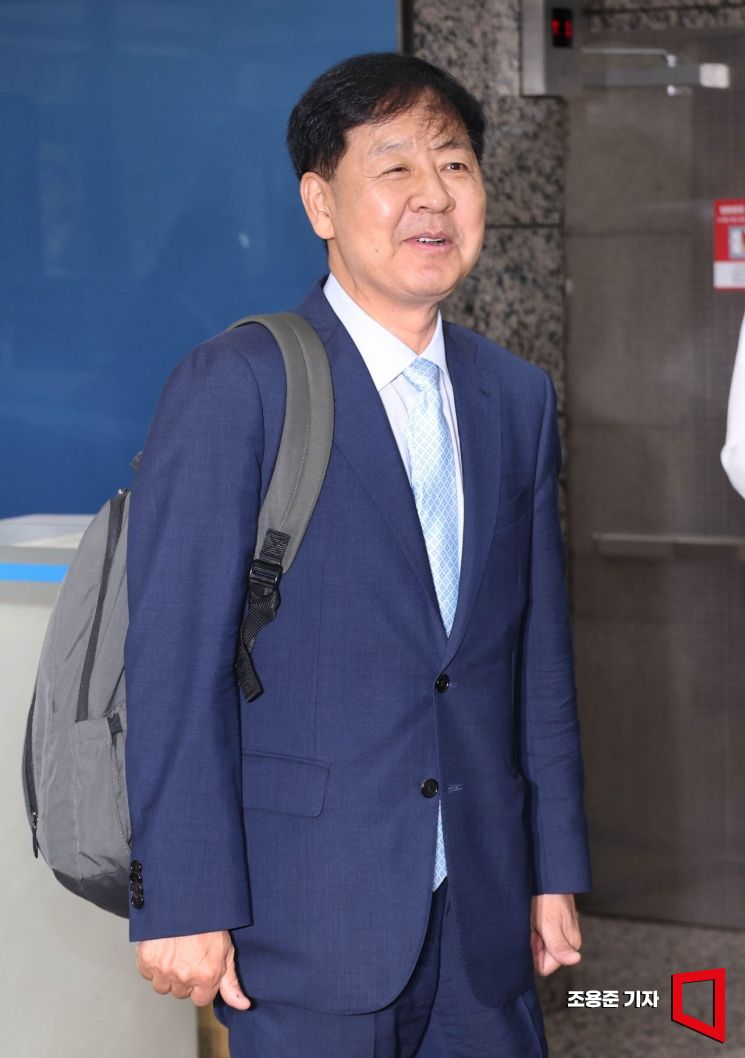 Koo Yoonchul, the nominee for Deputy Prime Minister for Economic Affairs and Minister of Economy and Finance, is arriving at the confirmation hearing preparation office set up at the Korea Deposit Insurance Corporation in Jung-gu, Seoul on the 30th. 2025.6.30 Photo by Jo Yongjun
In a written response submitted to the National Assembly for his confirmation hearing on the 15th, Koo stated, "Since its introduction in 1999, the pre-feasibility study system has contributed to efficient fiscal management by serving as a preliminary verification process for large-scale projects." He added, "However, there are criticisms that the system has limitations in reflecting recent changes in economic and social conditions, so we are seeking a fundamental overhaul."
He said, "It is necessary to redesign the framework of the system so that it can support the core agendas currently faced by the government, including the realization of a super-innovative economy, addressing the low birth rate, preventing regional extinction, and promoting balanced national development."
The pre-feasibility study system is a key procedure for verifying the feasibility of large-scale public projects in advance to prevent budget waste. Until now, the system has placed a heavy emphasis on economic efficiency, particularly the benefit-cost (B/C) ratio, which has led to insufficient prioritization of social values. In response, the Ministry of Economy and Finance is expected to transform the system into a multidimensional evaluation framework that incorporates policy effectiveness and qualitative value.
Regarding budget and fiscal management, he emphasized a performance-based approach. Koo stated, "I will operate fiscal policy in a performance-oriented manner, taking into account both the proactive role and sustainability of public finances?spending when necessary and boldly reducing expenditure when not needed." He explained, "I believe this will enable a virtuous cycle of economic growth, expansion of the revenue base, and improved fiscal sustainability."
As his vision for national governance, he continued to highlight the concept of "Republic of Korea Inc." Under the idea that "the people are shareholders, public officials are key employees, and ministers are managers," he plans to realize "welfare dividends" for the public through performance-based budget execution and policy evaluation.
© The Asia Business Daily(www.asiae.co.kr). All rights reserved.












