Competition Rate for National Pension Fund Manager Positions Remains at Record Low
First round competition rate this year at 3.57 to 1, similar to last year's all-time low
Temporary housing support ended earlier this year; performance bonuses also declining annually
"Top performers leaving, raising concerns over declining management quality"
The competition rate for recruiting fund managers responsible for managing the National Pension Fund, which is valued at 1,200 trillion won, has remained at its lowest level. There are concerns that difficulties in attracting talent, due to the relocation to Jeonju and issues related to compensation, could lead to a vicious cycle of declining management capabilities.

According to the public institution management information system (ALIO) on July 15, the competition rate for the first round of National Pension Service (NPS) fund manager recruitment this year was 3.57 to 1. The NPS plans to hire 28 people across 14 fields, with 100 applicants in total. This is similar to last year's record-low average competition rate of 3.45 to 1 across six rounds. The competition rate for fund manager recruitment has been declining: 7.22 to 1 in 2020, 4.38 to 1 in 2021, 3.83 to 1 in 2022, and 4.06 to 1 in 2023.
By field, there were no applicants at all for the position of chief fund manager in charge of financial settlement, which is hiring one person. For the positions of dedicated alternative risk management manager and dedicated financial settlement manager, the number of applicants matched the number of openings (two and one, respectively), but since there were no first-round qualifiers, these positions were effectively under-subscribed. The only exception was the alternative investment sector (private equity/venture capital, real estate, infrastructure), which posted a competition rate of 5.75 to 1 (eight positions, 46 applicants), above the average.
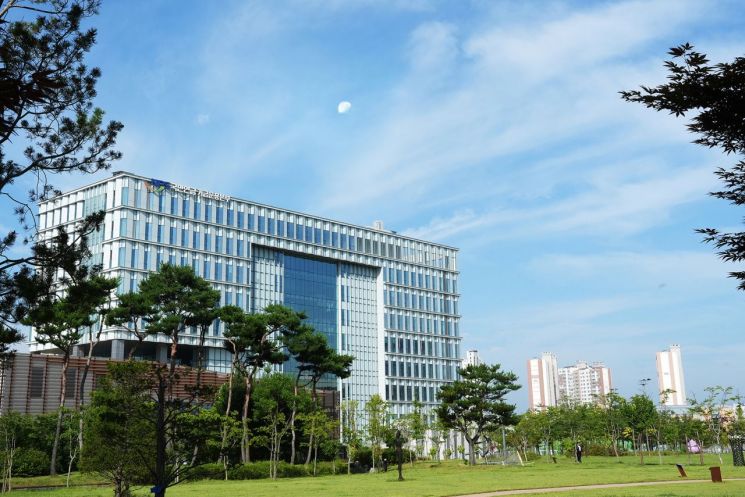
Industry experts cite geographical conditions as the primary reason for the declining competition rate. The NPS headquarters is located in Jeonbuk Innovation City, which is far from downtown Jeonju and requires about a 30-minute drive from KTX Iksan Station, making accessibility poor. In addition, the temporary housing provided to help employees settle in Jeonju was discontinued earlier this year. Temporary housing is typically provided for four years following the relocation of an institution, with a possible two-year extension upon government approval. In the case of the Fund Management Headquarters, the temporary housing was extended twice, operating for a total of eight years from early 2017 to early this year. While separate accommodations are provided for new fund managers, these are also limited to a short three-year term. The added burden of living conditions, such as children's education, is further discouraging potential applicants.
The NPS Fund Management Headquarters was once considered a "dream job," with the competition rate soaring to 32 to 1 in 2014. However, after the headquarters relocated to Jeonju in 2015, the rate plummeted to 9 to 1 that year. Since dropping to 5.3 to 1 in 2018, the competition rate has remained in the single digits.
Internal issues, such as lower compensation compared to the private financial sector, are also major factors in the decline in applicants. The performance-based bonus at the Fund Management Headquarters has been decreasing every year. The ratio of performance-based bonuses to base salary fell from 73.7% in 2019, to 86.7% in 2020, 67.7% in 2021, 51.1% in 2022, 39.9% in 2023, and 36.5% in 2024. An investment industry insider said, "With performance bonuses continually declining, and rumors of promotion bottlenecks and dissatisfaction with personnel decisions affecting team morale, it is inevitable that the number of applicants would decrease."
As the inflow of talent slows, concerns about declining management quality are growing. Last year, the fund's return on investment was 15.32% (time-weighted return), the highest ever recorded, but it was still 0.23 percentage points below the benchmark return. In 2023, the return was only 0.04 percentage points above the benchmark. The same investment industry insider noted, "The top performers are being recruited away, leaving only mediocre staff behind, which seems to be resulting in poor performance."
© The Asia Business Daily(www.asiae.co.kr). All rights reserved.













