"Seeking the Future in the Ocean"
Jeon Jae-soo Presents Five Key Marine and Fisheries Policy Directions at Confirmation Hearing
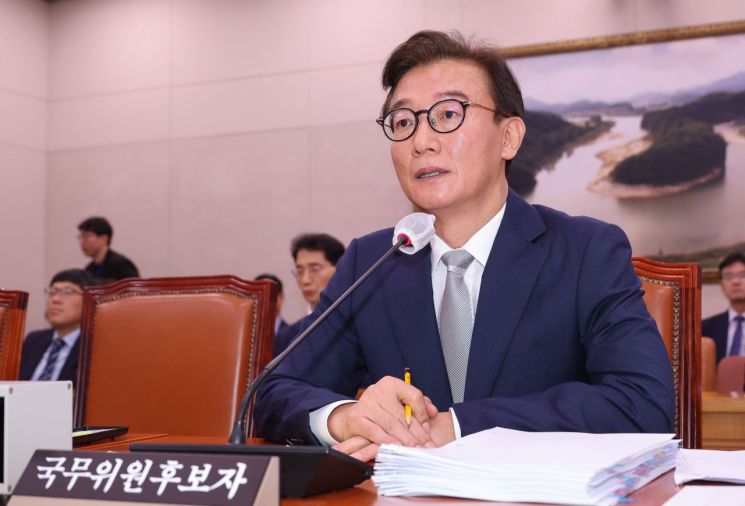
On July 14, Jeon Jae-soo, the nominee for Minister of Oceans and Fisheries, stated, "In preparation for the era of the Arctic shipping route, I will establish new maritime growth hubs and ensure the seamless relocation of the Ministry of Oceans and Fisheries to Busan."
In his opening remarks at the National Assembly confirmation hearing that day, Jeon said, "By attracting shipping companies and related institutions, we will equip ourselves with a new growth engine that goes beyond the current capital region-centric system."
Jeon emphasized, "The Arctic shipping route will become a key axis leading the transformation of global economic activities in the future," and added, "By successfully hosting the United Nations (UN) Ocean Conference in Korea, we will widely promote the status of Korea as a leading maritime nation."
At the hearing, Jeon presented five core policy directions for the marine and fisheries sector. As the second priority after the ministry's relocation and pioneering the Arctic route, he cited innovation in the fisheries industry to address the climate crisis.
Jeon stated, "We will convert coastal fisheries to a Total Allowable Catch (TAC) system and enhance productivity in aquaculture by adopting smart technologies. We will also focus on managing the supply of seafood to ensure that the public can receive fresh seafood stably."
He also announced plans to shift the shipping and port industries toward eco-friendly practices in response to the international community's strengthening of environmental regulations. Jeon said, "We will reorganize the national fleet around eco-friendly vessels and accelerate the development of ammonia- and hydrogen-based zero-carbon ships and autonomous ship technologies. Busan Port will be developed into a smart, automated port at the Jinhae New Port, and ports nationwide will be developed according to region-specific strategies."
A new approach to fishing villages and coastal areas was also presented as a major policy direction. Jeon said, "We will turn fishing villages facing extinction into lands of opportunity. We will establish complex marine leisure and tourism cities, and in small fishing villages, we will build infrastructure tailored to local resources such as marine healing, ecotourism, and fishing, thereby revitalizing local economies."
Regarding plans to expand offshore wind power, he said, "We will introduce a planned site selection system to ensure environmental and social acceptability, and we will actively develop mutually beneficial models that allow local residents and fishers to share in the benefits."
He also stressed the importance of safeguarding maritime sovereignty and creating a clean marine environment. Jeon stated, "We will leave no gaps in the management of maritime territories such as Dokdo and uninhabited islands, and by 2030, we will designate 30% of our waters as marine protected areas. We will also strengthen the full-cycle management system for marine debris and discarded fishing gear."
© The Asia Business Daily(www.asiae.co.kr). All rights reserved.











