OpenAI Expected to Launch AI-Powered Web Browser Within Weeks
Provides Information Through Conversations With AI
Perplexity Also Introduces AI Web Browser 'Comet'
Chrome, Whale, and Others Offer AI Integration Services
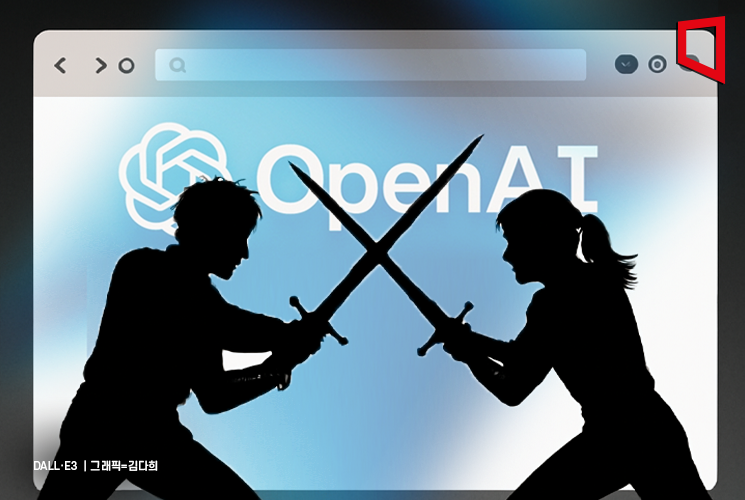
Global big tech companies offering artificial intelligence (AI) services are launching web browsers with built-in AI features, directly challenging Google. There is growing attention on whether these new browsers can become strong competitors to Google, which has dominated the web browser market by leveraging AI capabilities.
According to the IT industry and major foreign media on July 15, OpenAI is planning to launch a web browser equipped with AI features within the next few weeks. The browser, whose name has not yet been decided, is reported to operate differently from the traditional web surfing method of clicking links to move between sites. Instead, it will allow users to interact with an AI chatbot, which will immediately provide and process the necessary information through conversation.
OpenAI chose to develop its own web browser rather than simply adding AI extensions to existing browsers. The company explained that this approach would give it greater control over the collection of user data. To this end, OpenAI recruited two former Google vice presidents who were among the original developers of Google Chrome last year. An executive at OpenAI also stated that if Chrome were to be sold due to Google's antitrust regulations, the company would be interested in acquiring it.
Previously, on July 9 (local time), Perplexity also introduced its AI web browser, 'Comet.' Comet sets Perplexity's AI search engine as the default and features a new AI agent called 'Comet Assistant,' which helps automate everyday tasks. For example, it can summarize new emails and calendar events, or navigate web pages on behalf of the user. If a user asks questions about the content of a web page, it can provide answers as well.
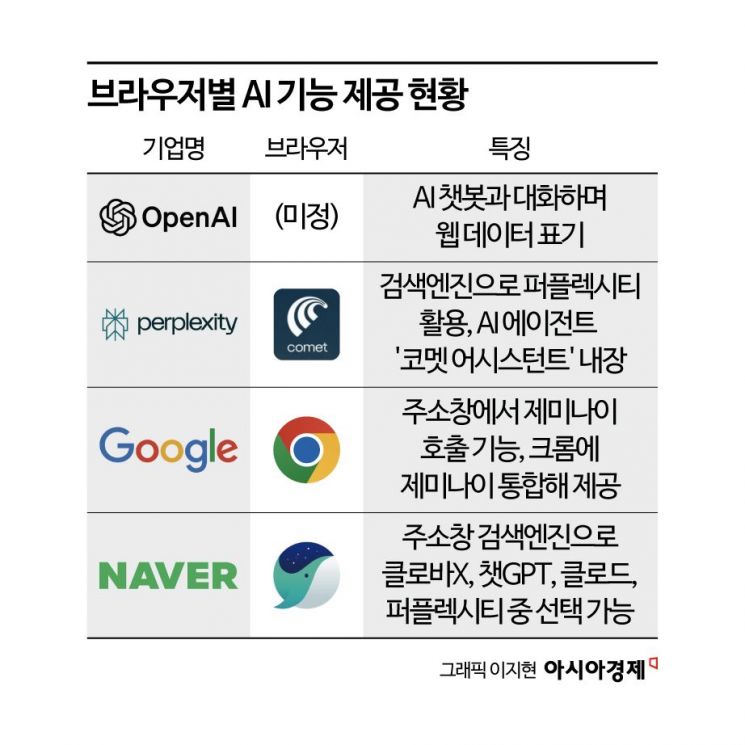
Google, which currently dominates the web browser market with Chrome, has also introduced features that enhance the usability of Gemini. At its annual developer conference, 'Google I/O,' held in June, Google announced the integration of its Chrome web browser with the AI service 'Gemini.' Currently, users can invoke Gemini directly from Chrome's address bar, and future updates will add features such as summarizing key content from web pages and navigating websites.
Domestic companies are providing services that allow users to utilize AI directly within web browsers or display AI-generated search results alongside traditional results. SK Telecom, which develops the AI service 'A.Dot,' launched the A.Dot Chrome extension in April. When users search on major domestic portal sites through a PC web browser, A.Dot provides answers to the search keywords alongside the regular results. In this process, users can utilize four large language models (LLMs) simultaneously. This extension is available not only on Chrome but also on other browsers such as Whale and Edge, which use Google's open-source browser engine 'Chromium.'
The web browser 'Whale,' developed by Naver, also added a feature in January that allows users to set the search engine in the address bar to AI services such as ClovaX, ChatGPT, or Perplexity. Previously, entering a search term in the address bar would take users to a portal site's search results page, but by connecting to an AI service, users can now access AI chatbot functions directly through the address bar.
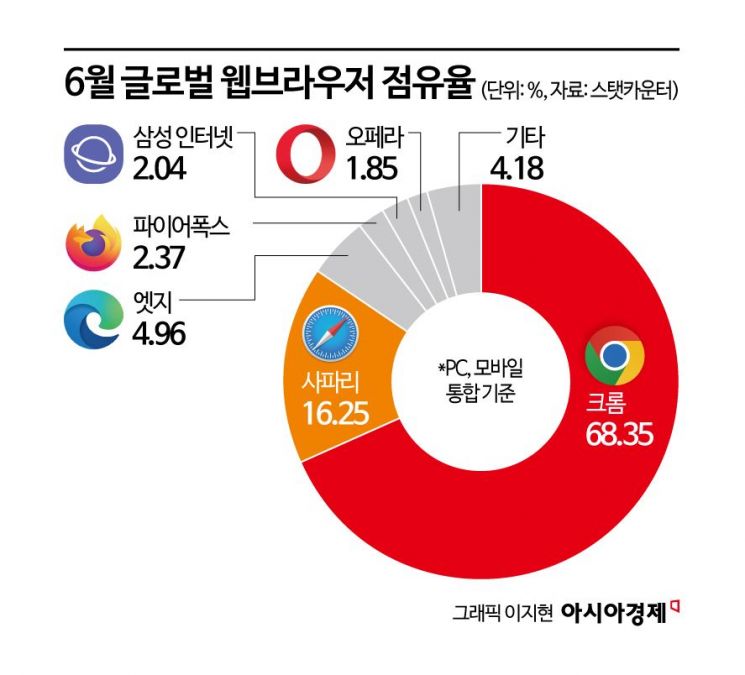
Meanwhile, according to global market research firm StatCounter, as of last month, Google Chrome held the highest global web browser market share at 68.4%. It was followed by Apple Safari at 16.3%, Microsoft Edge at 5%, and Firefox at 2.4%.
© The Asia Business Daily(www.asiae.co.kr). All rights reserved.

![Clutching a Stolen Dior Bag, Saying "I Hate Being Poor but Real"... The Grotesque Con of a "Human Knockoff" [Slate]](https://cwcontent.asiae.co.kr/asiaresize/183/2026021902243444107_1771435474.jpg)
















