"No Academic Flexibility" Declared,
But Customized Measures Under Consideration
Key Issues Include September Licensing Exam Without Special Privileges
Although medical students who had previously chosen mass academic probation in protest against the government's plan to increase medical school admissions have now declared a "full return," significant challenges remain regarding academic schedules, fairness, and eligibility for the national licensing exam. As a result, a smooth and complete normalization of medical education is expected to face difficulties.
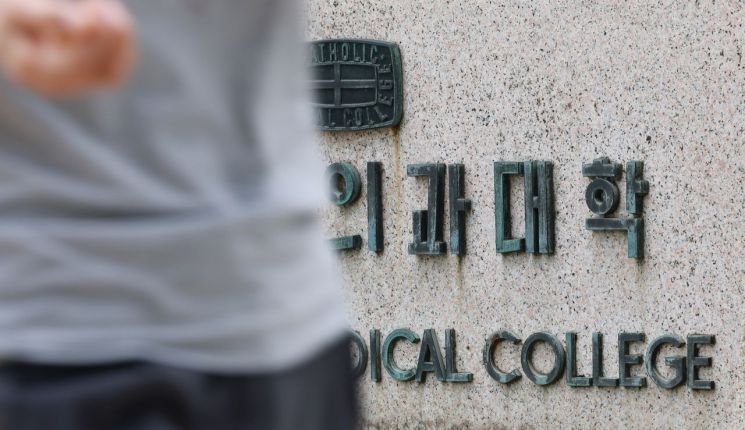
According to the education sector on July 14, the number of students expected to return to school following this declaration is about 8,000. These students did not return by April 30, the final deadline set by the Ministry of Education. Out of a total of 19,475 medical students, 8,350 (42.8%) fall into this category.
The main issue is that even if these students return, it will be difficult for them to rejoin the existing academic system. Unlike general universities, medical school curricula operate on a yearly basis, and the main (clinical) courses are closely tied to practical training. Once a certain point in the year has passed, it becomes virtually impossible to rejoin mid-term. For this reason, in April, the Council of University Presidents for the Advancement of Medical Schools (UCPAMS) and the Korean Association of Medical Colleges and Graduate Schools (KAMC) made it clear that "since the first semester has already ended, it is not possible to create a separate curriculum for the second semester for returning students." The Ministry of Education has also repeatedly stated that "there will be no academic flexibility measures." If customized measures are introduced for these returning students after this latest declaration, controversy over preferential treatment is expected to be unavoidable.
In response, Lee Sunwoo, head of the Emergency Response Committee of the Korean Medical Student Association, argued on July 12 that "normalization of academics means making full use of vacations and seasonal semesters, as was done under the previous administration, so that students can receive proper education without compressing the curriculum or reducing the total amount of education. This is different from academic flexibility measures that would constitute preferential treatment."
However, the challenge remains as to how to adjust the clinical, practice-based curriculum without offering special privileges. For fourth-year students, in particular, it will be unavoidable to provide additional support, such as extra opportunities to take the national medical licensing exam scheduled for September.
There are also fairness issues regarding students who already returned within the first semester in response to the government's request. Since there were cases where some students were obstructed or threatened from returning prior to the declaration, there are calls for investigations and appropriate actions regarding these incidents as well.
The Ministry of Education stated, "The plan for students' return, including the timing and methods, must be thoroughly discussed and reviewed with universities, relevant government agencies, and those directly responsible for education, taking into account academic schedules, educational conditions, and the unique characteristics of medical school curricula."
© The Asia Business Daily(www.asiae.co.kr). All rights reserved.












