Frequently Forgot to Remove Contact Lenses, Says Woman in Her 60s in the UK
A case in which 27 contact lenses were found in the eye of a female patient scheduled for cataract surgery has recently drawn attention.
According to a report published in the British Medical Association's journal, The BMJ, a 67-year-old woman, referred to as Ms. A, visited the hospital after experiencing a significant decline in vision in her right eye compared to her left.
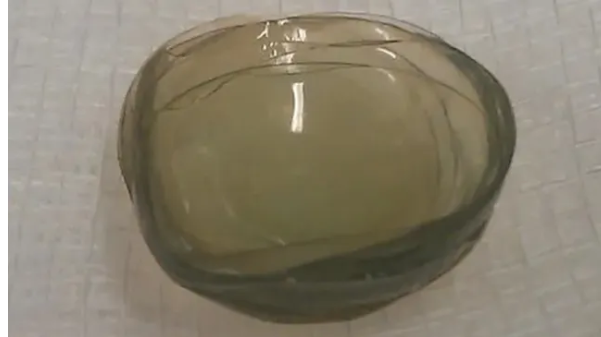 27 Contact lenses were discovered in a woman's eye just before cataract surgery. The photo shows the contact lenses clumped together like a mass. Photo by The BMJ
She told the doctor that she had never had any previous eye disease and that her eye felt slightly uncomfortable. The doctor initially suspected common symptoms of dry eye and aging, but upon examination, discovered signs of cataracts in her right eye.
While administering anesthesia for the cataract surgery, the doctor noticed a large bluish mass under the upper eyelid. Upon closer inspection, it was found to be a clump of disposable contact lenses.
After removing and counting them, there were 17 lenses. The doctor then conducted a more thorough examination and found 10 additional lenses. The ophthalmologist who diagnosed Ms. A said, "We were all shocked. We have never seen a case like this before."
According to the report, Ms. A had been wearing disposable contact lenses, each designed for about 30 days of use, for 35 years. She had worn contact lenses for 35 years, and the type she used could be worn for about 30 days. However, they must be removed every night before sleep. If contact lenses are not removed from the eyes, serious infections can occur.
 27 contact lenses were removed from one eye of a British woman in her 60s. Screenshot from The BMJ journal
Ms. A said, "Sometimes I tried to remove the lens from my right eye but couldn't find it. I thought I had dropped it somewhere."
After removing the lenses from Ms. A's eye, the attending physician postponed the cataract surgery for two weeks due to concerns about bacterial infection. Ms. A was later reported to have undergone the surgery safely. The case report noted that using fluorescein, a fluorescent dye, in the patient's eye can help detect hidden contact lenses.
Meanwhile, as in Ms. A's case, many contact lens users often experience the sensation that a lens has moved behind the eye. In reality, the lens does not go behind the eye but becomes trapped under the upper or lower eyelid.
This situation can also occur when wearing lenses that do not fit properly. In particular, hard lenses vary in curvature and must be properly fitted by an ophthalmologist. For soft lenses, it is important to pay attention to the correct orientation.
© The Asia Business Daily(www.asiae.co.kr). All rights reserved.













