Flight Attendants Warn: "Avoid In-Flight Coffee and Tea"
Concerns Raised Over Hygiene of Aircraft Water Tanks
Bacteria and Mineral Residue Frequently Detected in Onboard Water Systems
Another warning has been issued advising passengers not to drink coffee served on airplanes.
Southern Living, a U.S. lifestyle magazine, recently reported that former and current flight attendants have exposed uncomfortable truths about in-flight services.

According to the report, flight attendants advised passengers to avoid drinking coffee and tea provided on board whenever possible. They pointed out hygiene issues related to the internal water tanks where hot water is stored.
One former flight attendant said, "When I was working, neither I nor my fellow crew members ever drank the coffee or tea," adding, "The hot water always smelled of chlorine." The former attendant continued, "If you want a drink, it's better to order something bottled. Wine or whiskey is fine too, but it's best to ask for it without ice."
Another flight attendant stated, "Hot water often smells like disinfectant, and when it doesn't, that's even more suspicious." Some attendants also claimed, "I've seen residue and minerals accumulate inside the water tanks." Citing a survey of several U.S. airlines, the publication reported that bacteria were frequently detected in in-flight water systems.
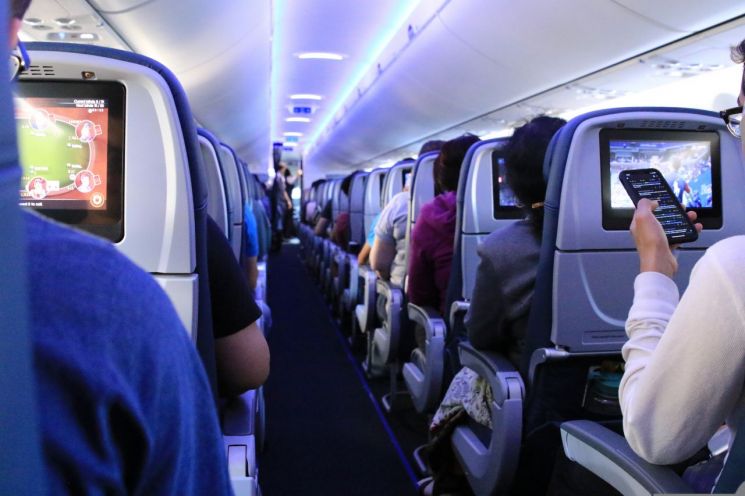
In fact, the publication stated that a survey of several U.S. airlines found numerous cases where bacteria were detected in the in-flight water systems.
According to the survey results, ice is also often contaminated with bacteria. This means that not only coffee and tea, but also drinks containing ice, cannot be considered safe.
This is not the first time such revelations have been made. Back in March, a U.S. flight attendant detailed the unsanitary conditions of in-flight coffee preparation through a TikTok account. At the time, the attendant said, "The water tanks are rarely cleaned, but that water is used to make coffee," and expressed concern about "mold and bacteria growing inside the tanks."
Kaz Marzo, who has worked in the airline industry for over 12 years, also claimed, "I have personally witnessed maintenance staff neglecting to clean the tanks properly. Mineral residue was accumulating in the pipes."
In fact, the U.S. Environmental Protection Agency (EPA) has conducted multiple investigations into aircraft water supply systems, finding that one out of every eight aircraft failed to meet water quality safety standards, and bacteria, including E. coli, were detected.
© The Asia Business Daily(www.asiae.co.kr). All rights reserved.













