"Like an Apartment with a Jeonse Tenant"...
Homeplus Makes Unusual Plea Amid Prolonged Sale Process
Timon-Wemakeprice Fallout Continues
Victims Unlikely to Receive Proper Compensation
The search for new owners of on-and-offline retail companies currently seeking sale is facing significant difficulties. As domestic consumption remains sluggish and industry conditions deteriorate, the number of companies up for sale is increasing, yet few potential buyers are stepping forward. In addition, resistance from victims affected by management crises and investment issues is considerable, making it unlikely that these complex problems will be resolved easily.
According to industry sources on July 12, several companies in the retail sector are currently attempting to sell, including Homeplus, the second-largest hypermarket operator, luxury goods platform Balan, e-commerce platform Wemakeprice, and household goods specialist Aekyung Industrial. Food tech startup Jeongyuggak and organic food retailer Chorokmaeul have also recently filed for corporate rehabilitation (court receivership) with the Seoul Bankruptcy Court, raising the possibility that management rights of Chorokmaeul may be sold.
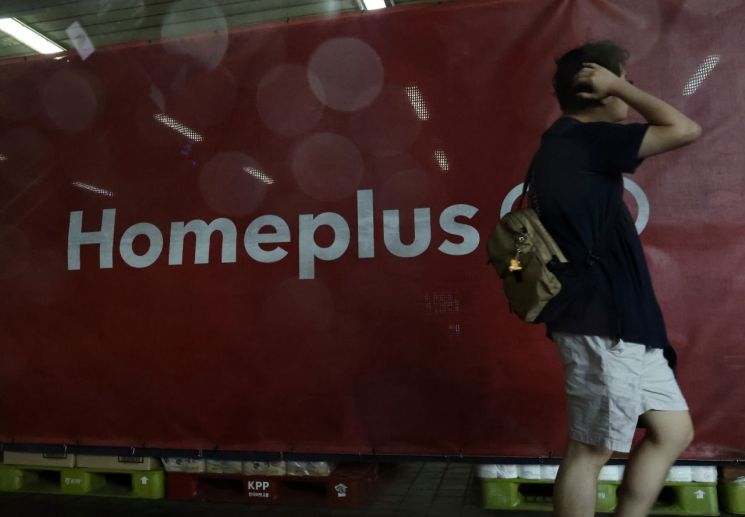
"Like an Apartment with a Jeonse Tenant"... An Unusual Analogy, Desperate Homeplus
Homeplus has recently launched an aggressive sales pitch, likening its situation to gap investment in apartments, and emphasizing that a buyer could secure management rights by investing less cash than the company's appraised value.
Homeplus explained, "Imagine an apartment valued at 7 trillion won, with 2.9 trillion won in jeonse (debt), and the previous owner (Homeplus's majority shareholder MBK Partners) has agreed to forgo their stake. A new buyer could use the apartment as collateral to borrow 2 trillion won to repay part of the jeonse, and cover the remainder with cash. In this way, the buyer could own the apartment for less than 1 trillion won in actual cash outlay."
As evidence, Homeplus stated, "By leveraging the company's 4.8 trillion won in real estate assets and applying a typical loan-to-value (LTV) ratio, it is possible to borrow around 2 trillion won. If the buyer secures 2 trillion won through real estate-backed loans and covers the remaining shortfall with cash, the actual capital required could be reduced to less than 1 trillion won."
Currently, the company's immediate liabilities amount to approximately 2.5 trillion to 2.7 trillion won. If a new buyer raises 2 trillion won through collateralized borrowing, the actual cash required would be less than 1 trillion won. Homeplus's unusual appeal, likening the company to an apartment with a jeonse tenant, appears to stem from the belief that it will be difficult to find a buyer, as the sale price is expected to exceed the liquidation value of 3.7 trillion won.

Homeplus highlights its self-rescue efforts aimed at reducing the burden on potential buyers, emphasizing that if a merger and acquisition (M&A) is completed before the rehabilitation plan is approved, it could help restructure the struggling domestic offline retail industry. One example is ongoing negotiations to adjust rental fees during the rehabilitation process, aimed at reducing fixed costs.
According to a report submitted last month to the Seoul Bankruptcy Court by Samil PwC, the Homeplus investigation committee, rental expenses for Homeplus are projected to account for 18-20% of total selling and administrative expenses for the 2024-2025 fiscal years, and are rising annually. Homeplus also emphasizes that if MBK, the majority shareholder, cancels its entire 2.5 trillion won stake in common stock for free and opts for a new share subscription sale, all proceeds will flow into Homeplus and can be used for debt repayment, thereby reducing financial costs.
In response, the Homeplus Commercial Paper Victims Emergency Committee stated, "If the acquisition terms are so attractive, MBK should inject additional funds and work toward normalization, but in reality, they are avoiding this. Creditors are repaid from the acquisition price, so a buyer must have the capacity to guarantee at least the liquidation value."

Timon-Wemakeprice Fallout Continues... Compensation for Victims Unlikely
Homeplus, which can appeal to buyers with its real estate collateral, and Aekyung Industrial, which attracted fewer than ten strategic and financial investors in its preliminary bidding, are in a relatively better position. In contrast, online platforms such as Balan, Wemakeprice, and Jeongyuggak, which have entered rehabilitation proceedings, are suffering from capital erosion and have lost market interest.
In April, Genesis BBQ, a chicken franchise, submitted a letter of intent (LOI) to acquire Wemakeprice, but no progress has been made. Timon, which last year, along with Wemakeprice, failed to settle payments to sellers, was acquired by Oasis, a fresh food delivery company, through a court-mandated rehabilitation plan. However, of Timon's total debt of 1.2 trillion won, only about 0.75% will be repaid to creditors using Oasis's 11.6 billion won acquisition funds, leading to strong backlash from victims.
Victims who lost 100 million won will only receive 750,000 won in compensation. Last year's Timon-Wemakeprice (Timep) payment default affected 470,000 consumers and 56,000 sellers. Those who suffered losses on other platforms such as Wemakeprice and Balan are also on high alert, fearing they may not receive proper repayment of their claims, just as in the Timon case.
The Black Umbrella Emergency Committee, made up of Timep victims, stated, "We understand that the court was forced to approve the plan to avoid bankruptcy, but with nearly a year having passed since the incident, a repayment rate of less than 1% is devastating. The government must listen to the victims and take action."
© The Asia Business Daily(www.asiae.co.kr). All rights reserved.














