A Cancer Treatment Hub Integrating Precision Medicine,
Radiation Therapy, and Digital Healthcare
Busan City has set sail to become a 'cancer-specialized city' based on the biohealth industry.
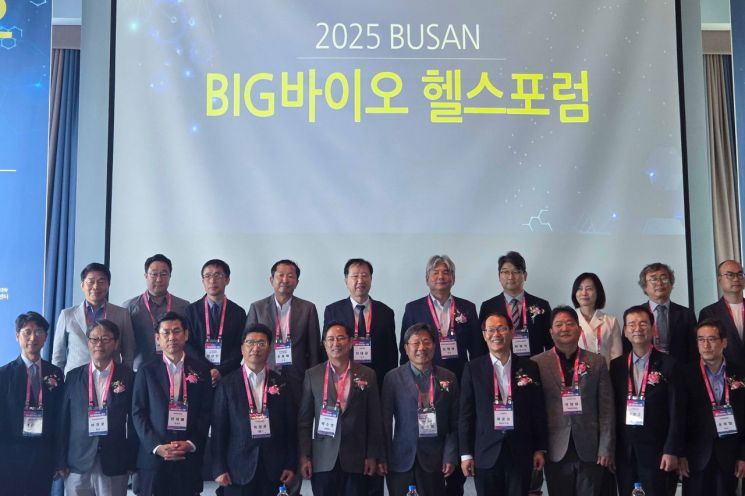
On July 7, more than 200 participants from the medical, academic, and industrial sectors gathered at the Asti Hotel Busan for the '2025 BIG Biohealth Forum' to share insights on the future direction of the medical industry.
This forum, hosted by Busan City and jointly organized by Busan Technopark Foundation and the Regional Medical Innovation Center at Seoul National University College of Medicine, was held for the second time following last year. The main agenda items included: ▲ the creation of a cancer-specialized city, ▲ digital healthcare, and ▲ the expansion of treatment infrastructure based on radiation medicine.
In the keynote speech, Kang Daehee, Professor of Preventive Medicine at Seoul National University College of Medicine and Biohealth Policy Advisor for Busan City, stated, "Statistics show that Busan ranks first among men and second among women in cancer incidence, which clearly justifies focusing on precision cancer treatment." He emphasized that "strategies to attract foreign patients should be pursued alongside the integration of medical, urban, and natural environment infrastructure, not only for cancer treatment but also for broader healthcare goals."
He particularly stressed the need to enhance the global competitiveness of Busan's medical institutions by learning from successful cases of Korean hospitals entering the global market. He identified several key factors: the integration of medical data, precision medicine based on biomarkers, the establishment of industry-academia-research collaboration systems, and regulatory flexibility.
In the first session, Han Mingyu, Executive Director of Kakao Healthcare, gave a presentation on 'Healthcare Services for Cancer Survivors.' He emphasized, "Since Korea has the world's highest cancer survival rates, it is crucial to provide 'cancer journey management services' that address life after treatment."
He added that "a personalized feedback system based on lifestyle data will be key to preventing secondary cancers and managing chronic diseases," and stressed the urgent need to establish a digital platform where Busan citizens can access a wide range of integrated support services.
In the second session, Lee Changhun, Director of the Dongnam Institute of Radiological and Medical Sciences, explained the current state of radiation therapy and pointed out that "the absolute lack of ultra-high-cost treatment equipment in the region is the biggest obstacle." He stated that, in addition to the heavy ion therapy device scheduled to be operational in 2027, it is also necessary to secure various types of equipment such as proton therapy devices.
In a subsequent presentation, Ji Daeyoon, CEO of FutureCam, said, "The Gijang Radiological Science Complex already has optimal conditions for new drug clinical trials," and added, "If it is designated as a national research and development zone like Daegu or Osong, it will be possible to attract companies specializing in the production of radiopharmaceuticals."
In the final panel discussion, Professor Kang Daehee served as moderator and discussed strategies to strengthen Busan's competitiveness in the biohealth sector with other experts.
Busan City stated, "We will establish concrete strategies to foster a cancer-specialized city, focusing on three pillars: precision medicine, radiation therapy, and advanced regenerative medicine." The city also added that it is developing a comprehensive plan to build a local foundation for medical self-sufficiency through an ecosystem of collaboration among industry, academia, research, and hospitals, while also encompassing medical tourism and the application of global new drugs.
© The Asia Business Daily(www.asiae.co.kr). All rights reserved.












