The Road to a Just Transition
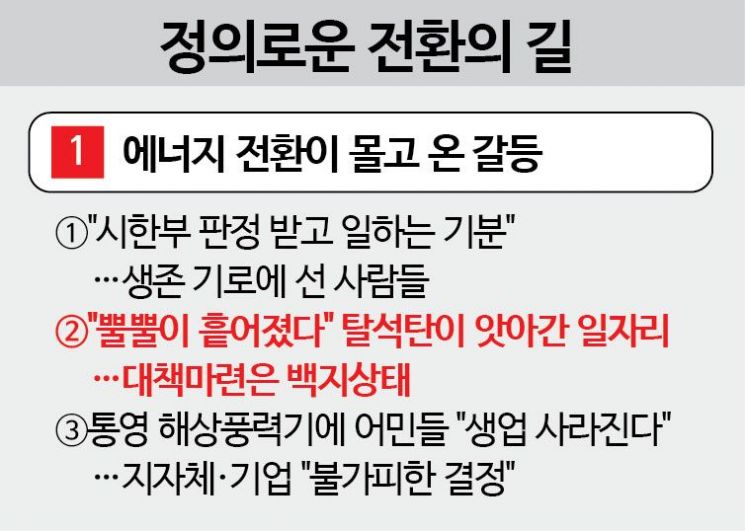
Ⅰ. Conflicts Brought by the Energy Transition
Dogye Mining Office in Samcheok, Gangwon Closes After 89 Years
Taean Coal Power Plant in Chungnam to Shut Down This December
After a four-hour journey on the Mugunghwa train from Cheongnyangni Station in Seoul, passing through 20 stations, you arrive at Dogye Station in Samcheok, Gangwon Province. Not far from Dogye Station lies 'Kkamak Village.' The village got its name because the black coal dust from the mine below would cover the entire area. There was a time when more than 100 households lived here, but now it is sparsely populated. If you walk about ten more minutes uphill from Kkamak Village, you will see the entrance to the Korea Coal Corporation Dogye Mining Office, which opened in 1936 and was closed on June 30 last month after 89 years of operation.
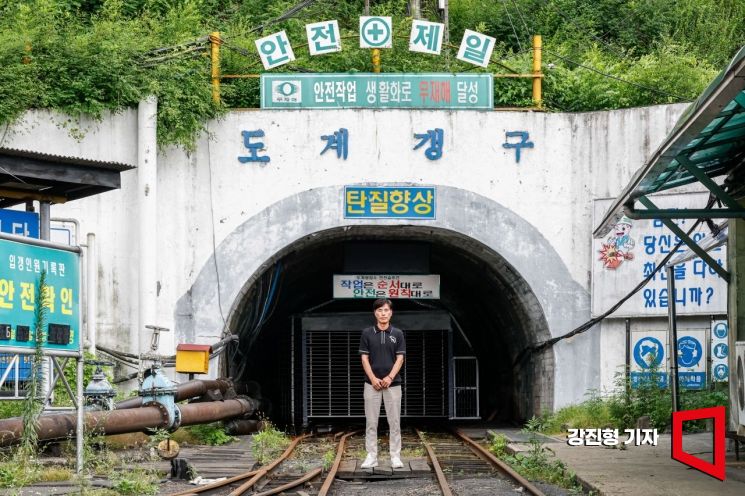 Miner Hwang Kyungseok, who was in charge of maintenance work at the coal mine facilities, is taking a photo on June 30, 2025, in front of the entrance to the Daehan Coal Corporation Dogye Mine in Samcheok City, Gangwon Province, which was closed on the 7th. Photo by Kang Jinhyung
I visited the Dogye Mining Office on July 7, one week after its closure. In front of the tightly shut mine, a yellow train?once used by miners to enter the mine?stood still on the tracks. The atmosphere was heavy with silence. The entry personnel board and the accident-free record board installed at the mine entrance had both stopped updating in June. While the clock in the miners' waiting area was still ticking, the calendar next to it had not moved past June. That day, only three or four workers remained on site to carry out final maintenance work.
The area in front of the mine entrance was flooded with groundwater. "We need to pump out that groundwater..." said Chansung Kim (50), former section chief in charge of pump operations at the Dogye Mining Office, standing in front of the shuttered entrance. Inside the mine, a lot of groundwater accumulates along small streams. If the water rises, not only does it make work difficult, but it also weakens the ground and increases the risk of tunnel collapse. Pumping out the water is an essential safety task for miners. With the closure of the mining office, Kim also lost his job. He said, "I know we have to accept the flow of the times, but it feels like such a waste for Korea's only underground resource to be buried like this."
Hwang Kyungseok (64), a miner who worked at the Dogye Mining Office for 25 years, said, "It has been decades since talk of closure began, but I never thought it would really end like this." Hwang added, "Since the closure happened without any alternative industry, everyone has scattered. Not only young people, but even locals find it hard to stay." He recalled, "I have memories of bringing my lunchbox and eating inside the mine. We even made our own pickaxes, so it's truly sad and regrettable to see the mine close like this."
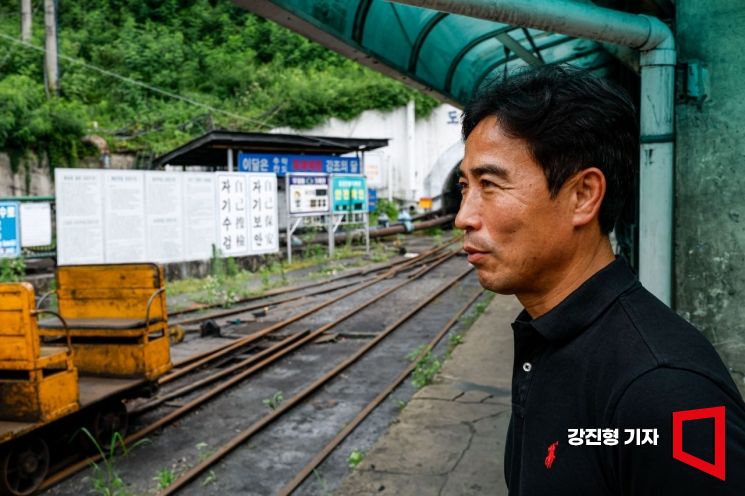 Chansung Kim, former head of the Dokye Mining Office at Korea Coal Corporation, is being interviewed on the 7th at the Dokye Mining Office of Korea Coal Corporation in Samcheok-si, Gangwon-do, which was closed on June 30, 2025. Photo by Jinhyung Kang
The government provided job transition training for coal workers at the Dogye Mining Office, but it was of little help. The transition training only began in March this year, just before the mine's closure at the end of June. Hwang questioned, "Given my age, how could I really be expected to find a new job like a forestry technician after just one or two months of training?" He reported that most of his former colleagues have still not found new employment.
For a century, coal was the 'national fuel' and the backbone of Korea's industrialization. During the peak of the domestic coal industry in the 1970s and 1980s, the population of Dogye-eup, Samcheok, approached 50,000. However, after the coal industry rationalization policy was implemented in 1989, the industry gradually declined. As of May this year, the population of Dogye-eup was 8,925. With the closure of the Dogye Mining Office, the population is expected to decrease further. Gangwon Special Self-Governing Province estimates the economic and social impact and damage to Samcheok City from the closure of the Dogye Mining Office at 980 billion won.
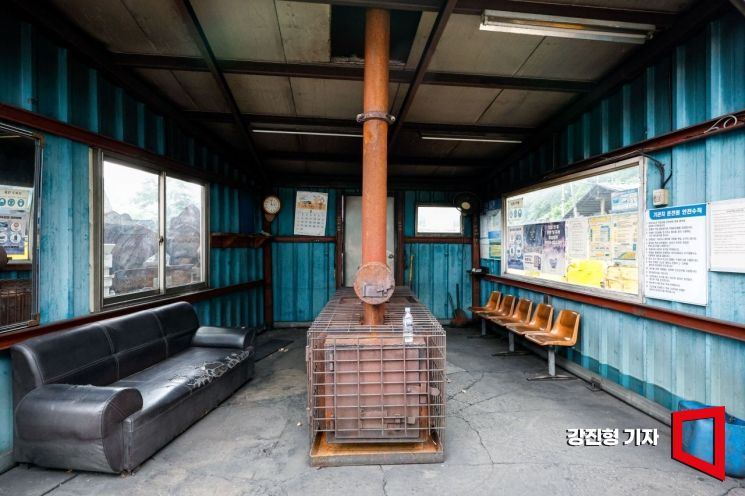 On June 30, 2025, at the closed Daehan Coal Corporation Dogye Mining Site in Samcheok City, Gangwon Province. Coal dust remains intact on the chairs placed in the coal workers' waiting area next to the mine entrance.
The hollowing out of the region has already begun. Residents I met in Dogye said, "About one-third of the local residents have already left since the mining office closed." On a weekday afternoon at Dokyejeon Market, it was hard to find any customers. Yeonok Kim (73), who has run a shop there for 30 years, said, "After the mining office closed, residents moved to Taebaek or Donghae, so on weekends, there is no business at all. If I used to make 500,000 won a day, now it's hard to make even 100,000 won." Due to the lack of customers, Kim no longer stocks fresh produce like fruit or vegetables. At another market, the Dogye-eup Five-Day Market, people used to come from Taebaek and Samcheok, but now there are more sellers than buyers.
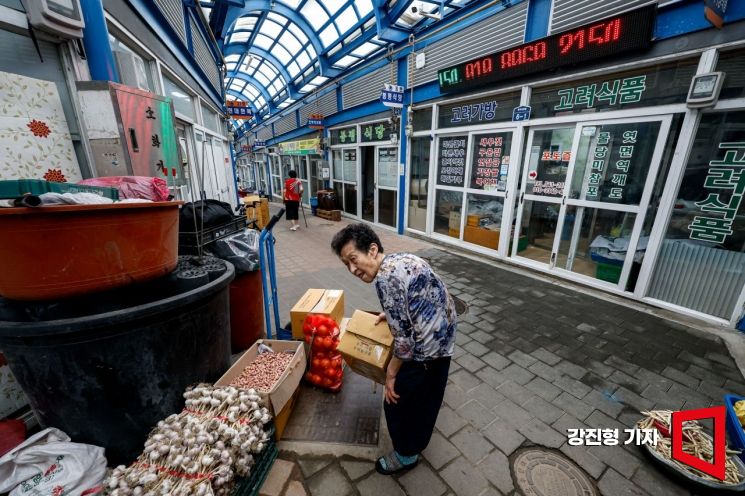 On June 30, 2025, the Dokyejeon Market near the Dokye Mining Office of Korea Coal Corporation in Samcheok City, Gangwon Province, which closed due to mine closure, appeared quiet on the 7th. Photo by Kang Jinhyung
The government is promoting the establishment of a designated duty-free store and a medical industry cluster based on a heavy ion accelerator to replace the coal industry in the Dogye closed mine area. However, Dogye residents questioned whether these new industries could be implemented properly, given the rapid population outflow. Residents pointed out that the closure of the mine had been planned for some time, yet the government had not prepared any measures in advance. Jinhyuk Lim (64), who has run a laundry for 40 years, said, "They've been talking about a duty-free store for ten years, but who would come all the way to Dogye just to get a small discount?" He added, "It's just a political campaign promise; nobody actually believes it."
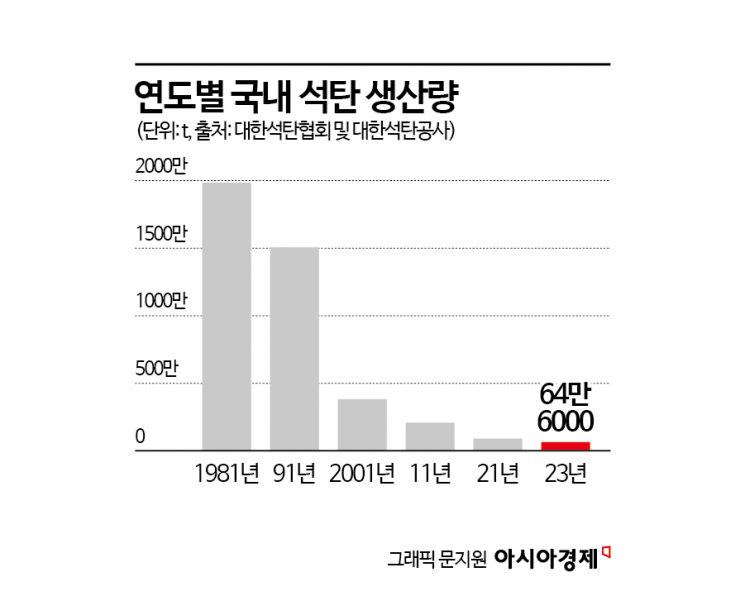
Taean, Chungnam: No Plan Despite the Foretold Closure of the Coal Power Plant
The Dogye Mining Office has become a glimpse into the future that awaits Taean in Chungnam Province. The first unit of the Taean Coal Power Plant in Chungnam has less than six months left before its scheduled shutdown at the end of this year. However, while there is a plan to convert to liquefied natural gas (LNG), there are no concrete plans for how or where to reassign the employees who worked at the existing power plant. Only now is a survey being conducted to assess the employment situation of workers facing job insecurity due to the shutdown of Taean Unit 1.
I visited Taean, where the headquarters of Korea Western Power, the operator of Taean Unit 1, is located. Yoon Kyunghak, Senior Vice Chairman of the Korea Western Power Labor Union, stated bluntly, "To be honest, there are no measures at all." He pointed out, "The government announced years ago that it would close coal power plants and switch to LNG and other sources, but to put it bluntly, there are still no concrete plans."
The assessment of workers at risk of unemployment due to the power plant closure is being carried out not by the central government, but by local governments and the labor union. The Labor Transition Support Center of the Korea Federation of Trade Unions Chungnam-Sejong Regional Headquarters, which includes the Western Power Union, has been conducting a research project since March this year on the employment risks for workers resulting from the closure of Taean Unit 1. The results are expected to be released next month.
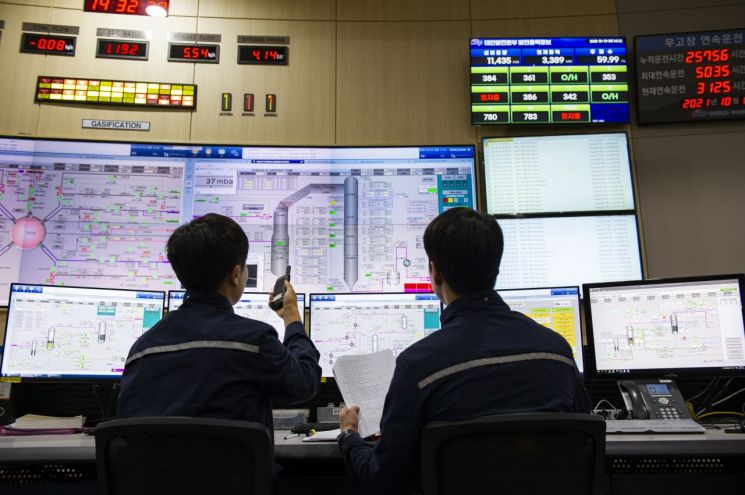 A technician is operating equipment in the control room of Taean Thermal Power Plant, Korea Western Power. Photo by Korea Western Power
Jinseok Lee, Secretary General of the Western Power Union, said, "Across Taean Thermal Power Plant Units 1 to 10, there are about 1,300 Western Power employees and 1,300 partner company employees, totaling around 2,600 people. For partner companies, it is not clear exactly how many workers at risk of unemployment are associated with Taean Unit 1 alone. If a single unit is closed, we need to know how many people in which fields will lose their jobs or need to be reassigned, and develop a strategy for them. But the basic groundwork of understanding the actual situation has not been done."
Korea Western Power plans to use the results of this research to apply similar measures not only to the remaining Taean coal power plants scheduled for closure or conversion, but also to power plants in other regions. The risk of unemployment is likely to be higher for partner company workers than for headquarters employees. Yoon Kyunghak explained, "Some say that workers who maintain coal power plants at partner companies can just learn new skills and maintain other power plants, but each plant has its own barriers to entry for each equipment field, so it's not that simple. When partner companies bid for maintenance contracts, the experience and skill level of their workers is crucial, so from the perspective of the main contractor, the reliability of reassigned maintenance personnel could become an issue."
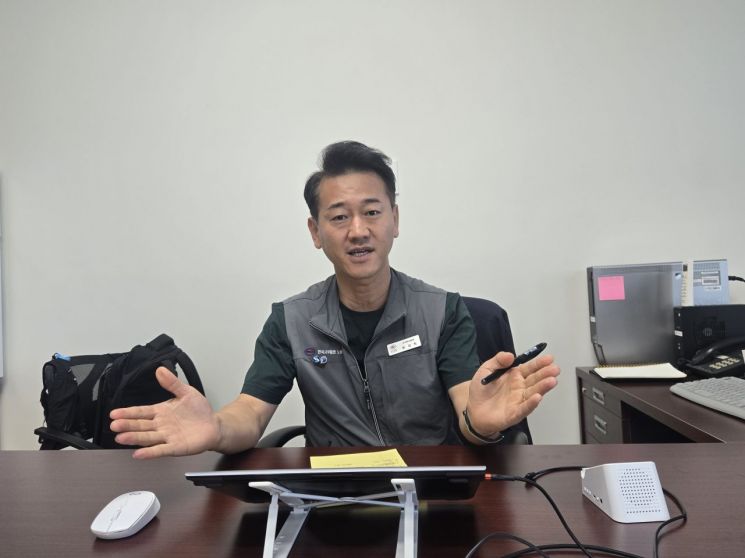 At the headquarters office of Korea Western Power located in Taean-gun, Chungnam, we met Yoon Kyunghak, Senior Vice Chairman of the Korea Western Power Labor Union, on the 7th. Photo by Joo Sangdon
Yoon Kyunghak also expressed concern that workers with strong local ties are at greater risk of unemployment. He said, "If you suddenly tell a worker at Taean Power Plant to move to Samcheonpo, it means they would have to be separated from their families. Especially for cleaning staff or security workers, many of whom are elderly, it is extremely difficult for people who have worked in Taean their whole lives to move to another region."
The negative impact on the local economy from the closure of coal power plants is also unavoidable. Jinseok Lee said, "Local business owners often ask, 'What are we supposed to do for a living if the coal power plant closes?' Not only will there be a constant decrease in the number of workers, but even the planned and preventive maintenance work, which temporarily brings in additional staff, will decrease, so the impact on the local economy will inevitably be significant." In fact, restaurants near the Taean Thermal Power Plant are already worried about next year. An employee at a buffet-style Korean restaurant that serves power plant workers said, "Currently, about 150 people come each day, but if one coal power unit closes, at least 20 to 30 fewer customers will come. With a meal costing 8,000 won, even if just 20 fewer people come each day, that's a loss of 160,000 won per day, or 3.2 million won over 20 days."
The closure of the coal industry was a predicted change in the era of energy transition. However, preparations for the transition were insufficient. The lack of policy measures has directly translated into suffering for workers in the industry. The mass unemployment and regional hollowing out caused by the closure of the Dogye Mining Office could be repeated as six more coal-fired power units are scheduled to close one by one by 2032, starting with Taean Unit 1.
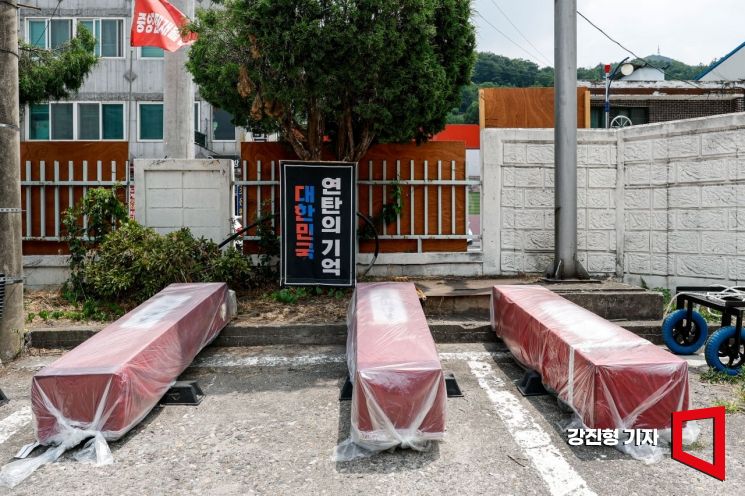 A tube filled with briquettes is installed at the headquarters of the Daehan Coal Corporation Dogye Mining Office in Samcheok City, Gangwon Province, which closed its mine on June 30, 2025. Photo by Kang Jinhyung
Both the ruling and opposition parties have introduced a total of 15 bills for the Special Act on Coal-Fired Power Plants, which would provide national-level support for coal and thermal power workers. However, the special act remains pending in the National Assembly. Deliberations on the special act have stalled due to differences of opinion among the lawmakers who proposed the bills.
Jiyeon Yoo, campaigner for Amnesty International Korea, said, "The energy transition must be fair and meet human rights standards to prevent marginalized groups and individuals from being sacrificed in the process." She continued, "Workers affected by the closure of coal-fired power plants are demanding employment succession and support for career changes so they can continue working. The government must guarantee a just transition for all workers and communities affected by climate change and decarbonization, and address any human rights threats or inequalities that may arise during the process."
This feature was supported by the Korea Press Foundation's media promotion fund, which is financed by government advertising fees.
© The Asia Business Daily(www.asiae.co.kr). All rights reserved.














