A Tourist Stung by Jellyfish in Seogwipo
Nomura's Jellyfish Can Cause Swelling, Fever, and Shock
As the heatwave continues, a jellyfish sting incident occurred at a beach in Jeju.
The Jeju Fire Safety Headquarters announced on July 8 that at 4:33 p.m. on July 7, a report was received via 119 that a tourist in their 30s, referred to as A, had been stung by a jellyfish at Jungmun Saekdal Beach in Seogwipo.
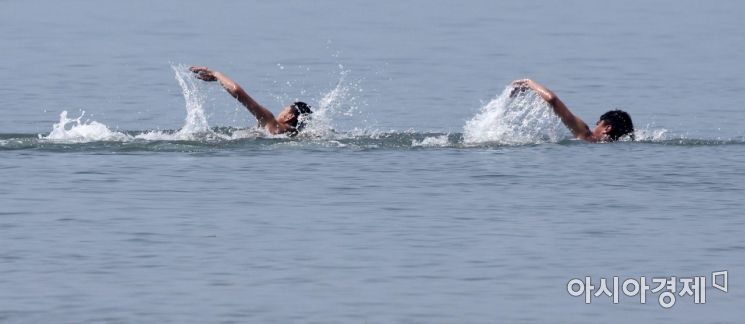 Citizens visiting Eulwangri Beach in Jung-gu, Incheon. This photo is for illustrative purposes only and is unrelated to the content.
A, who complained of numbness in both legs, received first aid from the 119 paramedics and was transported to a nearby hospital. The species of jellyfish has not yet been identified.
Due to rising sea temperatures, swarms of jellyfish are being carried to the coast by ocean currents every year, causing significant inconvenience to beachgoers.
According to the "Jellyfish Monitoring Weekly Report" (June 27 to July 3) from the National Institute of Fisheries Science under the Ministry of Oceans and Fisheries, the appearance rate of Nomura's jellyfish has been steadily increasing, from 1.9% on June 19, to 7.0% on June 26, and 9.3% on July 3. The jellyfish appearance rate is calculated as the percentage of respondents among 312 fishery monitoring personnel who observed jellyfish.
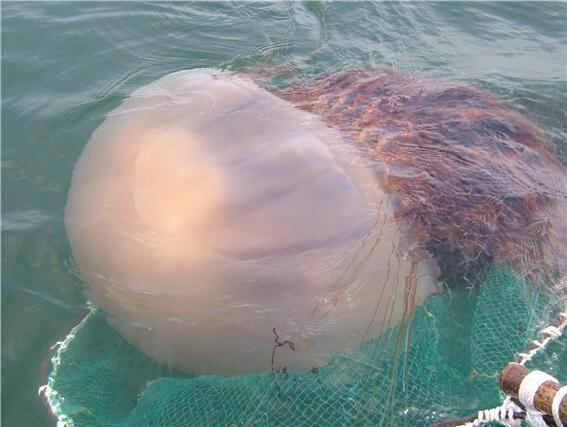
Nomura's jellyfish, which can reach a maximum length of 2 meters, can cause symptoms such as swelling, fever, muscle paralysis, difficulty breathing, and shock if stung. In addition, the appearance of other toxic jellyfish species, including Rhopilema esculentum, Physalia physalis, and Carybdea brevipedalia, is increasing along the southern coast and Jeju.
According to the Jeju Fire Safety Headquarters, the number of dispatches to beaches in Jeju due to jellyfish stings was 11 in 2019, 9 in 2020, 29 in 2021, 15 in 2022, 26 in 2023, and 20 in 2024.
A representative from the Jeju Coast Guard stated that anyone stung by a jellyfish should immediately exit the water. In particular, it was emphasized that the affected area should be washed with clean seawater or saline solution, not tap water. This is because washing with tap water can worsen the condition by causing toxins to spread more rapidly into the body due to osmotic pressure differences.
© The Asia Business Daily(www.asiae.co.kr). All rights reserved.