Ulsan University Hospital Closes Hospice Center... Shift to Focus on Severe Patients
Korean Society for Hospice and Palliative Care: "Do Not Abandon Care for Terminal Cancer Patients"
With Ulsan University Hospital abruptly closing its hospice ward, concerns have been raised that hospice beds may disappear from university hospitals as a result of the restructuring project for advanced general hospitals.
According to the medical community on July 8, Ulsan University Hospital notified the Ministry of Health and Welfare of the closure of its regional hospice center on July 1. Ulsan University Hospital was selected last year as an institution eligible for the advanced general hospital restructuring support project, and it is reported that hospice beds were eliminated during the process of reorganizing the wards to focus on severe illnesses.
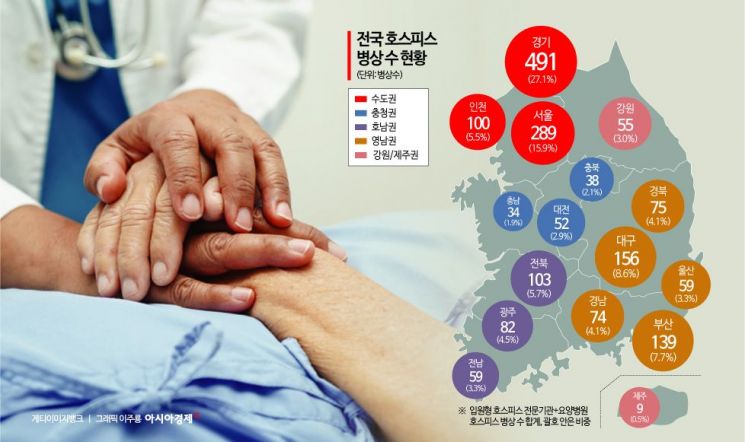
The hospital was the first in the region to launch hospice palliative care services in 2013 and was designated as a regional hospice center by the Ministry of Health and Welfare in 2019, taking responsibility for hospice care in the Ulsan and Gyeongnam regions for more than a decade. Of the 62 hospice beds in Ulsan, Ulsan University Hospital operated 10 beds.
The Korean Society for Hospice and Palliative Care issued a statement the previous day, saying, "This situation was entirely foreseeable." The society explained, "The Ministry of Health and Welfare designed a treatment system focused on severe patients through the advanced general hospital restructuring support project, but excluded terminal cancer patients who are not receiving chemotherapy or radiation therapy from the category of severe patients. This means that hospice wards could become targets for restructuring."
The society emphasized, "Hospice is not simply a place where treatment is stopped, but an essential medical service that helps terminally ill patients, exhausted from long battles with illness, to relieve suffering and maintain human dignity until the end." The society also pointed out, "Advanced general hospitals must not avoid their responsibility to care for terminal cancer patients."
Experts explain that while terminal patients in stable condition can be cared for at home, in nursing hospitals, or in primary care institutions, terminal patients with severe conditions require careful management of opioid painkillers and responses to complex symptoms such as severe vomiting, bleeding, and seizures. They stress that such advanced symptom management is only effective when based on the expertise, equipment, and experience of advanced general hospitals. In particular, for terminal cancer patients, hospice wards within advanced general hospitals are essential for the transition from stopping treatment to palliative care.
For example, terminal hematologic cancer patients must continue to receive blood transfusions even while under hospice care in order to maintain their quality of life until death. Since blood transfusion for hematologic cancer patients is a highly advanced procedure, it can only be performed at advanced general hospitals.
In response, the society called on the government to establish legal and institutional measures to prevent hospice wards from being closed for profitability reasons, as in the case of Ulsan University Hospital, by prioritizing public interest and patient rights in policy.
Kim Daegyun, Professor of Family Medicine at Incheon St. Mary's Hospital and Director of Education at the Korean Society for Hospice and Palliative Care, stated, "To enable advanced general hospitals to function as hubs for integrated care for terminal patients, the evaluation criteria for advanced general hospitals and the definition of severe patients in the ongoing restructuring support project must be revised." He also emphasized, "A sustainable infrastructure must be established so that all citizens can receive hospice care regardless of region, hospital, or income."
According to the Central Hospice Center, as of 2024, there were a total of 107 inpatient hospice specialized institutions and nursing hospitals nationwide, with 1,815 inpatient beds. Among these, advanced general hospitals accounted for 19 institutions and 265 beds.
© The Asia Business Daily(www.asiae.co.kr). All rights reserved.