Development of Heterojunction-Based Stochastic Control Transistor Device
Research Teams Led by Eunkwang Lee and Hocheon Yoo Publish in 'Advanced Materials'
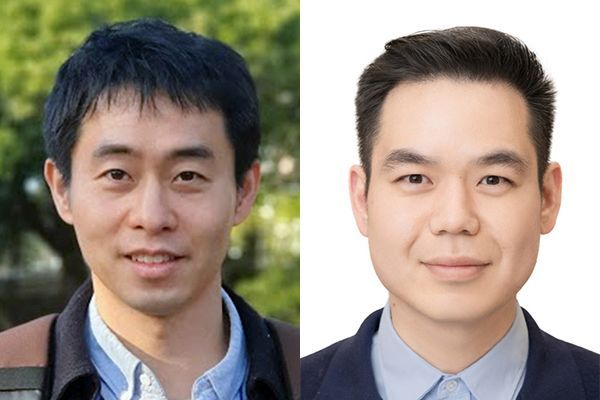
A research team led by Professor Eunkwang Lee (Department of Chemical Engineering) at National Pukyong University and another team led by Professor Hocheon Yoo (Department of Convergence Electronic Engineering) at Hanyang University have developed a heterojunction-based stochastic control transistor device. They have proposed a novel principle that amplifies noise to actually improve image generation accuracy.
The joint research team implemented a negative transconductance (NTC) characteristic by introducing a polymer-based heterojunction structure, which enables spontaneous formation of NTC due to the imbalance in the injection of holes and electrons.
They also demonstrated for the first time that stochastic de-doping induced by internal noise is a key mechanism that enhances image generation accuracy.
This study has drawn attention as a groundbreaking approach at a time when research into new devices capable of efficiently implementing stochasticity and nonlinearity at the hardware level is gaining traction, driven by the advancement of edge computing and generative AI.
Stochastic transistors, which possess unpredictability similar to synapses in the human brain, are considered promising next-generation device technologies that can ensure both energy efficiency and functional diversity. However, conventional stochastic devices typically suppress or avoid noise, and devices that actively utilize noise are rare.
This research is significant in that it represents a paradigm shift by utilizing the physical phenomenon of 'noise' as a computational resource rather than something to be eliminated.
In particular, if this technology is applied to next-generation generative AI systems, edge devices, and cognitive sensor devices, it is expected to enable the realization of low-power, high-efficiency computing architectures.
Professor Eunkwang Lee stated, "This research is a creative attempt that simultaneously leverages the structural advantages of organic semiconductors and nonlinear stochasticity. It will greatly accelerate the commercialization of noise-control-based hardware AI systems."
This study is regarded as a groundbreaking breakthrough in the field of next-generation nonlinear computing devices and generative AI hardware. The research paper, titled "Heterojunction-driven stochasticity: BHJ noise-enhanced negative transconductance transistor in image generation," was recently published in a world-renowned journal in the fields of materials science and applied electronics (IF: 26.8, JCR top 2.2%).
This research was supported by the Individual Basic Research Program of the Ministry of Science and ICT and the National Research Foundation of Korea, as well as the AI Semiconductor Core Talent Training Program (IITP) of the Korea Institute for Advancement of Technology.
© The Asia Business Daily(www.asiae.co.kr). All rights reserved.












