Risk of Recession in the Second Half
"Mini Stagflationary Shock"
Possibility of Entrenched High Inflation
Nouriel Rubini, a professor at New York University who predicted the 2008 global financial crisis, stated that the U.S. economic growth is likely to slow in the second half of this year, and that inflation may become entrenched. He predicted that the Federal Reserve (Fed) would find it difficult to cut interest rates before December. However, he added, "I do not expect a situation to recur that would trigger a sharp market sell-off like what happened on April 2."
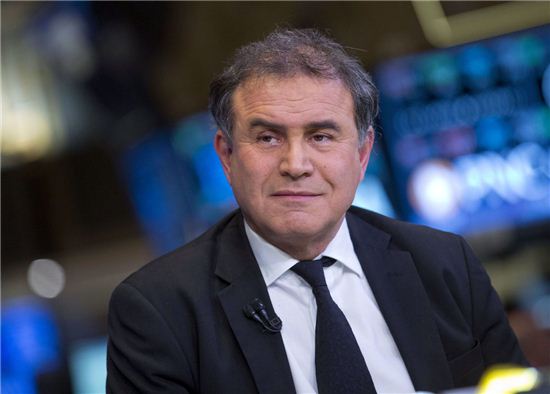 Nouriel Rubini
In an interview with CNBC on July 6 (local time), Professor Rubini pointed out that the U.S. economic growth rate could slow further in the second half of the year, and there is also a risk that this could lead to a recession. He emphasized that this economic slowdown would resemble a "mini stagflationary shock," and predicted that the Fed would find it difficult to lower rates before December. He believes this is because persistently high inflation will inevitably limit the Fed's policy options.
He projected that the core Personal Consumption Expenditures (PCE) index, which the Fed closely monitors, would reach about 3.5% by the end of this year. He also noted that there have been past instances where high inflation persisted even as economic growth slowed.
Professor Rubini assessed that the global trade order could tilt toward increased protectionism, despite the appearance of easing tensions. He said, "Global trade negotiations will cool off," but warned, "It will not be a quiet de-escalation without economic damage." He specifically predicted that a 'mild' scenario could unfold in which multiple countries impose tariffs of around 15%. He analyzed that while trade tensions may appear to ease on the surface, in reality, countries could move toward stronger protectionism and higher tariff barriers.
Regarding the possibility of market shocks resulting from reciprocal tariff negotiations, Professor Rubini said, "I certainly do not see a situation similar to April 2 occurring." On April 2, President Donald Trump announced a high-tariff policy, causing the U.S. stock market to plummet in a single day. At that time, not only stocks but also Treasury yields and the value of the dollar fell, resulting in a "triple weakness" phenomenon.
Professor Rubini also analyzed that the global economy is gradually moving away from a U.S. dollar-centered system, and that global investors are preparing for this shift. He stated, "I do not see the market collapsing immediately, but the trend is clear and moving in that direction." The "direction" he referred to means: high inflation, slow growth, geopolitical uncertainty, and a global environment of financial tightening.
Meanwhile, Professor Rubini, who earned the nickname "Dr. Doom" for predicting both the 2008 global financial crisis and the pandemic-induced recession in 2020, is currently serving as a portfolio manager for the Atlas America Fund (USAF).
© The Asia Business Daily(www.asiae.co.kr). All rights reserved.










