Extraordinary National Assembly Session Begins July 7
Ruling Party to Prioritize Key Bills, Launches Intra-Party Prosecutorial Reform Task Force
The Democratic Party of Korea, having completed the passage of the Commercial Act amendment as the first key legislative initiative of the Lee Jaemyung administration, is now preparing to convene an extraordinary session of the National Assembly in July to address other contentious bills, including the Yellow Envelope Act (amendments to Articles 2 and 3 of the Trade Union Act).
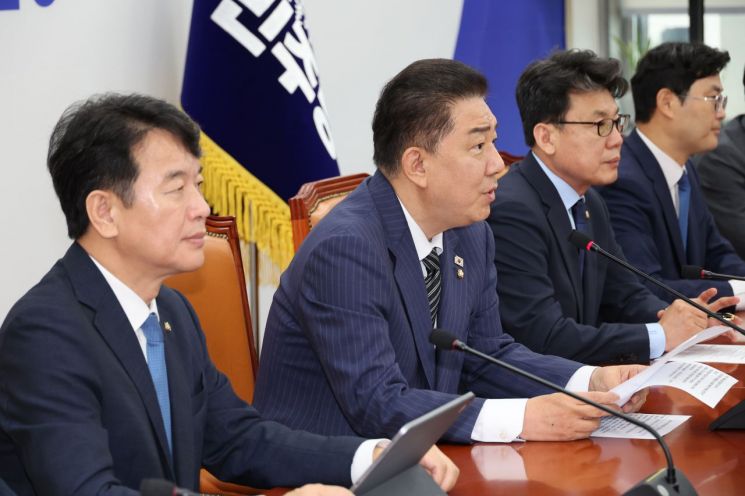
According to party officials, Kim Byungki, acting party leader and floor leader, urged the party to accelerate the handling of key livelihood and reform bills designated as priorities at a closed-door general meeting of lawmakers held at the National Assembly on July 3.
Previously, the Democratic Party had selected a total of 40 priority bills, including 13 contentious bills such as the Commercial Act, which were scrapped after President Yoon Sukyeol exercised his right to request reconsideration (veto), as well as 16 bipartisan livelihood pledge bills.
The priority bills include the four agricultural laws such as the Grain Management Act, the Local Education Finance Grant Act related to free high school education, and the Elementary and Secondary Education Act, which would allow artificial intelligence (AI) textbooks to be used as reference materials rather than official textbooks.
Since the Democratic Party prioritized the Commercial Act during the June extraordinary session, it now plans to immediately convene the July session to handle additional bills such as the Yellow Envelope Act and the three broadcasting laws.
In addition, Kim is reported to have announced the creation of a prosecutorial reform task force within the party.
This move appears to be aimed at accelerating legislative discussions on prosecutorial reform, in line with President Lee Jaemyung's emphasis on the separation of investigative and prosecutorial powers during his press conference marking 30 days in office, where he mentioned a "framework before Chuseok."
The National Assembly Legislation and Judiciary Committee also began full-scale discussions by introducing the "Four Prosecutorial Reform Bills" (the bill to abolish the Prosecutors' Office Act, the bill to establish the Public Prosecution Office, the bill to establish the National Investigation Commission, and the bill to establish the Serious Crimes Investigation Agency), which were sponsored by Democratic Party lawmaker Kim Yongmin and others, at a plenary meeting on the same day, and decided to hold a public hearing on July 9.
Regarding the Commercial Act, the Democratic Party also aims to process additional bills during the July session, including the cumulative voting system and the expansion of separate election of audit committee members, which were excluded from the amendment passed on this day due to negotiations with opposition parties.
Earlier, National Assembly Speaker Woo Wonsik announced on the same day that an extraordinary session would be convened from July 7, in response to requests from both the ruling and opposition parties.
With confirmation hearings for the first ministerial nominees of the Lee Jaemyung administration also set to take place in succession, both parties are expected to fiercely clash over contentious bills and hearings during the July extraordinary session.
© The Asia Business Daily(www.asiae.co.kr). All rights reserved.












