Voting and Ballot Counting Set for the 20th... Ruling Party's Cash Support vs. Opposition's Tax Cuts Amid Soaring Prices
522 Candidates Compete for 125 Seats... Weekly Magazine Predicts "Ruling Party Will Fail to Achieve Its Goal"
The official campaign for the House of Councillors (upper house) election, which serves as a midterm evaluation of the Japanese cabinet led by Shigeru Ishiba since its launch in October last year, began on July 3.
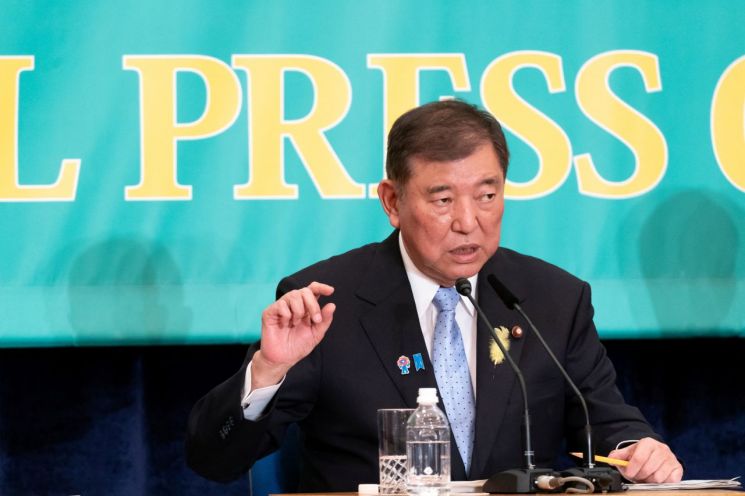
The official election campaign will run for 17 days, starting with candidate registration on this day. Voting and ballot counting are scheduled for the 20th.
If the ruling party is defeated in this election, Japan's political landscape is expected to be thrown into turmoil. This could lead to attempts to reshape the coalition structure and to increased calls for Prime Minister Ishiba to take responsibility.
The House of Councillors has a total of 248 seats, with half of its members elected every three years for six-year terms. In this election, 125 seats are up for grabs, including one vacancy in the Tokyo constituency. Of these, 75 are from local constituencies and 50 from proportional representation.
According to Kyodo News, 522 candidates have registered for this election. Among them, 152 are women, the second-highest number in history.
Currently, the ruling Liberal Democratic Party (LDP) and its coalition partner Komeito hold 52 and 14 seats, respectively, among the seats up for election in both local constituencies and proportional representation. If the two parties win a combined total of 50 seats, they will maintain a majority in the House of Councillors, including the 75 non-contested seats (those not up for election).
With cabinet approval ratings hovering around 30%, Prime Minister Ishiba has set the maintenance of a ruling party majority as his main objective.
The LDP and Komeito already suffered a major defeat in the House of Representatives (lower house) election last October. Since then, they have been forced to operate the government with difficulty, cooperating with some opposition parties on a policy-by-policy basis in a situation where the opposition holds more seats in the lower house.
If the ruling parties fail to maintain a majority in the House of Councillors election as well, there are concerns that the opposition will be able to review bills as they wish and could unite to pressure the Ishiba cabinet to resign.
The Yomiuri Shimbun reported, "The biggest focus of this election is whether the ruling parties can maintain a majority," adding, "The opposition is making its stance clear by aiming to break the ruling parties' majority."
Japanese media predict that the outcome in 32 single-member constituencies, where only one seat is contested, will determine the overall result. In the previous House of Councillors election in 2022, the LDP won 28 out of 32 single-member districts and the ruling parties secured 76 out of 125 seats in total.
With food prices soaring?rice prices, for example, have doubled compared to previous years?measures to address high living costs have become a central issue in this election.
The Constitutional Democratic Party, the largest opposition party, has pledged to temporarily reduce the current 8% consumption tax on food to 0%. Most opposition parties have also made consumption tax cuts a key campaign promise. On this day, Constitutional Democratic Party leader Yoshihiko Noda visited Miyazaki Prefecture in southern Kyushu and pledged to protect citizens from high living costs caused by rising rice prices by pushing for a reduction in the food consumption tax.
In response, the LDP has pledged to provide a uniform cash payment of at least 20,000 yen (about 190,000 won) per person to all citizens.
Prime Minister Ishiba, who is also president of the LDP, criticized the opposition, stating, "It is irresponsible to cut the consumption tax, which is a source of funding for social security." During a campaign speech in Kobe, Hyogo Prefecture, he said, "I want to quickly deliver support payments to those who are struggling because price increases have outpaced wage growth," emphasizing that "these payments are by no means a populist policy."
However, public opinion regarding the ruling party's cash payment pledge is not favorable. In a telephone survey conducted by the Yomiuri Shimbun from June 27 to 29 with 1,061 respondents, only 28% evaluated the payments positively, while 66% responded negatively.
Other key issues in this election are expected to include Japan-U.S. tariff negotiations, constitutional revision to explicitly mention the Self-Defense Forces, the introduction of an optional separate surname system for married couples, and the LDP's political funds scandal.
© The Asia Business Daily(www.asiae.co.kr). All rights reserved.












