Daytime Highs in Gwangju and Jeollanam-do Approach 34 Degrees on the 2nd
Cumulative Number of Heat-related Illness Cases Reaches 38 as of June 30
Over 30,000 Livestock, Including Chickens and Ducks, Die in Jeollanam-do
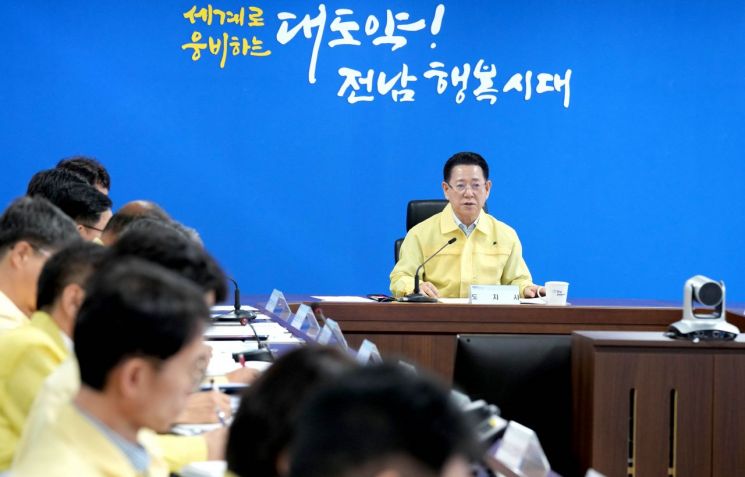 Jeollanam-do Governor Kim Youngrok is presiding over the "Summer Heatwave Response Status Inspection Meeting" on the morning of the 2nd at the provincial office's Disaster Comprehensive Situation Room, with department heads and deputy heads of city and county governments attending via video. Provided by Jeonnam Province
An unusually early heatwave is sweeping through the region. It is clear that not only people but also animals are struggling to cope with the summer heat.
According to the Gwangju Regional Meteorological Administration on July 2, Gwangju and Jeollanam-do have been under a heatwave advisory for six consecutive days, with the daytime high temperatures reaching up to 34 degrees Celsius again on this day. In some areas, the 'tropical night phenomenon,' where temperatures do not cool down even at night, has been observed for several days in a row.
The unprecedented heat that has continued since mid-June is even rewriting various records. In fact, it was analyzed that Gwangju and Yeosu recorded the highest-ever June daily average temperatures since weather observations began, with 29 degrees Celsius and 26.5 degrees Celsius, respectively.
The sweltering heat is causing significant damage not only to people but also to local livestock farms, with the impact snowballing.
As of June 30, the cumulative number of heat-related illness cases in Gwangju and Jeollanam-do reached 38. Most of these cases were reported among people engaged in outdoor activities. In addition, by July 1, a total of 30,025 livestock had died at 61 livestock farms in Jeollanam-do. Specifically, about 27,000 chickens, 2,200 ducks, and 600 pigs perished. The estimated financial loss amounts to approximately 287 million won.
The problem is that both human and material damages are likely to increase for the time being. This is because there are no signs of rain or other factors that could cool down the heat.
The Gwangju Regional Meteorological Administration forecasts that the probability of precipitation in Gwangju and Jeollanam-do will remain close to 0% through July 12. While there may be occasional showers, they are not expected to be sufficient to relieve the current heatwave.
The Gwangju city government and Jeollanam-do provincial government have raised the heatwave crisis alert to the highest level and are making every effort to minimize damage by urging people to refrain from outdoor activities. However, it remains difficult to respond effectively to the situation.
An official from Jeollanam-do stated, "Unlike previous years, the summer heat has arrived early. We urge elderly people and those with underlying health conditions to avoid going outside for the time being and to stay indoors as much as possible. If you must engage in outdoor activities, drink water frequently, and if you notice any abnormal physical symptoms, visit a hospital immediately."
© The Asia Business Daily(www.asiae.co.kr). All rights reserved.

![Clutching a Stolen Dior Bag, Saying "I Hate Being Poor but Real"... The Grotesque Con of a "Human Knockoff" [Slate]](https://cwcontent.asiae.co.kr/asiaresize/183/2026021902243444107_1771435474.jpg)














