Bipartisan Effort Emerges to Curb AI Companies' Unchecked Expansion
The provision for a moratorium on artificial intelligence (AI) regulation has been removed from President Donald Trump's tax cut bill, which was passed by the U.S. Senate.
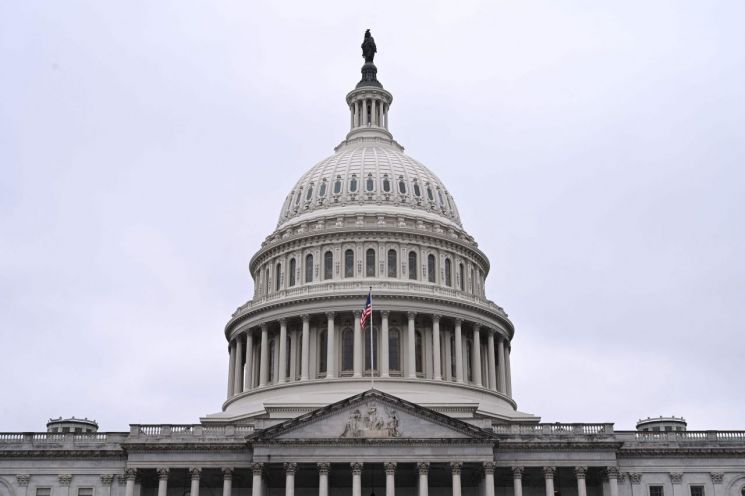
On July 1 (local time), the British daily Financial Times (FT) reported that the so-called "AI moratorium" provision was voted down in the U.S. Senate that day. The provision stipulated that, in order for U.S. state governments to receive AI infrastructure funding, they would have to suspend AI regulations for ten years.
Silicon Valley tech companies such as Google, Microsoft, Meta, OpenAI, and Amazon have argued that state-level regulations could hinder innovation and cause the U.S. to fall behind China, insisting that a regulatory moratorium is necessary.
However, even within the Republican Party, concerns were raised about eliminating oversight of AI technologies that could cause significant social and economic upheaval. Since there are still no meaningful federal regulations regarding safety testing of AI models or data protection, eliminating state-level oversight could create regulatory blind spots.
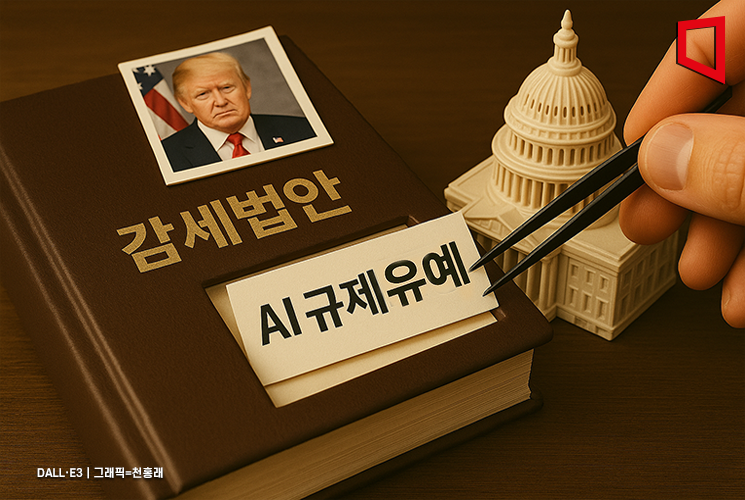
Republican Senator Marsha Blackburn submitted an amendment to remove the provision, arguing that it could undermine Tennessee's "Elvis Act," which aims to prevent deepfakes in the context of child safety and consumer protection. Ninety-nine senators expressed support for the amendment. Only Republican Senator Thom Tillis, who has announced he will not run in the next election, voted against it.
Max Tegmark, a professor at the Massachusetts Institute of Technology (MIT) and head of a nonprofit leading an AI regulation campaign, stated, "The overwhelming rejection of Big Tech's power grab is a bipartisan move to prevent AI companies from running amok," adding, "These companies are demanding immunity from meaningful oversight, even as they admit they cannot control the systems they are building."
FT analyzed the Senate's decision as "a significant defeat for Silicon Valley companies," noting that "there is now a strong possibility that a wide range of state-level AI regulations will be implemented."
© The Asia Business Daily(www.asiae.co.kr). All rights reserved.













