Key Technology Diplomacy in AI and Quantum Should Be Led by Specialized Ministries
Legal Foundation Needed for Cross-Ministerial Collaboration and Sustainable International Cooperation
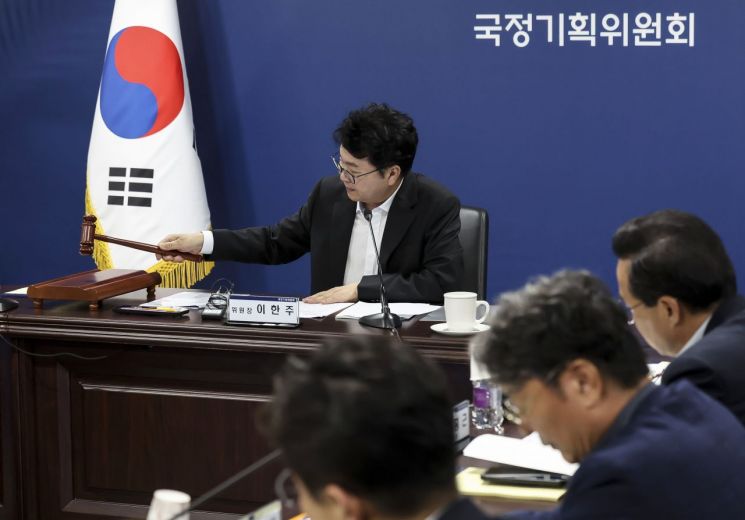
The National Policy Planning Committee, which serves as the transition team for the Lee Jaemyung administration, held a 'Science and Technology Diplomacy Policy Roundtable' on July 1. Scientists and technologists in attendance expressed the opinion that science and technology diplomacy should be led by specialized government ministries focused on science and technology. They pointed out that securing technological sovereignty requires a diplomatic system with both expertise and consistency.
The roundtable was organized by the Economic Subcommittee 2 of the National Policy Planning Committee, specifically the subcommittee on Artificial Intelligence (AI), Science and Technology, and Aerospace Defense Industry. Planning and expert committee members, including Hwang Jeonga, as well as private sector experts from the science and technology community, attended the event.
In the field of international cooperation in science and technology, participants included Koo Bonkyung, Director of the Institute for Basic Science (IBS); Kim Myungjoo, Director of the Artificial Intelligence (AI) Safety Research Institute; and Han Sangwook, Head of the Quantum Information Research Division at the Korea Institute of Science and Technology (KIST). In the field of science and technology diplomacy, attendees included Oh Taeseok, President of the Korea Institute of S&T Evaluation and Planning (KISTEP); Park Chansu, Vice President of the Science and Technology Policy Institute (STEPI); Lee Jaehun, Professor at Sungshin Women's University; and Park Jaemin, Professor at Konkuk University.
The participants suggested that, in order to strengthen international cooperation in key foundational technologies such as artificial intelligence, quantum, and biotechnology, it is necessary to enhance expertise through a science and technology diplomacy system centered on specialized government ministries, utilizing public-private networks.
They also emphasized the need to establish a legal foundation for sustainable international cooperation. They argued that, to secure a strategic approach to science and technology diplomacy, it is essential to enact relevant legislation and foster collaboration among government ministries, specialized agencies, and research institutions.
The participants stated that, for Korea to secure international influence in the field of science and technology, it must lead diplomatic agendas by contributing to the resolution of global issues and secure leadership roles on international stages such as the G20 and the World Bank.
Lee Choonseok, Chair of Economic Subcommittee 2 of the National Policy Planning Committee, said, "The Lee Jaemyung administration presented the establishment of an inter-ministerial strategy and a legal foundation for international cooperation in science and technology as a presidential campaign pledge," and added, "We will ensure that today's discussions are reflected in the national policy agenda."
© The Asia Business Daily(www.asiae.co.kr). All rights reserved.












