MS: "AI Doctor" Accuracy Reaches 85.5%
AI Used for Depression Diagnosis in Japan... Insurance Coverage Targeted for 2027
China Appoints Its First "AI Pediatrician" Earlier This Year
'AI doctors' are emerging worldwide, from the United States and China to Japan. These AI doctors are expected to take on various roles, ranging from medical chatbots that reach optimal diagnoses through internal discussions to 'assistant doctors' that support human physicians in making diagnoses.
MS: "AI doctor accuracy rate up to 85.5%"
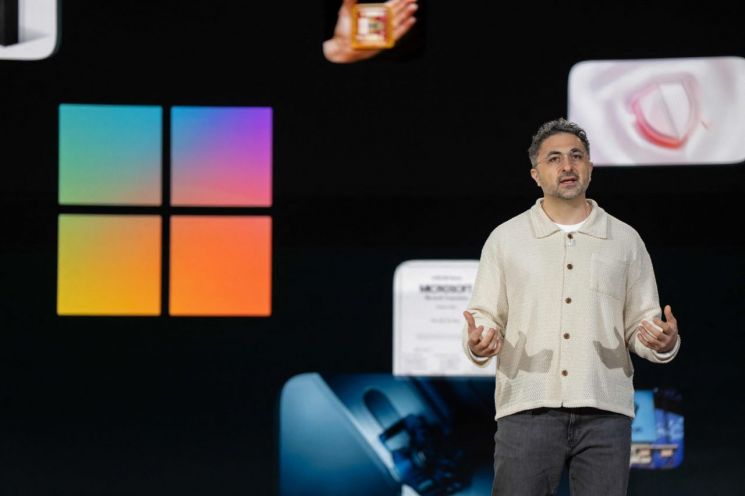 Mustafa Suleyman, CEO of Microsoft (MS) Artificial Intelligence (AI), is speaking at an event related to MS's conversational AI 'Copilot' on April 4. Photo by AFP
Mustafa Suleyman, CEO of Microsoft (MS) AI, announced in an interview with the Financial Times (FT) published on June 30 (local time) that MS has developed a medical diagnostic AI model called 'MS AI Diagnostic Orchestrator (MAI-DxO)'.
According to MS, five virtual 'AI doctor' agents discuss diagnoses like a panel to determine the optimal diagnostic pathway. The company designed the system so that the AI can explain to users, step by step, how it arrived at its solution.
MS explained that its AI-based medical tool can diagnose complex diseases four times more successfully than human doctors. When based on OpenAI's large language model (LLM), the agents achieved an accuracy rate of up to 85.5%. In comparison, human doctors without the tool had an accuracy rate of only 20%.
CEO Suleyman emphasized, "AI is faster, cheaper, and much more accurate than humans," adding, "It will bring true innovation to the medical field." MS plans to integrate this technology into its conversational AI 'Copilot' and its search engine 'Bing' to handle more than 50 million health-related queries per day.
In Japan, AI detects depression... Insurance coverage targeted for 2027
On the same day, news emerged from Japan about the development of a medical device that uses AI to determine the presence of depression. The Sankei Shimbun reported that a research team including the Advanced Telecommunications Research Institute International, a third-sector research institute in Japan, has received first-stage approval from Japanese authorities for the medical device.
The research team is developing a medical device that uses AI to analyze brain imaging data from about 700 people captured by magnetic resonance imaging (MRI), quantifying features found in patients with depression. The goal is to obtain second-stage approval by next spring and to have the device covered by health insurance in 2027.
Once released, this device will allow doctors to diagnose depression based on the results interpreted by AI. The precision rate is about 70%. The Sankei Shimbun also reported that the research team is developing technology to quantify conditions such as schizophrenia and autism, aiming to build an AI system capable of evaluating multiple mental illnesses or disorders in a single measurement.
In China, the 'first AI pediatrician' appointed in February
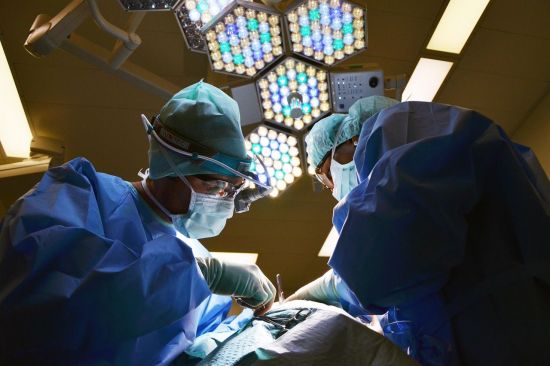
Similar AI-powered medical devices are emerging in China as well. According to a Xinhua News Agency report in early February, an AI specialist was officially appointed at the National Children's Medical Center and the Beijing Children's Hospital Collaborative Center. The agency described this as "China's first AI pediatrician."
This AI doctor participated in collaborative consultations with 13 pediatric specialists on difficult patient cases. One such case involved an 8-year-old boy who experienced convulsions for three weeks, with the cause of illness being complex and diagnoses differing among doctors. The AI doctor presented an opinion that closely matched those of the 13 specialists in otolaryngology, head and neck surgery, oncology, and other fields.
Xinhua News Agency noted that in China, where there is a shortage of pediatricians, utilizing AI in medical consultations could be one way to address the shortage of doctors.
© The Asia Business Daily(www.asiae.co.kr). All rights reserved.













