Sharing the Latest Insights on Mental Health Crisis Response
Exploring Community-Based Support Strategies
The public sector of Seoul National University Hospital announced on July 1 that it had conducted the "Community Mental Health Experts Capacity Building Training."
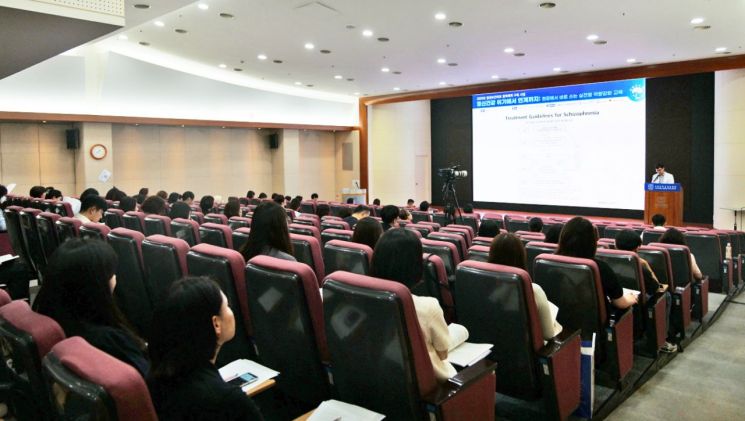 The scene of the "Community Mental Health Experts Capacity Building Training" held on the 27th of last month at Seoul National University Hospital in Jongno-gu, Seoul. Seoul National University Hospital
This training was held on June 27 at Seoul National University Hospital in Jongno-gu, Seoul, and was jointly hosted by Seoul National University Hospital, Seoul Metropolitan Boramae Hospital, Seoul Medical Center, and Seoul Red Cross Hospital. It was part of the "Establishment of Public Health Care Cooperation System Project" organized by the Ministry of Health and Welfare and the Seoul Metropolitan Government. Approximately 250 field workers from mental health-related institutions, including psychiatric hospitals, health and welfare centers, and rehabilitation facilities, attended the training.
According to the Korea Hope Respect Foundation, the number of suicide deaths in 2024 was 14,439 (provisional), marking the highest level in 13 years. As a result, the importance of managing mental health, which is closely related to suicide, is also increasing. In particular, in mental health emergencies, rapid initial response determines patient outcomes, making it essential to strengthen the expertise of field workers and establish a cooperative system between medical institutions and the community.
The theme of the training was "From Mental Health Crisis to Connection: Practical Capacity Building Training for Immediate Use in the Field." The program included sharing practical knowledge and skills necessary for responding to mental health crises, as well as exploring effective management strategies that link community medical resources.
The first session, titled "Acute Phase Treatment Practices in Psychiatric Emergencies," covered treatment approaches according to the types and situations of mental illnesses. Through lectures on "Principles of Pharmacological Treatment for Acute Psychiatric Symptoms" (Lee Sangjin, Seoul National University Hospital Professor) and "Understanding and Intervention Strategies for Psychiatric Emergencies" (Kim Younghyuk, Seoul Metropolitan Boramae Hospital Professor), participants reviewed treatment principles and intervention strategies for psychiatric emergencies with high risk of self-harm or harm to others, thereby enhancing their professional crisis response capabilities.
The second session, under the theme "Community-Based Case Management and Mental Health Service Linkage Strategies for High-Risk Groups," featured lectures by Lee Seungyeon, Deputy Director of the Seoul Mental Health Welfare Center, Jeon Jina, Research Fellow at the Korea Institute for Health and Social Affairs, and Jeong Jehyeong, Attorney at Law at Law Firm Igong. This session specifically addressed methods for responding to mental health emergencies in connection with community mental health welfare centers, and shared an integrated perspective that considers both institutional and human rights aspects. Participants also discussed practical support measures based on the needs of patients and their families.
Moon Jinsu, Director of the Public Sector at Seoul National University Hospital, stated, "Today, mental health issues are increasingly being recognized as a responsibility not only of individuals but of society as a whole," and added, "I hope this training has helped strengthen the community-based cooperative system and build a solid foundation for practical mental health crisis response together with field workers."
© The Asia Business Daily(www.asiae.co.kr). All rights reserved.












