Starting July 1, 32 Out of 413 Office Staff Join Paid Leave
Aimed at Overcoming Crisis from Fire Damage and Sharing Burden with Production Workers
Plan to Expand Paid Leave Coverage Until Normal Operations Resume
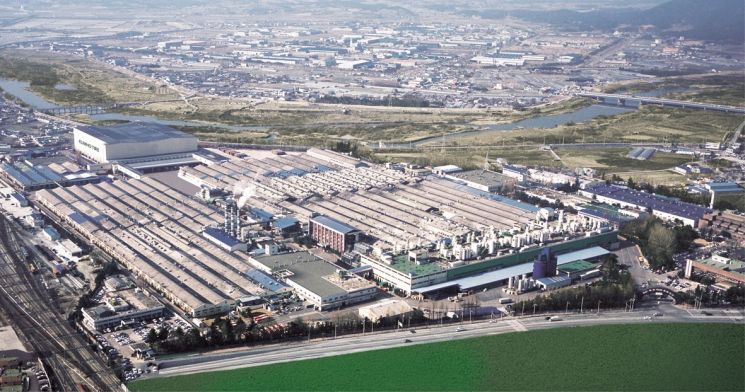
After a major fire forced Kumho Tire to halt operations at its Gwangju plant, the company is expanding paid leave, which had previously applied only to production workers, to include office staff as well. Kumho Tire explained that this move is intended to share the difficulties faced by production workers suffering from job insecurity and, at the same time, to help restore the company, which has entered an emergency management system, back to normal operations.
According to Kumho Tire on July 1, starting from this day, 32 out of 413 office staff members (including executives) at the Kumho Tire Gwangju Plant will be placed on partial paid leave.
This paid leave for office staff will follow a two-shift system in which employees work for 15 days and do not work for the remaining days in a month. On days not worked, employees will receive 70% of their average wage.
Previously, only 1,854 production workers at the Kumho Tire Gwangju Plant were on paid leave. However, unlike production workers, who have been on full paid leave for all working days in a month (based on 30 days per month), office staff will receive their full regular salary for the two weeks they work as usual.
Earlier, at the end of last month, Kumho Tire individually notified those eligible for paid leave with an official letter outlining these details and obtained final consent after discussions with each department.
Kumho Tire reportedly plans to gradually increase the number of participants after a trial run of paid leave for office staff this month.
According to company representatives, the expansion of paid leave from production to office staff is a self-rescue measure for Kumho Tire, which has been directly hit by a sharp drop in sales due to the fire. They added that it is also intended to share the burden of production workers whose livelihoods have been severely affected by the suspension of plant operations.
The Kumho Tire Gwangju Plant suffered a devastating fire of unknown origin in the Jeongryeondong (Plant 2) area in May, resulting in the near-total destruction of the facility.
As a result, the tire production line came to a complete halt, and production workers have been on standby at home, unable to work. However, office staff continued to work as usual even after the fire.
Before the fire, the total monthly salary paid to all employees (including both office and production staff) at the Gwangju plant was reportedly about 11 billion won. However, after the accident, with only 70% of production workers' (classified as skilled workers) salaries being paid due to the leave, the total monthly payroll for all employees has decreased to the 8 billion won range.
According to current labor laws, if paid leave is caused by reasons attributable to the company, those affected must be paid 70% of their average wage based on the number of working days.
Although fixed labor costs have been reduced, the sharp decline in sales due to the suspension of plant operations, combined with labor costs amounting to several billion won, remains a significant burden for Kumho Tire.
Kumho Tire plans to utilize the Employment Retention Subsidy system for production workers (up to 66,000 won per person per day) to receive approximately 4 billion won in support over a maximum of six months (from July to December). For office staff, since paid leave is only now being implemented, the application of the Employment Retention Subsidy is expected to be delayed.
A Kumho Tire representative stated, "Many employees are going through a difficult time due to the unexpected fire. The company is facing the same situation." He explained, "The implementation of paid leave for office staff is aimed at efficient personnel management, as the company’s business environment has deteriorated rapidly due to both tangible and intangible damage, and at sharing the burden of production workers suffering from job insecurity."
© The Asia Business Daily(www.asiae.co.kr). All rights reserved.












