Export Reliance on the US and Import Dependence on China
Rising Risks to Supply Chains, Employment, and Economic Stability
As South Korea's trade structure remains excessively dependent on both the United States and China, highlighting vulnerabilities in economic security, a state-run research institute has recommended that the country expedite its accession to the Comprehensive and Progressive Agreement for Trans-Pacific Partnership (CPTPP).
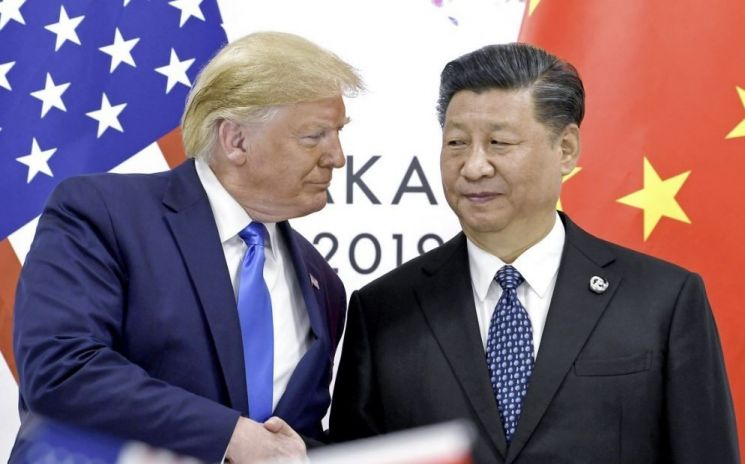
On July 1, the Korea Development Institute (KDI) published the KDI Focus report titled "Changes in Trade Structure Since the 2010s and Implications for Economic Security." Jung Sunghoon, a senior research fellow at KDI, stated, "Since the 2010s, South Korea's trade structure has become increasingly dependent on exports to the United States and imports from China, resulting in deepening reliance on both countries." He added, "This goes beyond a simple efficiency issue and could pose a significant threat to economic security." Jung also remarked, "It does not seem likely that trade issues will be completely resolved simply by negotiating tariffs effectively with the Trump administration in the United States," and emphasized, "In the long term, South Korea needs to reduce its trade concentration on both the United States and China."
According to the report, since the 2010s, South Korea's trade structure has continued to be heavily skewed toward both the United States and China. South Korea has focused on exporting a limited range of products, such as semiconductors and auto parts, to the United States, while imports from China have centered on a wide array of manufacturing goods, including intermediate goods, capital goods, and consumer goods.
The main issue is the high level of concentration on these two countries. Among six countries analyzed (South Korea, Japan, China, the Netherlands, France, and Germany), South Korea exhibited the highest degree of trade concentration?a concept indicating that the more a country's trade is asymmetrically focused on a few partners, the more economically dependent it becomes on those countries. In contrast, China rapidly diversified its export destinations and reduced its import concentration following the 2018 US-China trade war. The Netherlands, which has a higher trade-to-GDP ratio than South Korea, as well as manufacturing powerhouses Germany and France, have also either reduced or maintained low levels of trade concentration.
Jung identified several risks arising from this structure: increased threats to economic security and constraints on future industry growth due to deepening supply chain dependence on China; a negative impact on domestic manufacturing employment resulting from intensified competition with Chinese products; the potential for increased trade pressure from the United States as South Korean exports to the US grow; and greater macroeconomic instability within South Korea.
Accordingly, Jung stressed that South Korea should pursue expanded trade agreements with countries other than the US and China and diversify its trading partners to enhance economic stability. He specifically recommended that the country accelerate its accession to the CPTPP. The CPTPP is a multilateral agreement involving 12 countries, excluding the US and China, and is characterized by a high level of openness among member states, making it effective for diversifying supply chains and securing economic security.
He further stated, "South Korea should expedite agreements with countries that have potential demand for exports or that can contribute to supply chain stabilization from an import perspective, and efforts should be made to broaden the scope and depth of existing agreements that have low trade creation and diversion effects." He explained that there is significant potential to pioneer new markets in regions with high growth potential, such as South Asia and Southeast Asia; in Europe, which seeks to counter China's entry; in the Middle East, where there is strong demand for industrial restructuring; and in resource-rich regions such as Latin America and Africa.
© The Asia Business Daily(www.asiae.co.kr). All rights reserved.












