Han Sungjon Confirmed as New Head of KIRA Emergency Response Committee
The Korean Intern Resident Association (KIRA), which has formalized the formation of its new leadership, has decided to take a forward-looking approach to dialogue with the government and the National Assembly.
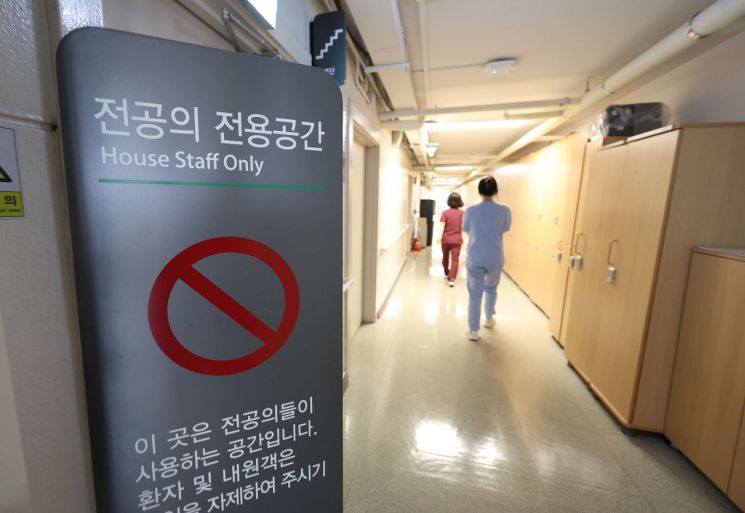
KIRA announced on June 28 that it had made this decision during an extraordinary general assembly held at the Seoul Medical Association. At the assembly, Han Sungjon, the representative of residents at Asan Medical Center in Seoul, was officially confirmed as the head of KIRA's Emergency Response Committee. Out of a total of 175 training units, 130 units attended the assembly, and Han received approval from 105 of them.
In his opening remarks, Han emphasized a transparent decision-making process, stating, "No hasty agreement will be made without the consent of our members." Prior to the assembly, when meeting with reporters, he also said, "All decisions and judgments will be based on the voices of our internal members."
Alongside Han, the committee will include Kim Donggeon, representative of residents at Seoul National University Hospital; Kim Eunsik, representative of residents at Severance Hospital; Park Jihui, representative of residents at Korea University Medical Center; and seven other members. With this, KIRA's leadership has been replaced for the first time in about a year and a half since the conflict between the medical community and the government began in February of last year.
At the assembly, it was also decided to establish an administrative support office under the Emergency Response Committee and to create regional councils by area. There were no opposing votes against the establishment of the regional councils. Han stated, "Through the regional chairperson system, we will ensure that the voices of all hospitals are evenly reflected."
The Emergency Response Committee stated, "Participants freely exchanged opinions at the assembly," and added, "There was a consensus on the importance of engaging in forward-looking dialogue with the government and the National Assembly to resolve the situation." The committee further said, "We will actively strive to communicate with various organizations within the medical community, including the Korean Medical Association and the Korean Association of Medical College and Graduate Medical School Students."
The committee plans to survey the training status and enlistment status at each training hospital unit as part of its efforts to engage in dialogue with the government and the National Assembly. In addition, it intends to establish communication channels that will directly collect and confirm the opinions of all members, not just delegates and regional council chairs.
With Han, who has criticized former committee head Park Dan for a lack of communication, officially taking office, it is expected that the nature of the conflict between the medical community and the government may change. As Han has emphasized both internal and external communication and forward-looking dialogue, there is speculation that the stalemate in the conflict may enter a new phase.
© The Asia Business Daily(www.asiae.co.kr). All rights reserved.












