Gyeonggi-do has issued a Japanese encephalitis advisory.
On June 27, the Gyeonggi-do Institute of Health and Environment announced that the primary vector mosquito for Japanese encephalitis, Culex tritaeniorhynchus, was detected in Dongtan, Hwaseong-si, and urged residents to pay attention to vaccination and personal protection measures.
This year, the mosquitoes were collected in the third week of June, which is more than a month earlier than the fifth week of July last year. However, the Japanese encephalitis virus was not detected in the collected mosquitoes, so there is no risk of disease transmission at this time.
Gyeonggi-do, in cooperation with Suwon-si and Hwaseong-si, operates the "Climate Change Response Infectious Disease Vector Mosquito Surveillance Project" every year from April to November, regularly analyzing the occurrence of Japanese encephalitis vector mosquitoes and the presence of pathogens. Due to recent climate change, the appearance of mosquitoes is occurring earlier each year, making surveillance and response increasingly important.
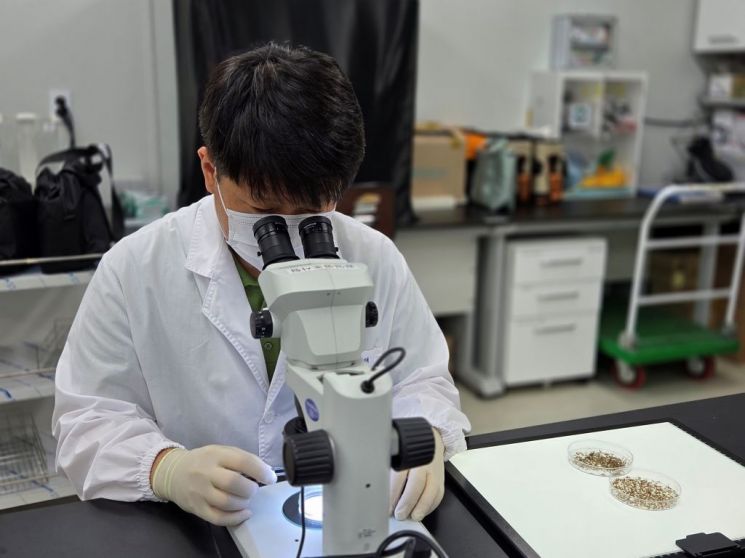 Gyeonggi-do Institute of Health and Environment is classifying mosquitoes that transmit Japanese encephalitis. Photo by Gyeonggi-do
The number of Japanese encephalitis cases in the province has increased every year, with 4 cases in 2022, 5 cases in 2023, and 8 cases in 2024.
Most people infected with the Japanese encephalitis virus experience only mild symptoms, but some may develop severe neurological symptoms such as high fever, seizures, convulsions, or coma. The fatality rate is 20 to 30 percent. Even after recovering from encephalitis, 30 to 50 percent of patients may suffer from neurological complications.
To prevent Japanese encephalitis, avoiding mosquito bites is important, and the most effective preventive measure is vaccination. Vaccination is especially recommended for people living near rice paddies or pig farms, those planning to travel to areas where Japanese encephalitis is prevalent, children aged 12 months or older, and adults aged 18 or older who are not immune.
When engaging in outdoor activities, individuals should wear long sleeves and use mosquito repellents as part of personal protection measures.
Kim Myunggil, head of the Infectious Disease Investigation Team at the Gyeonggi-do Institute of Health and Environment, stated, "With the rainy season and high temperatures coinciding, the mosquito population is expected to increase significantly. We will continue to strengthen our surveillance system and do our best in public awareness and prevention activities to protect residents from infectious diseases."
© The Asia Business Daily(www.asiae.co.kr). All rights reserved.












