Restructuring Toward Government Funding and Large-Scale Projects
Discussion on Improving Treatment of Researchers
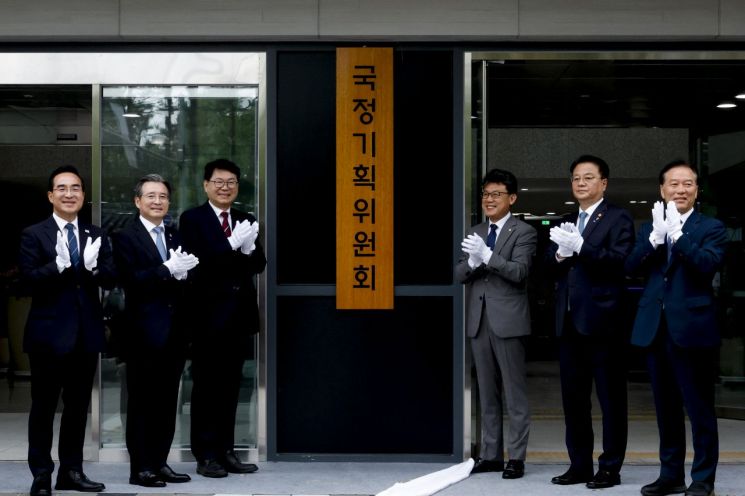
The National Policy Planning Committee, which is serving as the transition team for the Lee Jaemyung administration, announced that it is considering a major overhaul of the financial structure of government-funded research institutes in the science and technology sector (hereafter referred to as government-funded research institutes). The main focus is to shift from the current "multiple small-scale commissioned projects" structure to a "government funding and large-scale project" structure. The committee also pledged to improve the treatment of researchers at these institutes.
On June 26, planning and expert members of the National Policy Planning Committee held a meeting with researchers from government-funded research institutes, private sector experts, and officials from the Ministry of Science and ICT to discuss future policy directions. At the meeting, several topics were discussed, including strengthening the capabilities of researchers at government-funded institutes?a key campaign pledge of President Lee Jaemyung?maximizing the utilization of unused science and technology talent, improving systems to help researchers balance work and family life, and expanding support for utilizing retired, highly experienced researchers.
Participants from the government-funded research institutes emphasized, "The current financial structure, centered on multiple small-scale commissioned projects known as PBS, disperses research achievements and serves as a major obstacle to mission-oriented or group research. Therefore, it is necessary to shift the financial structure to focus on government funding and large-scale projects."
They also argued, "The compensation system at government-funded research institutes is insufficient compared to the private sector, which is causing outstanding researchers to leave. To inspire research motivation and continuously attract top talent, it is necessary to improve overall treatment and introduce bold incentive systems linked to performance."
Furthermore, they stated, "Regulations should be eased to allow institutions to actively utilize their own generated income. In addition, support should be expanded for career-holding women in science and technology to return to research and education, and for retired researchers so that their knowledge and experience can be put to use."
The issue of insufficient research administration and support staff was also raised. Participants agreed, "The scale and expertise of administrative staff in research settings are lacking compared to advanced countries, resulting in various administrative burdens being shifted onto researchers. It is necessary to strengthen research administration functions so that researchers can focus on their research."
Lee Choonseok, head of the Economic Division 2 of the National Policy Planning Committee, said, "This meeting served as an opportunity to identify the fundamental problems that have restricted research achievements at government-funded institutes and to review the new administration's policy direction for supporting these institutes."
The meeting was attended by representatives from the Public Science and Technology Research Labor Union, the Science and Technology Research Professionals Labor Union, the National Science and Technology Labor Union, and the Council of Science and Technology Personnel Associations of Government-Funded Institutes. Among the heads of government-funded research institutes, Bang Seungchan, President of the Electronics and Telecommunications Research Institute (ETRI); Kim Namgyun, President of the Korea Electrotechnology Research Institute; and Han Sunhwa, former President of the Korea Institute of Science and Technology Information (KISTI), were present. From academia, Professor Kim Changwan of Chung-Ang University attended the meeting.
© The Asia Business Daily(www.asiae.co.kr). All rights reserved.












