WSJ: "Chinese Ministry of Commerce Demands Personal Information from Companies"
Suspected Purpose: Management and Tracking to Prevent Overseas Technology Leaks
Ministry of Commerce Maintains Opaque Approval Process for Rare Earth Export Permits
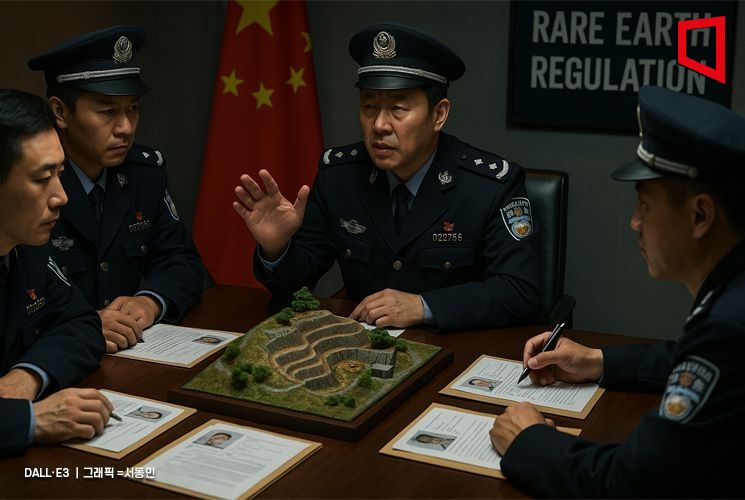
The Wall Street Journal (WSJ) reported exclusively on June 25 (local time) that China is demanding even personal information, including the identities of rare earth technology experts, from domestic companies in an effort to prevent the overseas leakage of rare earth technologies.
Sources familiar with rare earth issues told the WSJ that in recent weeks, the Chinese Ministry of Commerce has requested personnel lists from domestic rare earth companies. These lists must include the specific areas of expertise, educational backgrounds, research experience, and personal information of technical specialists.
According to these sources, the purpose of this measure is for the Chinese government to officially compile a list of experts and to continuously track and manage them to prevent the leakage of confidential information overseas. Some experts have reportedly been instructed to surrender their passports to their companies or local Chinese authorities to prevent unauthorized departures from the country.
In April, as trade tensions between the United States and China intensified, China introduced a new licensing system for the export of seven types of rare earths and rare earth magnets. Currently, China mines and processes the largest amount of rare earths in the world and produces about 90% of the world’s rare earth magnets.
While the Chinese government has claimed to ease rare earth export controls, it continues to maintain an opaque approval process. The Ministry of Commerce announced through a spokesperson on the 26th that it had approved applications for rare earth export permits, but, according to Reuters, did not disclose specific export volumes or the number of approvals granted to U.S. companies.
Similar complaints have arisen in Europe. China operates a “green channel” fast-track system for rare earth exports to European Union (EU) companies, but questions have been raised about its effectiveness. According to the European Association of Automotive Suppliers (CLEPA), as of June, only 25% of rare earth export applications submitted to Chinese authorities had been approved. The remaining 75% were either delayed or rejected, resulting in some European auto parts factories suspending operations.
© The Asia Business Daily(www.asiae.co.kr). All rights reserved.