Pilots Rely on Aerial Refueling, Makeshift Beds, and Stimulants
37-Hour Flight from Striking Iranian Nuclear Facilities to Returning Home
"Urine bags, stimulants, portable toilets..."
The high-intensity operational methods of pilots have drawn attention after the U.S. Air Force's B-2 stealth bombers recently carried out a 37-hour ultra-long-range mission, striking Iranian nuclear facilities with precision before returning to the mainland, Yonhap News reported on the 25th, citing foreign media.
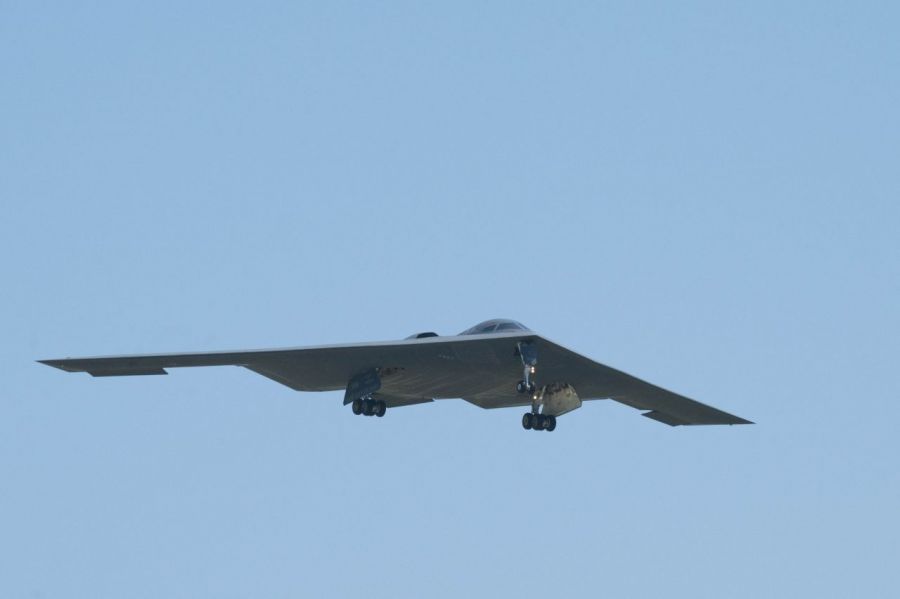
This airstrike was a large-scale operation in which the United States deployed seven B-2 bombers to drop 14 GBU-57 bunker-buster bombs. Since this bold move by U.S. President Donald Trump led to a dramatic ceasefire agreement between Israel and Iran, American media outlets are focusing on what happened behind the scenes.
On the 24th (local time), CNN introduced the realities of long-range bombing missions by quoting the experiences of former U.S. Air Force Colonel Melvin G. Diehl, who set a 44-hour flight record during the 2001 airstrikes in Afghanistan.
According to Colonel Diehl, B-2 pilots regularly undergo 24-hour continuous flight training at Whiteman Air Force Base in Missouri, and in actual deployments, they often do not receive precise mission durations until just before the operation. He stated, "Most of the time, we are notified only a few hours in advance, and it is only when the President’s approval comes through that we realize we will be flying for two days."
When such extreme operations are anticipated, military doctors at the base prescribe sleeping pills to help pilots get adequate rest before departure. However, once the mission begins, pilots must remain alert and can only take brief naps. The two pilots alternate resting on a makeshift bed, sleeping for three to four hours at a time.
Aerial refueling is also a highly challenging task. The B-2's refueling port is located far behind the cockpit, so pilots cannot see the refueling boom. As a result, they must rely on extensive training and their senses to complete the process.
The use of medication to maintain alertness was also mentioned. Colonel Diehl said that in the past, a type of amphetamine called the "go pill" was used with Air Force approval. However, he added that the policy may have changed since then.
There are also unavoidable physiological issues during long flights. Behind the B-2 cockpit, there is a portable toilet with chemicals to suppress odors, but because pilots worry about the possibility of overflow, its use is limited.
However, the cockpit environment, which is designed for high altitudes, makes dehydration likely, so drinking water is essential, and an absorbent device known as a "urine bag" becomes indispensable. Colonel Diehl recalled, "I drank about one bottle of water per hour and kept track of the number of used urine bags to mark the passage of time."
Because these missions test the limits of human physical and mental endurance, psychologists are stationed at Whiteman Air Force Base to help B-2 pilots prepare for their missions, The New York Times reported.
At midnight on the 21st Eastern Time, seven B-2 bombers took off from Whiteman Air Force Base in Missouri and, about 18 hours later, dropped 14 massive GBU-57 bunker-buster bombs on Iran's Fordow and Natanz nuclear facilities. Two days later, Iran agreed to a ceasefire with Israel.
© The Asia Business Daily(www.asiae.co.kr). All rights reserved.












