[The Path to a Just Transition]
Ⅱ. How Were Conflicts Resolved During the Coal Phase-Out Process?
Loos-en-Gohelle in France: From Waste Rock Piles to Trekking Attractions
London in the UK: From Coal Power Plants to Modern Art Museums and Shopping Malls
The biggest challenge for governments pursuing coal phase-out policies is "how to revitalize local economies that once thrived on coal after the transition." As coal mines and power plants shut down, workers and related facilities leave, leaving regions empty and desolate. Although France and the UK no longer operate thermal power plants, they have succeeded in transforming abandoned mines and power plants into new urban spaces. This was made possible by "bottom-up transition" led by local governments and residents.
French Coal Town Transforms Waste Rock Piles into Trekking Attractions
The village of Loos-en-Gohelle, located in the former coal city of Lens, France, has seen a steady stream of tourists since it turned the waste rock piles built up by miners into popular trekking spots. About 10 minutes by local bus from Lens train station, visitors are greeted by huge black mountains stretching like a folding screen. These are waste rock piles left from mining in the 1960s and 1970s. The transformation of these waste piles into tourist attractions was the result of long-term cooperation between the local government and residents.
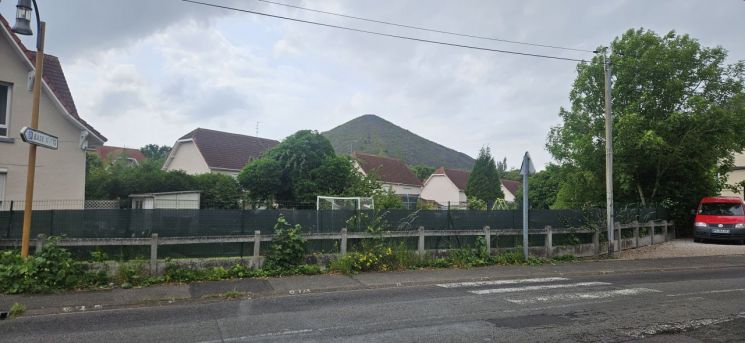 A pile of waste rock visible in Reims Rouen Goel, France. It has now become a popular trekking spot. Photo by Jeon Jin Young.
In the 19th century, Lens earned a reputation as a coal city, with 5,000 miners extracting 6,000 tons of coal per day. It would not be an exaggeration to say that the French Coal Corporation supported the entire city. However, as France began converting its thermal power plants to renewable energy plants, coal was no longer needed, and the coal city quickly fell silent, becoming a desolate area.
There were suggestions to sell off the coal power plants and mine sites and introduce new industries, but the local government and residents at the time chose a completely different path. Rather than erasing the past, they decided to use it as the foundation for new development. In 1984, to change the bleak atmosphere of the town after the mine closures, local residents voluntarily launched the "Gohelliades" festival. Over time, the festival evolved into participatory plays and musical performances telling the stories of mining town residents. The local government saw the potential to transform the town by building this kind of cultural capital.
The local government first decided, in consultation with residents, to preserve the coal processing facility, which was on the verge of demolition, as the "11/19 Base." The numbers refer to the preserved shaft numbers, specifically vertical shafts 11 and 19. The warehouse was converted into a laboratory and cinema where artists could perform and hold workshops, attracting young artists to the area.
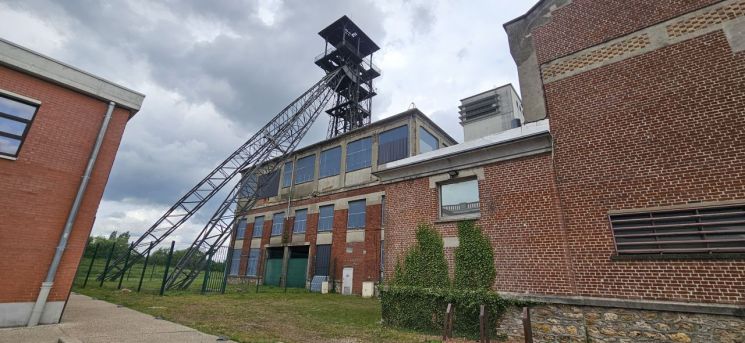
They also devised ways to utilize the waste rock piles. Instead of demolishing them, they succeeded in having them inscribed as a UNESCO World Heritage Site in 2012. Afterwards, they developed hiking trails and promoted the site as a trekking destination. Every May, they hold the "Trail des pyramides noires," a running event that attracts tourists. The race covers a total of 110 km, crossing 22 waste rock piles, and aims to commemorate the solidarity of miners.
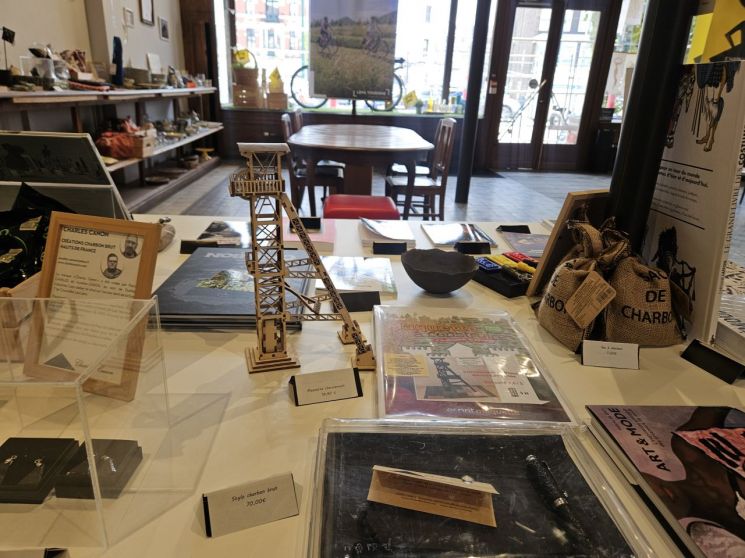
The mining town also has its own souvenirs. At the tourist center, located a five-minute walk from Lens train station, visitors can purchase bags for carrying coal, various books related to the coal industry in the Lens region, and models of coal processing bases as tourist products. Particularly popular is the mint candy known as "La pastille du mineur" or "the miner's candy," which evokes memories of the coal city. Since miners could not smoke inside methane-filled mines, the candy was made with eucalyptus and mint to reduce the urge to smoke. The candy is even oval-shaped and black, resembling a lump of coal.
Sylvie, a staff member at the 11/19 Base who has lived here for 50 years, explained, "After the power plant shut down, this place was nothing more than a rural village. But now, people come to visit from Canada, Belgium, and even the United States," adding, "With the base transformed into a cinema and other facilities, it brings small joys to rural residents, making it a win-win situation."
Tate Modern: An Art Museum That Revives the Meaning of Place and Environment
Tate Modern, a leading contemporary art museum in London, was created by converting the Bankside Power Station, which began construction in 1962. The Bankside Power Station, which once supplied one-fifth of London's electricity, closed in 1981 after a spike in oil prices made it unprofitable.
The abandoned power plant was given new life in 1993 through London's "Millennium Project." As part of a large-scale urban regeneration initiative to mark the year 2000, the city installed several features such as the Millennium Wheel (known as the London Eye) and the Millennium Bridge connecting St. Paul's Cathedral and the north and south banks of the Thames. Tate Modern was also born out of this public project.
At the time, the Tate, the UK's art management organization, was searching for a site to build a contemporary art museum, and the city of London offered the now-defunct power station. The Tate began converting it into a museum in 1997. The Southwark Borough Council took the lead in persuading local residents to approve the development plan. This synergy was created by the combination of local government and private art capital.
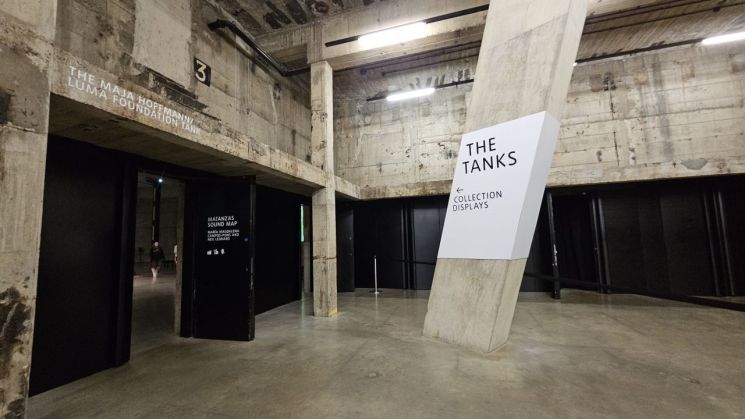 Exterior view of 'The Tank,' the Tate Modern exhibition space converted from a power plant oil tank. Photo by Jeon Jinyoung.
Tate Modern preserved the original spaces of the power plant. The turbine hall, where the turbines once stood, was transformed into the entrance area for visitors. The tangled black steel structures and chimneys were left intact, making it immediately clear that the building was once a power plant.
The oil tanks, which had stored oil, were repurposed as spaces for live art, video, and audio installations. Taking advantage of the echoing characteristics of the oil tanks, the museum actively hosts sound-based exhibitions. When the reporter visited in June, works by sculptor Giacometti from the post-World War II era were on display. The unique somber atmosphere of Giacometti's sculptures was heightened by the dark, still faintly-scented oil tanks, maximizing the immersive experience.
The "recycled power plant" is also part of the museum's identity. Tate Modern has established a permanent exhibition space called "Gathering Ground." The exhibition guide explains that the building is a repurposed thermal power plant and states, "Starting from the question of how we can sustain the world we live in, the exhibitions are designed to reflect on threatened ecosystems."
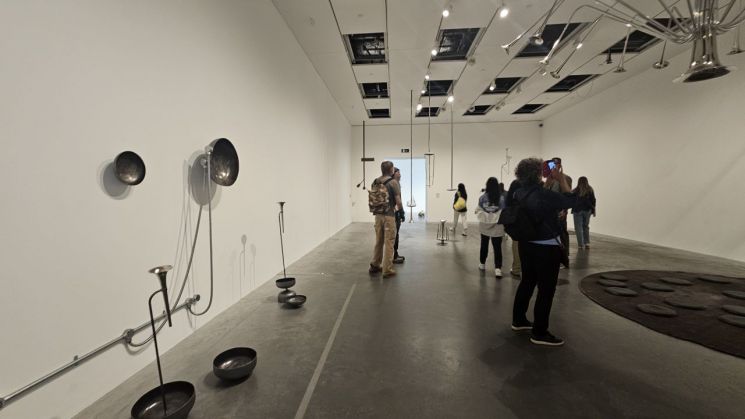 Visitors are viewing the work of Abbas Zahedi exhibited at Tate Modern's "Gathering Ground." Pipes made from discarded aluminum and other materials are connected to the pipes in the existing power plant building, producing irregular sounds through resonance. This participatory exhibition allows visitors to sit on the floor and listen to the sounds resonating from the pipes. The artist also hosts a gathering here every Saturday to revive the meaning of the ecosystem. Photo by Jin Jungyong.
Battersea Power Station: Dramatic Environmental Improvements and a Source of Local Pride
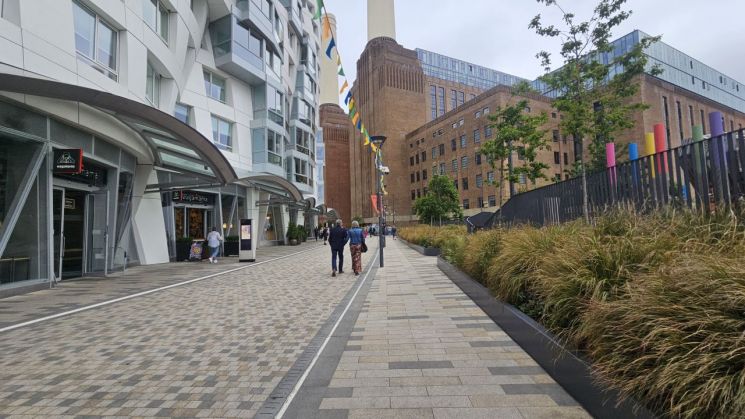 Exterior view of Battersea Power Station in London, UK, transformed into a multiplex. Photo by Jinyoung Jeon.
Although Battersea Power Station in London has ceased operations, it has become one of the city's hottest tourist destinations.
When the reporter visited on June 11, even on a weekday, the interior was bustling with children on school trips and people on dates. The sound of children freely playing the public piano echoed through the turbine hall. Located on the south bank of the Thames, this power station was once known as the largest brick building in the world. However, after operations stopped in 1983 and the internal equipment was removed, it was left unmanaged and effectively abandoned. The fact that it was listed as a cultural heritage site made it almost impossible to demolish. Several attempts to sell the site failed, and the area around the power station became increasingly run-down.
The area's dramatic rebirth was largely due to cooperation between the local government and the private sector. In 2010, the city of London designated the area as an "opportunity zone" and actively attracted private developers. At the end of 2012, Malaysia's sovereign wealth fund acquired the power station. At that time, the city of London and Wandsworth Borough Council set conditions such as extending the subway and building public housing to ensure that benefits would be returned to residents. The borough council also planned transportation connections and raised funds.
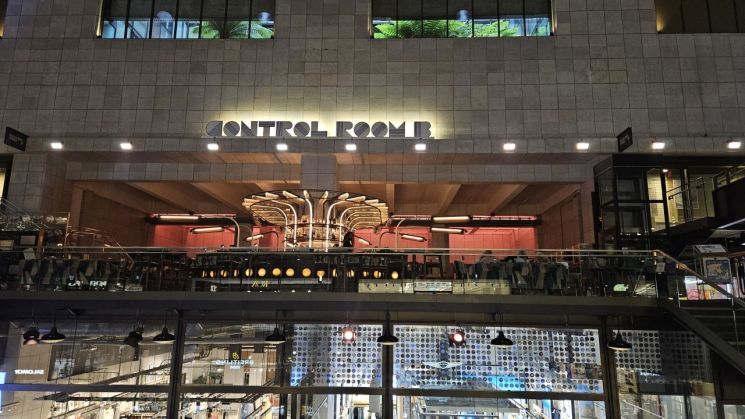 Control room of Battersea Power Station. Originally a place with control devices, it has been transformed into a space selling beverages. Photo by Jinyoung Jeon.
Thanks to this close cooperation between the local government and private developers, Battersea, once a neglected area, was reborn as a multiplex with leisure, commercial, and food and beverage facilities. During the redevelopment, temporary nests were built to protect the peregrine falcons that had made their homes on the old power station pillars, naturally turning the site into an icon of ecological protection. Especially due to the urban regeneration plan that created residential and commercial facilities centered around the power station, the surrounding area has been transformed into a newly renovated affluent neighborhood.
Once considered a headache, the power station has now become a source of pride for local residents. Harry, a Battersea staff member, said, "More than 90% of visitors are extremely satisfied," adding, "Residents also take pride in the fact that this place has transformed from a coal power plant into a sophisticated commercial facility. The only people who objected were those who wanted it to remain a museum."
This feature was supported by the Press Promotion Fund, which is financed by government advertising fees.

© The Asia Business Daily(www.asiae.co.kr). All rights reserved.














