"Boldly Reform Elements That Encourage Politicization of Employees"
"Open a Breakthrough for Inter-Korean Dialogue and Easing Tensions"
On Espionage Act Revision: "Meet Public Expectations"
On June 25, National Intelligence Service (NIS) Director Lee Jongseok stated, "For the NIS to become an organization that works effectively and delivers results, we must honestly reflect on our past as it is and candidly address the areas for which we are responsible."
In his inaugural address at the ceremony held that day, Director Lee said, "Many citizens have expressed concern that some members of the NIS, who should have been solely dedicated to national security and the advancement of national interests, have at times engaged in behavior that raised doubts about their political neutrality and lost sight of their proper role."
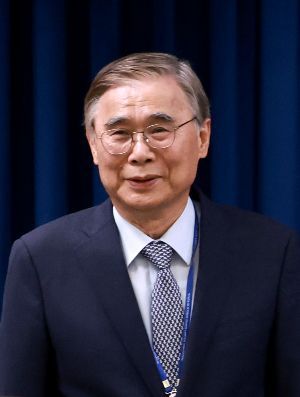
Director Lee first emphasized, "The NIS is not an institution that stands at the forefront, but rather one that supports the government's policy implementation from behind the scenes," adding, "In a democratic republic, it is necessary for intelligence agencies to be controlled and restricted by law and institutional frameworks." He went on to say, "We must actively respond to the public's demand for strict political neutrality and democratic transparency from the NIS."
He also stated, "I will identify and boldly reform elements that encourage the politicization of employees and hinder the enhancement of professionalism, thereby creating institutional and cultural environments that foster dedication to the nation and the organization." He stressed, "Let us never forget that the very reason for the NIS's existence and its roots lie in the Republic of Korea and our sovereign people."
Director Lee also commented on recent developments, saying, "We are facing numerous challenges, including instability in the Middle East, the expansion of 'global protectionism,' intensifying strategic competition between the United States and China, and hostile inter-Korean relations." He added, "We must demonstrate our commitment to the nation and the people, as well as our capabilities as intelligence officers, through tangible results."
He stated, "Currently, inter-Korean relations have deteriorated to the point where it would not be surprising if a conflict were to break out at any time." He continued, "To enhance public safety and reduce the Korea risk, we must fully mobilize our intelligence capabilities regarding North Korea to establish a robust national security environment. At the same time, we must contribute to easing military tensions between the two Koreas and opening a breakthrough for dialogue."
Director Lee continued, "We must support overcoming the global trade crisis by gathering information, conducting accurate analysis, and providing future assessments on economic trends in various countries?especially those directly affecting our economy, such as global supply chains and 'materials, parts, and equipment' issues." He added, "We must carry out collection and analysis activities based solely on facts, in line with the spirit of practical realism, and perform our duties strictly based on the national interest."
Director Lee stated, "The President has repeatedly emphasized the importance of advanced technologies such as artificial intelligence (AI), and there is not much time left in the golden window for Korea to become a leading AI nation." He continued, "We must accelerate the advancement of scientific intelligence capabilities, including the promotion of AI transformation across all intelligence activities."
Director Lee requested that, in addition to the NIS's core role of national counterintelligence, the agency should also respond proactively and actively to emerging security threats such as counterterrorism, prevention of international crime, public safety-related early warning activities, and new risks like infectious diseases and climate change. In particular, regarding the 'Espionage Act,' for which the need for revision has been raised, he said, "As discussions are underway in the National Assembly, please approach your duties with a more citizen-friendly attitude so as to meet public expectations."
© The Asia Business Daily(www.asiae.co.kr). All rights reserved.












